This post may contain affiliate links. Please read our disclosure policy.
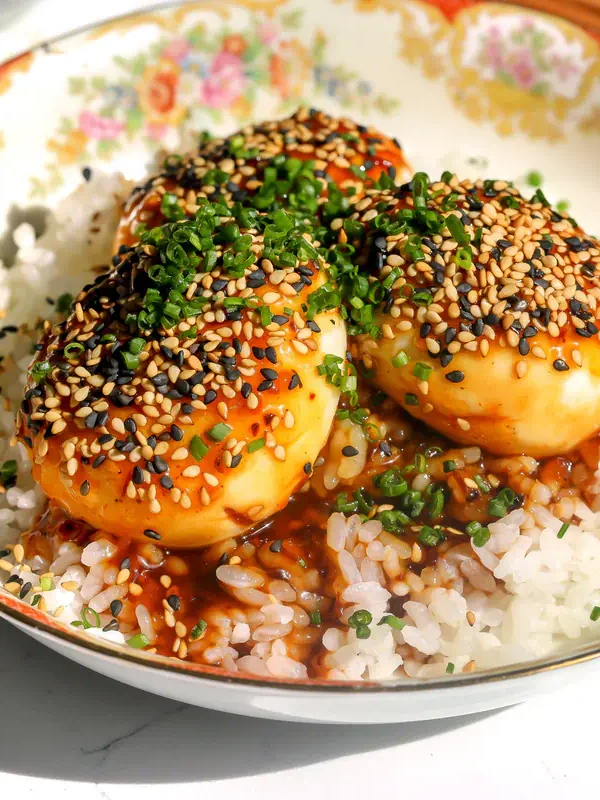
This miso ramen pastina is a fusion of two amazing comfort foods: Japanese ramen and Italian pastina. Let me tell you, using the pasta risottata method with the rich, savory broth so it slowly absorbs the deep flavors into each tiny acini di pepe pasta is better than it has any right to be. You serve it, hot and creamy, with a soft ramen egg on the top so the yolk melts directly into the pasta. Add crisp green onions for a fresh crunch, and finish with a drizzle of salsa macha for the perfect smoky finisher to this recipe.
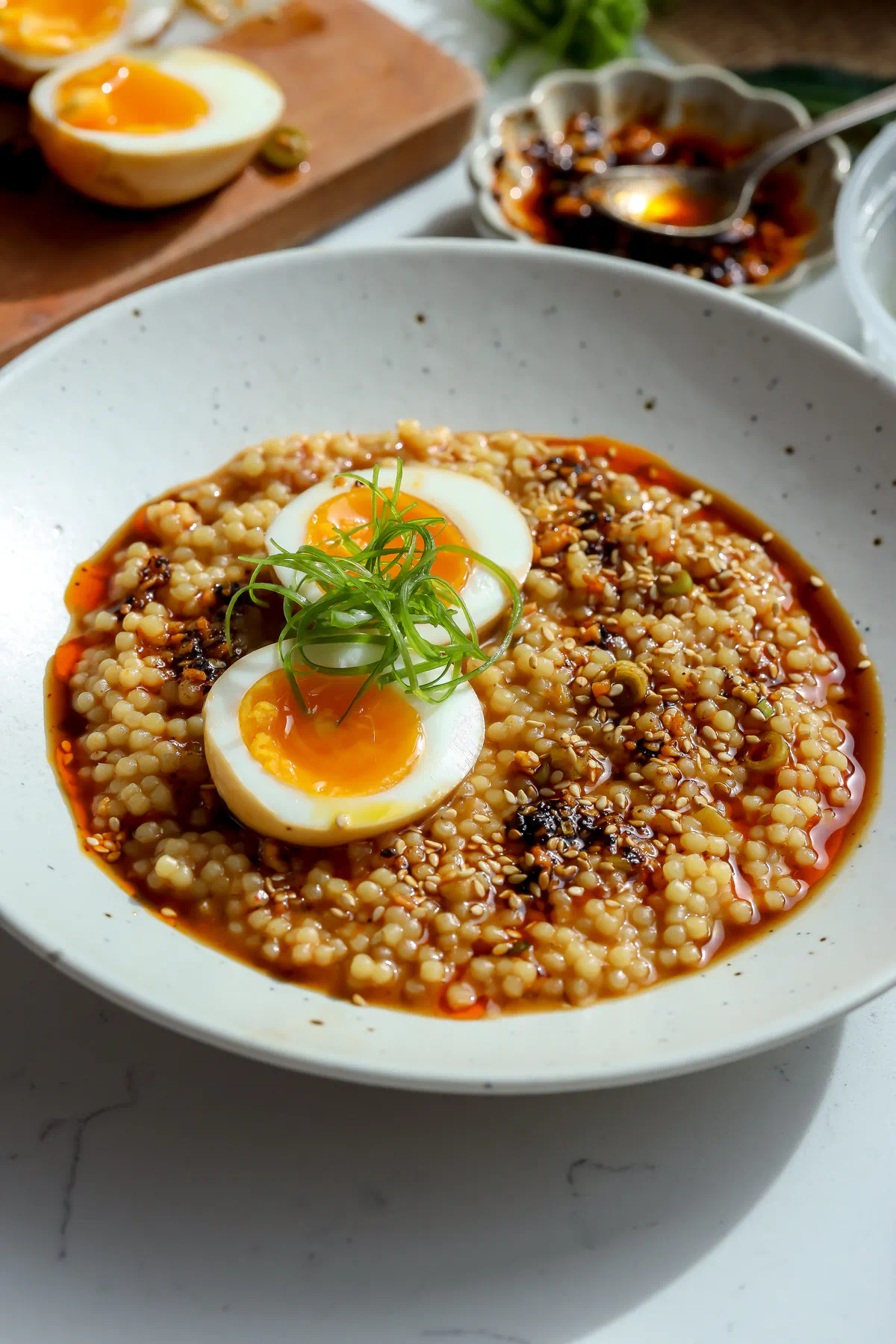
Table of Contents
The Pasta Risottata Method
This recipe uses a technique called pasta risottata. It is basically how you cook risotto, but in Italian, they call it risottata when applying it to pasta. By adding the broth slowly and cooking the raw pasta directly in the liquid, it helps the pasta release its starches. This naturally thickens the broth into a thick sauce without any heavy cream. This is better because the pasta drinks up the broth and miso instead of plain water. You get a big hit of savory flavor in every bite. Keeping the starch in the pan creates a silky, glossy sauce that feels rich without being heavy. It gives the bowl a beautiful finish that looks as good as it tastes.
Prep the Ingredients
Once you start cooking the pasta, you have to stir frequently. To avoid scrambling at the last minute, chop and measure everything before you turn on the stove.
Green Onions: Cut off the roots, then wash and dry. Separate the dark green tops from the white bottoms. Slice the dark greens into long, thin strips and drop them into a bowl of ice water. The ice water shocks the onions so they curl up and get crisp. Chop the white parts and save them to cook in the pan.
The Broth: Pour the beef bone broth into a separate pot. Put it on a back burner and keep it at a low simmer so it is ready to use.
The Flavors: Grate the garlic and ginger. Finely dice the shallot. Put the white miso paste, gochujang, mirin, and optional bonito flakes into one small bowl so you can add them to the pan all at once later.
How to Make Jammy Ramen Eggs
This is just a summary for my perfect ramen egg recipe. Click the link for more details.
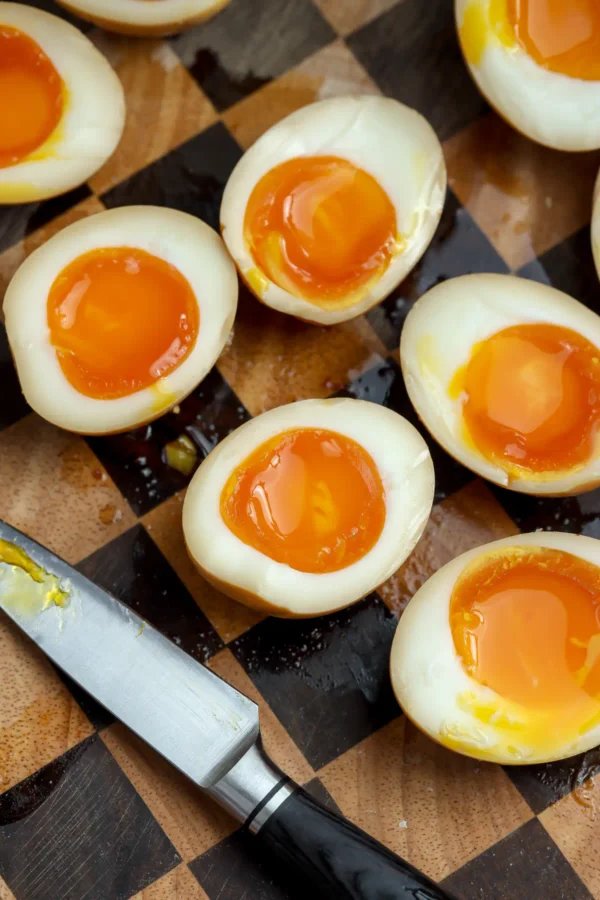
You need a soft, runny yolk to mix into the pasta. Because the eggs need time to marinate, make these at least one day in advance.
The Marinade: Simmer ½ cup mirin, ½ cup tamari, 1½ tbsp cane sugar, and 2 tbsp rice vinegar for 2 minutes. Stir in 2 chopped scallions, ¼ cup water, and 1½ tbsp salsa macha. Let it cool completely.
Boil the Eggs: Pierce your eggs with an egg piercer. Drop them into boiling water and cook for exactly 6 to 6½ minutes.
Ice Bath: Move the eggs straight to an ice bath to stop the cooking.
Peel and Marinate: Gently crack and roll the eggs to peel them under water. Put the peeled eggs in the cooled marinade, cover and leave them in the fridge for 1 to 4 days.
How to Store and Reheat Leftovers
Pastina is best served immediately while it is creamy. As it cools, the pasta keeps soaking up liquid until it turns into a solid block. If you have leftovers, keep them in an airtight container in the fridge for up to 3 to 4 days.
To bring back the right texture, add a splash of beef broth or water to your bowl. Microwave it in 30-second bursts, stirring each time until the sauce is smooth and creamy again. You can also do this in a saucepan over low heat.
Don’t Freeze The Pastina: Freezing ruins the structure of the tiny noodles. Because the pastina has already absorbed the broth, the freezer turns the pasta into mush. When you thaw it, the texture becomes grainy and watery. It will not get creamy again once it has been frozen.
The Classics
If you are looking for a more traditional ramen instead of a fusion, my Oxtail Ramen builds a savory, beefy bone broth from scratch and uses traditional ramen noodles. And if you are looking for a more traditional pastina, check out my original Lemon Parm Pastina.
Ingredient Swaps
Acini di pepe: Orzo or ditalini work well for the pasta risottata method. These slightly larger shapes might need a few extra minutes to get tender and soak up the savory broth.
Beef bone broth: Chicken bone broth is a great sub if you want a lighter flavor. If using standard vegetable stock, the sauce will be less glossy since it lacks the natural collagen of bone broth.
White miso: Yellow miso is a perfect substitute with a similar mild profile. Red miso is much funkier and saltier, so start with half the amount to keep the flavors balanced.
Salsa macha: Chili crisp is the best swap for that smoky crunch. It adds a similar textured heat that complements the creamy pasta.
Mirin: A splash of rice vinegar mixed with a pinch of sugar provides that same bright acidity. This adds a bright acidity that pairs well with the umami of the miso and gochujang.
Bonito flakes: A teaspoon of fish sauce or tamari provides that savory ocean depth if you cannot find these at your local market. Look for bonito flakes in the international aisle near the dried seaweed.
How to Serve Miso Ramen Pastina
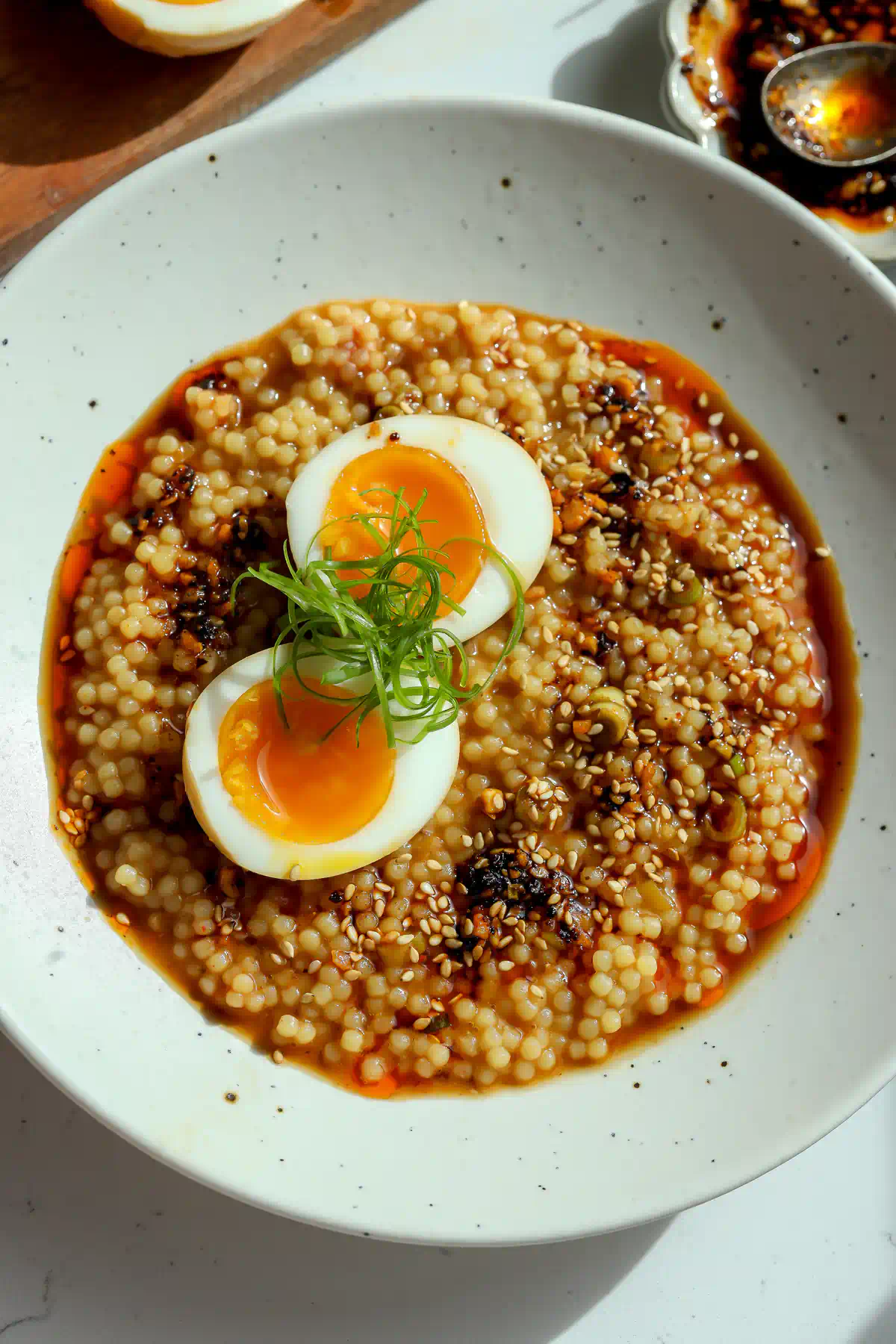
Serve this pastina right away. The pasta will continue to absorb the broth as it cools, causing the sauce to thicken ruining that slight soupiness that you want. Ladle it into wide, shallow bowls and place the halved jammy egg on top. Garnish with chilled green onion curls and a drizzle of salsa macha.
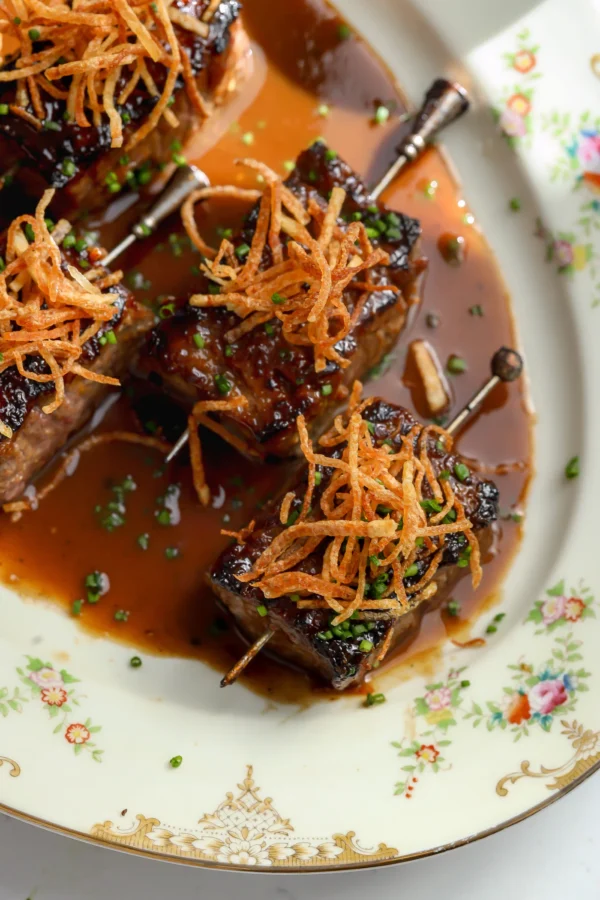
Not sure what to serve with your ramen pastina? You’re in the right place. Start with a London Mule, The ginger and lime complement the savory bone broth. Obviously you need to top it with a ramen egg and salsa macha. If you are looking for some extra protein, misoyaki steak frites skewers use a savory-sweet glaze that ties perfectly with the ramens flavor profile. End the meal with a warm cherry jubilee over cold ice cream


Want to save this recipe to your collection?
Frequently Asked Questions
You can use a simple 6-minute soft-boiled egg if you are in a rush. You will miss out on the deep soy-mirin flavor from the marinade, but the jammy, runny yolk will still create that rich, buttery sauce once it breaks into the hot pasta.
It is a creamy pasta dish, not a soup. The pasta risottata method forces the acini di pepe to soak up the broth and release its starches, creating a thick, creamy sauce that coats every grain.
Gochujang adds a mild, fermented heat with a touch of sweetness. It is much more complex and less sharp than a standard hot sauce. If you want a very mild bowl, you can cut the amount in half without losing the savory depth of the dish.
Orzo or stelline are the best swaps because they have a similar size and surface area. These tiny shapes are essential for catching the miso sauce and creating a smooth texture. Larger pasta shapes like ditalini will work in a pinch but will not feel as decadent.
White miso is best because they are mild and slightly sweet, but yellow is similar and can be swapped. Red miso is fermented longer and has a very punchy, salty flavor that might overpower the delicate pastina. If you use red miso, start with just one tablespoon and adjust to your preference.
Any Miso Ramen Pastina leftovers will thicken significantly as they cool. To bring it back to life, add a splash of broth or water before reheating. Stir it well to emulsify the starches again so the sauce becomes creamy instead of clumpy.
Nadia’s Tips
- Stir, stir, stir: Don’t skip the stir frequently rule on this one. Consistent, steady stirring as you add the broth creates just the friction needed to get the starch out of the acini di pepe. This released starch is what thickens the cooking liquid into a creamy sauce without the need for heavy cream.
- Pull the pasta early: Small pasta shapes like acini di pepe have very little mass and transition from perfect to overcooked in seconds. Turn off the burner when the grains are tender but still have a firm bite (al dente). The heat in the thick sauce will finish the cooking process during the final minute as you incorporate the butter and add the toppings.
- Check the all-onda consistency: The target texture for this technique is called all-onda, which means on the wave. When you tilt the pan, the pastina should slide together as a slow-motion, fluid mass. If the pasta stays in a dry clump, it needs more broth. If it splashes or pools, it needs another minute to reduce.
Equipment
- large pan
- small bowl
Ingredients
Pastina
- 4.5 to 5 cups beef bone broth, or broth of choice
- 4 green onions, divided
- 1 tbsp neutral oil
- 1 shallot, brunoise
- 1/2 tsp ginger, freshly grated
- 1 garlic clove, grated
- 1 cup acini di pepe
- 2.5 tbsp white miso paste
- 1 tbsp gochujang
- 1/2 tsp bonito flakes, optional
- 1 tsp mirin
- 1 tbsp unsalted butter
- 4 ramen eggs, soft boiled
- salsa macha, to taste
Instructions
- Warm Your Broth: Begin to warm your beef bone broth in a pot on medium heat and let it come to a low simmer.4.5 to 5 cups beef bone broth
- Curly Green Onions: Slice the green parts of the onions into thin strips and place them in a bowl of cold water to crisp and curl. Slice the light and white parts and save for the next step.4 green onions
- Sauté: Heat a pan over low heat for 2 minutes. Add the oil, shallot, and ginger and cook on low for 2 minutes. Add the grated garlic and the chopped white and light green onions to the pan and cook on low for 2 more minutes.1 tbsp neutral oil, 1 shallot, 1/2 tsp ginger, 1 garlic clove, 4 green onions
- Toast Pastina: Add the acini di pepe and toast over medium-low heat for 3 minutes. Stir in the miso paste, gochujang, bonito flakes, and mirin until the pasta is evenly coated.1 cup acini di pepe, 2.5 tbsp white miso paste, 1 tbsp gochujang, 1/2 tsp bonito flakes, 1 tsp mirin
- Cook Risotto-Style: Pour in 1 cup of the hot broth, maintaining a gentle simmer and stirring frequently until the liquid is absorbed. Continue adding broth 1 cup at a time, stirring often, until the pastina is al dente, about 11 to 14 minutes.4.5 to 5 cups beef bone broth
- Finish: Remove from heat and stir in the butter until melted.1 tbsp unsalted butter
- Eggs and Serving: Drain the curled green onions. Divide the hot pastina into bowls. Top each with 1 ramen egg, the curled green onions, and a drizzle of salsa macha.4 ramen eggs, salsa macha
Kitchen Cam
Nutrition
Nutrition information is automatically calculated, so should only be used as an approximation.