
This post may contain affiliate links. Please read our disclosure policy.
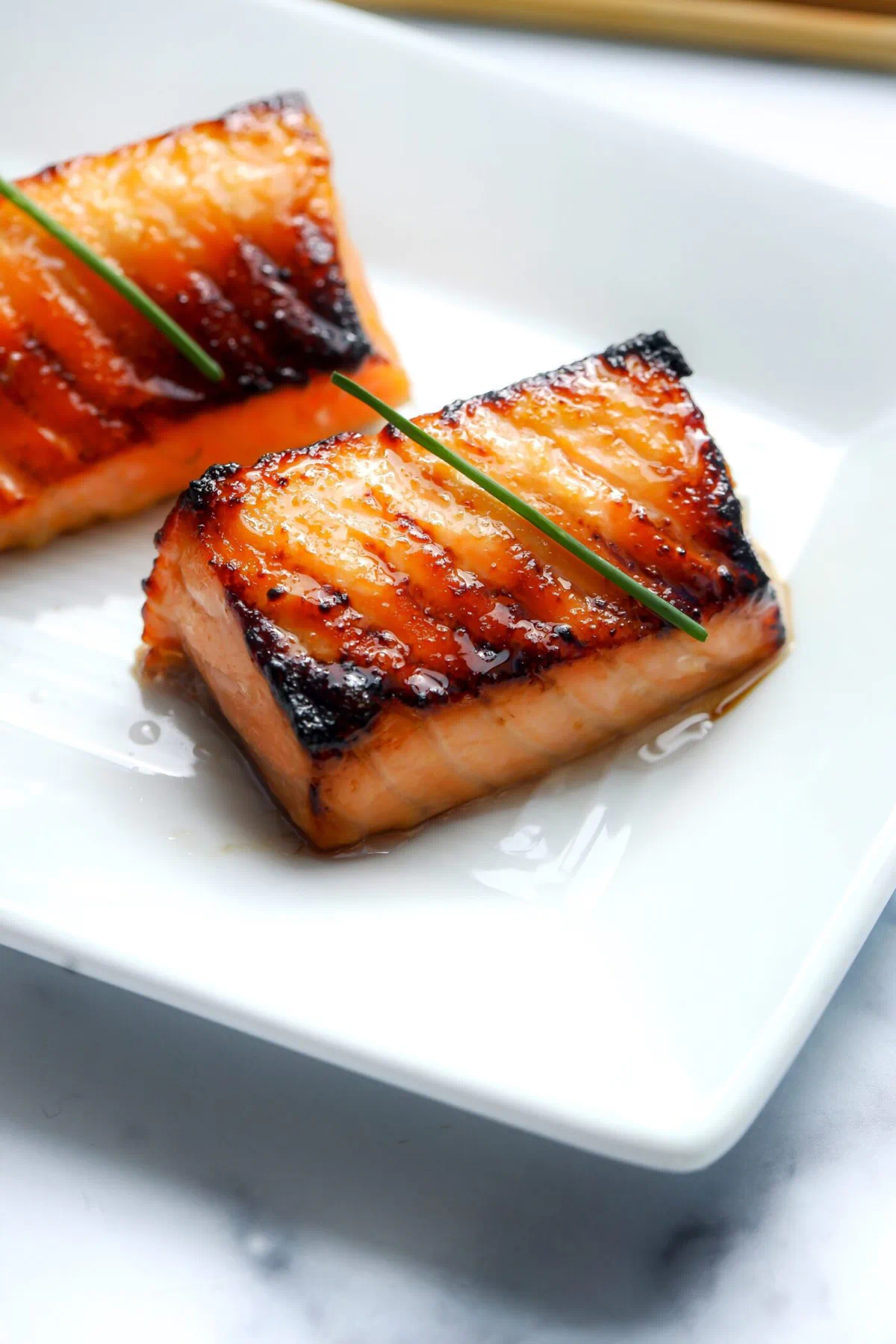
Miso Salmon is one of my favorite ways to use this marinade. Years ago I had Nobu’s miso black cod for the first time, and that was the end of my life as I knew it. My miso black cod recipe came out of that obsession, but I wanted to adapt it for salmon. You do have to marinate it overnight, but the recipe comes together super quickly other than that. When it’s time to broil the salmon, the sugars from the marinade caramelize into a deep amber crust with charred edges while the inside stays so tender.
My husband Bryan does not like cooked salmon. He was obsessed with this one. Take that as your sign.
Table of Contents
What Makes White Miso Marinade So Good?
This marinade does more than season the salmon. It cures it. White miso is full of enzymes from the koji it’s fermented with, and over a couple of days in the fridge those enzymes lightly cure the fish all the way through. When the broiler hits the sugar in the marinade, it caramelizes on the outside and gives you a crisp, golden crust. Underneath, the salmon is tender, with the seasoning woven in all the way through instead of sitting on the surface. The whole technique is called saikyo yaki, and people have been doing it for over a thousand years.
What is Saikyo Yaki?
It started in Kyoto, the capital of Japan for nearly a thousand years. The name saikyo means “Western Capital.” Because the city sits inland, fresh fish had to travel from the coast to get there, and miso was how they kept it from spoiling. The long cure made it taste better too.
The traditional marinade is three ingredients: white miso, mirin, and sake. That is exactly what is in this recipe. Salmon is one of the classic fish for saikyo yaki, alongside black cod, Spanish mackerel, and sea bream.
Chef Nobu Matsuhisa put this marinade on the world map when he opened Matsuhisa in Beverly Hills in 1987, with a black cod version that’s still, according to a recent interview with Nobu himself, the most popular thing on his menu today.
Cooking Methods for Miso Salmon
The broiler is the easiest method. The intense heat broils the salmon from above while the hot baking sheet cooks from the bottom, so both sides finish at the same time and no flip is needed. The grill and the pan only cook from one side at a time, so they need a flip. All of these methods give you tender fish with a great crust, but broiling is my favorite.
Broiler
This is how I make it. The broiler gives you the closest thing to a restaurant flame at home: intense radiant heat from above, no flipping. Preheat to 550°F (288°C) and set the salmon on a foil-lined baking sheet on the middle rack. Broil about 7 minutes for an average fillet. Adjust for thickness if yours runs thinner or thicker, and watch closely because the sugar in the marinade colors fast, the difference between deep amber and burnt is about 30 seconds. Pull at 135°F (57°C) for medium-rare.
Grill
Salmon and grill grates don’t always get along. The flesh sticks easily and can get stuck. To stop this from happening, make sure your grill is clean and oil the grates well before the fish goes on. Keep the heat at medium (around 375 to 400°F / 190 to 205°C) so the sugar in the miso doesn’t burn before the inside is done. Place the salmon on the grates and leave it alone for the first few minutes. When the bottom is ready to flip, it will release on its own. If you try to lift it and it resists, give it another 30 to 60 seconds and try again. Use a wide metal spatula, slide it fully under the salmon in one smooth motion, and flip. The second side only needs another 2 to 3 minutes. Pull at 135°F (57°C) for medium-rare.
If you want an easier flip on the grill, my miso salmon skewers recipe uses cubed salmon on sticks, which holds together when you turn them.
Pan Sear
A cast iron or stainless steel skillet over medium-high heat will give you a crust similar to the broiler without leaving the kitchen. Heat the pan well before the salmon goes in. Add a thin layer of neutral oil like avocado or grapeseed, and place the salmon down without touching it. Same rule as the grill: when the bottom is set, the salmon will lift cleanly. Flip it once with a wide spatula. The other side only needs another 1 to 2 minutes. Pull at 135°F (57°C) for medium-rare.
Nadia’s Tips
- Use a non-reactive dish. Glass or ceramic only. Metal reacts with the miso and pulls off-flavors into the fish.
- Coat both sides well. Pour a little of the cooled marinade into the bottom of the dish first, lay the salmon skin side down, pour the rest over the top, and move the pieces around so every surface is covered.
- Flip skin side up before refrigerating. This keeps the cut side of the salmon in direct contact with the marinade where most of the curing happens.
- Cover tightly with plastic wrap. Press the wrap right down against the surface so no air gets in.
- Marinate 24 hours minimum, 2 to 3 days is the sweet spot. Less than 24 and the cure doesn’t reach the center. Past 3 days and the salt starts to push the texture into salami territory.
How to Tell When Miso Salmon is Done
A thermometer is the most accurate way to check, and I would recommend an instant-read one. Pull at 135°F (57°C) for medium-rare or 145°F (63°C) for well done. But salmon also gives you a few clear visual and tactile cues.
Watch the side of the fillet. As salmon cooks, the flesh turns from glossy and translucent to opaque, starting at the bottom and climbing up the side like a loading bar. When the opaque band is most of the way up with just a thin translucent strip left in the middle, that’s medium-rare.
Use the flake test. Insert a fork into the thickest part at a slight angle and twist gently. It should separate into clean, moist layers with a little resistance. If it fights you, it needs more time. If it falls apart dry, it’s overcooked.
Press it. Gently press the thickest part with your finger. It should feel firm but yield slightly. If it’s still soft and squishy underneath, it needs more heat.
The dark miso glaze on top makes color a less reliable cue here, so trust the side, the flake, or the press over what the top looks like. And if you’re not sure, pull it a minute early. You can always put salmon back in the oven. You can’t un-do it.
Make-Ahead and Storage
This recipe has to be make-ahead for the marinade to work best. The marinade can be cooked, cooled, and stored covered in the fridge up to 2 days before the salmon goes in. The salmon itself marinates for at least 24 hours and up to 3 days. Past 3 days, the cure starts to push the texture past tender and into something denser and saltier.
Freezing raw in marinade. Once the salmon has cured in the fridge for at least 24 hours, you can move the whole dish to the freezer with the salmon still in the marinade. It will keep for up to 2 months. The marinade slows ice crystal damage and keeps doing its work as the fish thaws. Move it to the fridge overnight to thaw before broiling. If your salmon was previously frozen at the store, I would skip this step because each freeze-thaw cycle damages the texture.
Storing leftovers. Cooked salmon keeps in an airtight container in the fridge for 3 to 4 days, according to USDA guidelines. I don’t recommend freezing cooked salmon. The texture turns rubbery on the way back. To reheat, use a low oven (275°F / 135°C) or a hot pan. The microwave will dry the salmon out and turn the glaze gummy.
How to tell if it has gone bad. Fresh salmon should smell mild and clean, like ocean air. If it smells sour, ammonia-like, or sharply fishy, throw it out, those are the spoilage compounds the FDA warns about. Other signs: a dull or gray color, a slimy or sticky surface, a white filmy residue, or flesh that feels mushy and does not spring back when pressed. When in doubt, throw it out. Cooking will not neutralize spoilage.
How to Serve
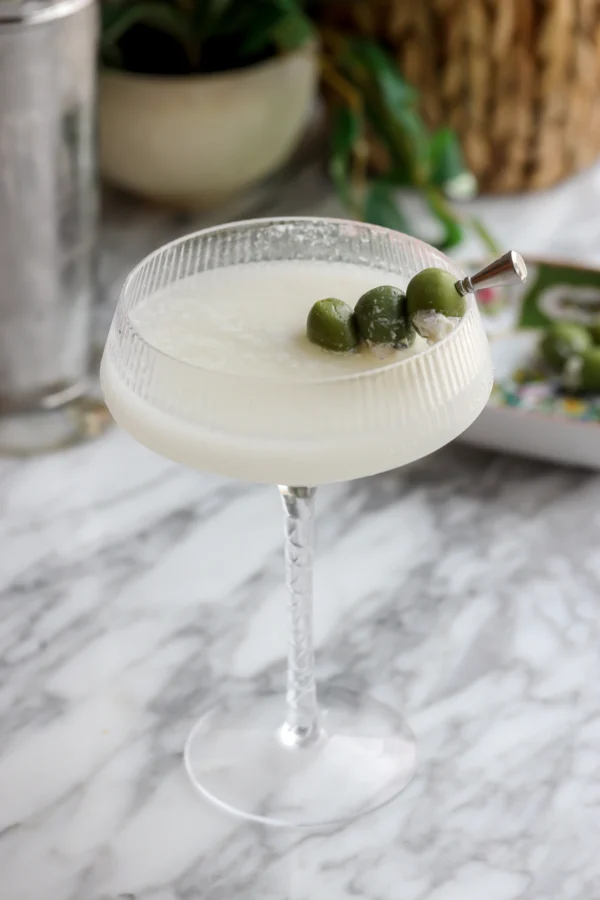
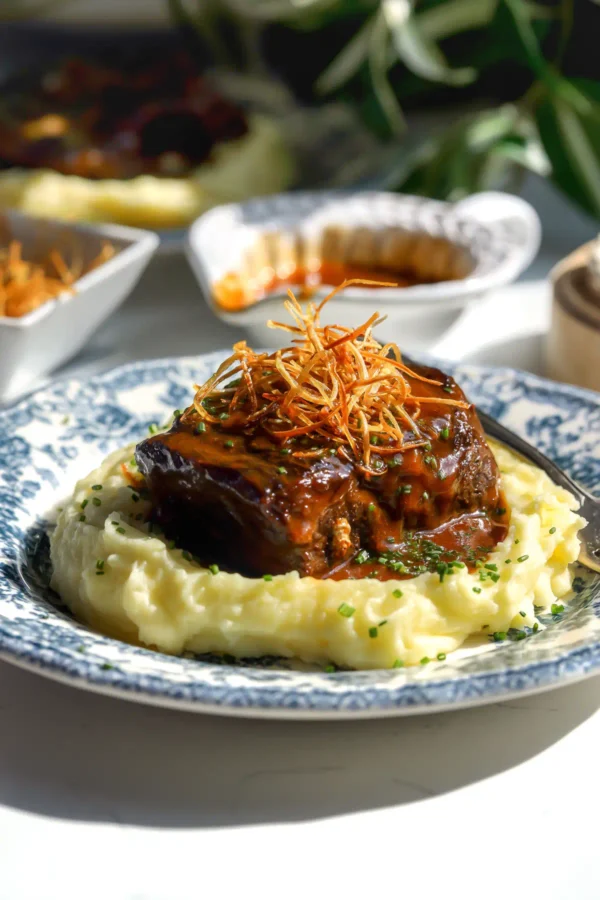
Start with a Cucumbertini, a bright cocktail that cuts through the rich miso glaze. For an appetizer, Chawanmushi (a savory Japanese steamed egg custard) keeps the theme going without competing with the salmon. The salmon goes over rice, short-grain catches the glaze that drips off the fish. Alongside, a Cucumber Fennel Salad keeps things light and crisp. Finish with Amaretto Peaches, the caramelized warmth echoes the glaze on the salmon.


Want to save these recipes to your collection?
Save it to your account.
Or email it to yourself!
Frequently Asked Questions
Yes, with a small adjustment. Red miso is fermented for much longer than white, so it is saltier and more intense. Start with a little less than the recipe calls for, taste the cooled marinade before the salmon goes in, and add more if needed. The finished glaze will be darker and stronger than the white miso version.
For the marinade I use Mellow White Miso by Cold Mountain and Eden Mirin. With the sake, just pick one that you would actually drink. The salmon, I use skin-on fillets.
Yes, but I would skip the broiler. A bottom broiler heats the underside of the salmon, not the miso glaze on top. So you wouldn’t get that amazing crust. Use the grill or pan-sear methods in the Cooking Methods section above instead. Both give you that seared crust.
Equipment
- pot
- non-reactive dish
- baking sheet
- aluminum foil
- broiler
- Instant-Read Thermometer, highly recommended
Ingredients
- ¼ cup mirin
- ¼ cup sake
- ⅓ cup cane sugar
- ⅓ cup white miso paste
- 2 lb salmon, deboned, cut into filets
Instructions
- Make the Marinade: In a pot, boil the mirin and sake for 3 minutes. Add the cane sugar and miso and cook a few more minutes without boiling. Cool completely.
- Marinate the Salmon: Pour a little of the cooled marinade into the bottom of a non-reactive dish. Place the salmon skin side down and pour the rest of the marinade over the top. Move the pieces around so every side is fully coated, then flip them skin side up. Cover tightly with plastic wrap and refrigerate at least 24 hours, up to 2-3 days.
- Prepare the Fish: Let your salmon get to room temperature for about 15-20 minutes.
- Broil: Preheat the broiler for about 5-10 minutes on high (550°F). Line a baking sheet with aluminum foil and place the marinated salmon on top with space in between. Broil about 5 inches away from the heating element for about 7 minutes (adjust for thickness), until the salmon is opaque and flakes easily. Check the thickest part with an instant-read thermometer: 135°F (57°C) for medium-rare or 145°F (63°C) for well done. If the top is getting too dark, you can move it down to finish cooking.
- Optional: Add the remaining marinade to a saucepan and boil for at least 5 minutes, stirring frequently. Brush over the cooked salmon before serving.
Kitchen Cam
Nutrition
Nutrition information is automatically calculated, so should only be used as an approximation.


What type of miso? I’ve seen red and others
Hi! I linked the one I use 🙂 It is Mellow White Miso paste by Cold mountain
I just made this and loved it! The salmon is caramelized on the outside and falls apart into perfectly smooth flakes.
hello, what temp did you broil your salmon at? thanks
Hey Bob,
So when you broil, the temp will be 550°, but make sure you are using the broil function on your stove and not actually setting the temperature to that. Place it in the middle rack and watch it super closely. It should take about 7 minutes but everyone’s oven is different so keeping an eye out to make sure it doesn’t burn is so important. Hope that helps!
Hi! Two questions – what did you use to wrap the salmon and did you do it on a baking sheet? For the broiling, did you have your broiler on high or low? I only have settings for broil lol. Thanks
Hey Kay, I just used plastic wrap for marinading. For the broiling I did it on high in the middle rack. I hope that helps! Let me know how it goes ☺️
I’m going to try this. What type of sake?
Hey Stephanie,
You can use any sake for this. If you like the taste of it to drink, it will be great to use as the marinade. Let me know how you like it!
Hi, can I freeze batches of the Miso Salmon Nobu copycat marinade? Many thanks for any assistance, Susan
Hi Susan, In theory all of the ingredients should be totally fine to freeze in batches and use later. I have never tried it so I can’t say for sure that it’s good, but I really don’t see why it wouldn’t be. If you do try it please let me know how it turns out!
Hi, I don’t have any sake at home. Is there a substitute? Or should I just wait to start the marinade until I’ve been able to get to a shop?
Hey Janice, I’ve honestly never tested anything as a sub so the miso. I’d would just wait till you go to the shop and do it right. This is a really great recipe and you will be glad you did!
Hi! Are you broiling without discarding any of the marinade? Thanks in advance 🙂
Hey Danielle, You actually add them to a baking sheet first. I didn’t realize I hadn’t added that on the instructions! It’s updated and I added a video so you can watch the whole process. Thank you for pointing that out!
this is delicious! I make it with salmon and often don’t have time to marinate it long and it turns out amazing.
Thanks for the review Nat! I’m so glad that you like it!
Is it okay to use red miso ?
Hi Olga,
Yes, red miso would work great.
Hi,
I would love to try this but I have a question about the oven. I have an old oven with broiler on the bottom. I will set oven to broiler but do I put the pan under the broiler or just in the oven middle rack?
Hey Rebecca,
This is a hard one because I’ve never cooked with an oven that has the broiler on the bottom. The temp needs to get high for the miso glaze to caramelize and I’m not sure how that works with the broiler on the bottom. I would just play with it. Make sure to preheat the oven with the broiler and start by trying it on the middle rack. Make sure to use a thermometer since this is kind of an experiment lol. Move it to the bottom and cook longer if it looks like it’s not searing right. It probably won’t have the dark corners without the fire exposed on top, but as long as it gets hot enough to caramelize the taste should still be good. I’m sorry I don’t have a better answer for you. Let me know if you try it and it works!
Rebecca, other similar recipes call for baking salmon in a very hot oven (450-475), for a similar amount of time, which I have done and found to be very good. You won’t get the same delicious browned glazey top, but it’s still going to be very good. Nadia’s recipe for the marinade and her key note for marinating, as she recommends, a couple of days makes this the best recipe I’ve ever made. Hope this helps.
Sensational! My new fav salmon recipe!
Hey Trish, I’m so glad you liked it!
Thank you for this wonderful recipe! Could you recommend a garnish and a side dish? I have not been to Nobu and I’m just wondering what might go best? Thank you so much!
Hey Sharon,
Steamed rice is always a classic and pairs great. I like to keep it simple and have sugar snap peas or sautéed bok choy. Miso soup or a simple salad with a ginger dressing are great starters.