
This post may contain affiliate links. Please read our disclosure policy.
Miso Black Cod (Nobu-Style) – one of the most famous dishes at Nobu, made at home with four ingredients.
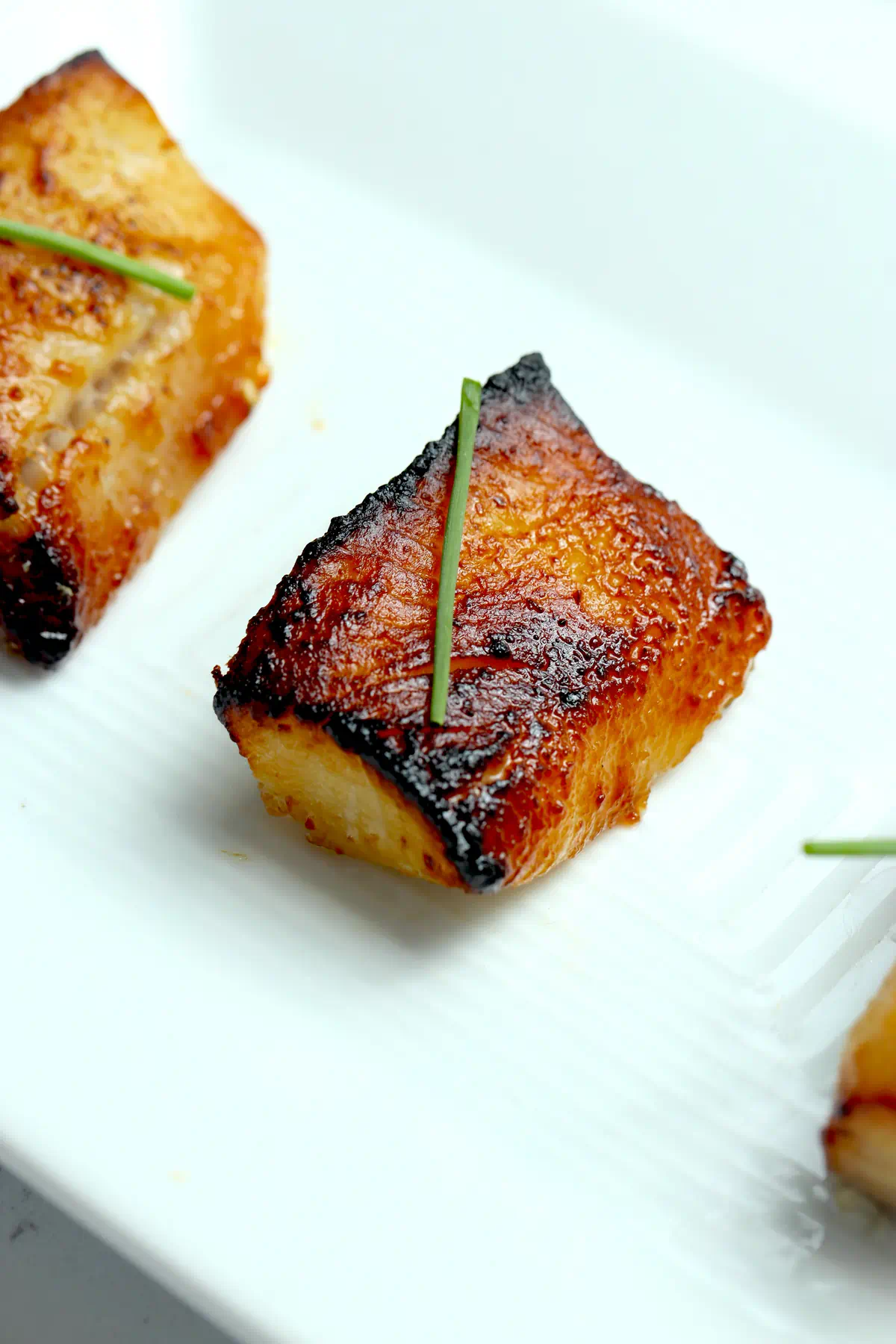
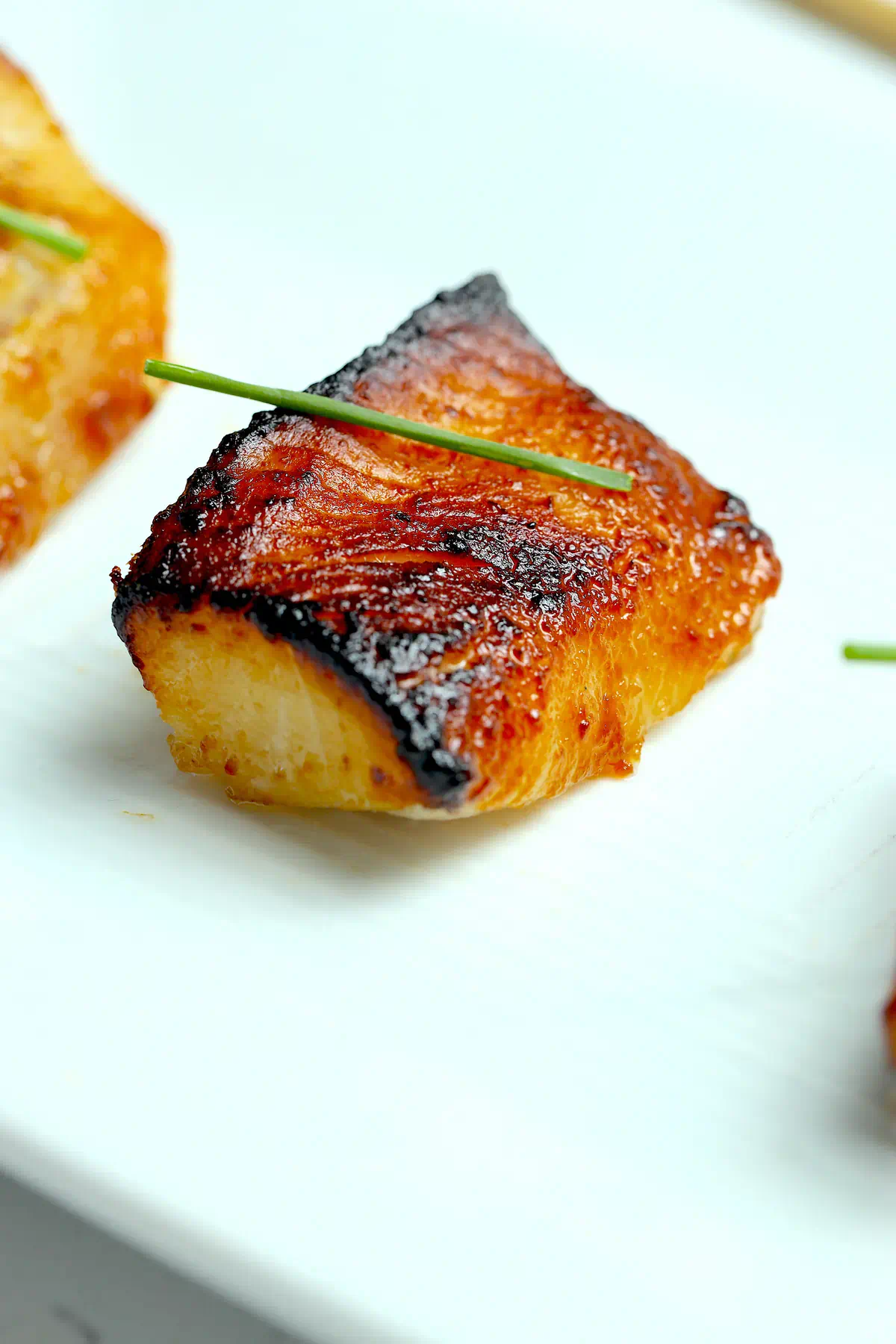
The miso marinade cures the cod for a day or two, then the broiler caramelizes the top into a sweet crust with charred edges while the inside stays soft and flaky. And it’s so easy. You make the marinade, the fridge does the rest, and it broils in about seven minutes.
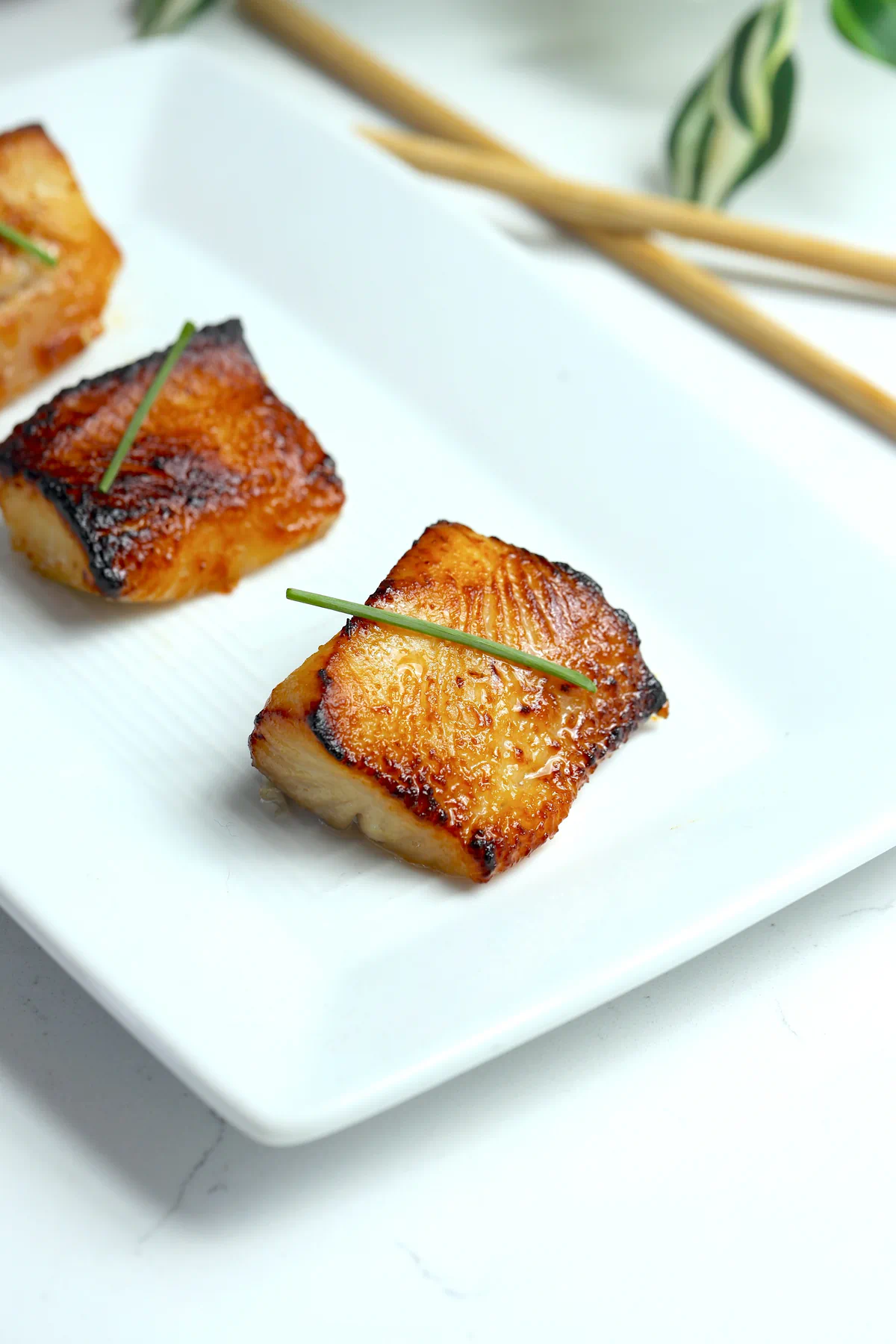
Table of Contents
Nobu’s Famous Dish
Nobu Matsuhisa calls this his most famous dish. He created it at his first restaurant, Matsuhisa, in Beverly Hills in 1987, and once Nobu opened in New York it spread everywhere. The dish is his, but the method behind it is old. Curing fish in sweet miso is a centuries-old Japanese technique called saikyo yaki, a way to keep fish before refrigeration. Nobu built his version on it, and it became the one he’s known for.
How the Miso Marinade Works
The marinade does two things. First, it tenderizes. White miso is full of enzymes from the koji it’s fermented with, and over a day or two in the fridge they break down the proteins in the fish. The flesh turns silky and soft all the way through, seasoned from the inside instead of just on the surface. Second, it caramelizes. Miso and sugar both brown fast under high heat, so the second the broiler hits the marinade on the fish, the top blisters into a dark, sweet crust while the center stays tender. Four ingredients and a few days in the fridge. That’s the whole dish, and there’s a reason it spread the way it did.
Why Black Cod Is the Best Fish for Miso
Black cod and regular cod aren’t the same fish. It’s one of the fattiest white fish there is, and that fat is why it’s the one to use with this miso marinade. Under the broiler the fat melts through the flesh and keeps it soft and buttery, where a leaner fish would dry out and turn tough. The flavor is light and mild, not fishy at all, so the salty-sweet miso is what comes through.
Where to Buy Black Cod
You’ll find black cod at a good fish counter, a Japanese or Asian market, or in the freezer case, where a lot of it sells frozen and thaws fine. You can also order it online and have it shipped frozen. Ask for skin-on fillets with the pin bones removed. It costs more than salmon, so if your store doesn’t keep it stocked, call ahead.
What Other Seafood Works?
Black cod is the best fish for this, but the marinade works on plenty of other fish.
- Chilean sea bass: the closest to black cod, just as fatty, with the same big flakes.
- Salmon: the most available and the most forgiving. It’s softer, so keep the marinade closer to a day or it goes past tender. My miso salmon is the broiled fillet; miso salmon skewers are the version for the grill.
- Spanish mackerel (sawara): traditional, takes the glaze well.
- Yellowtail: great too, best in winter when it’s fatty.
Why the Broiler Is Best
The broiler chars and caramelizes the miso on top while the fish cooks through underneath, no flipping. Preheat the broil on high (about 550°F)and put the cod on a foil-lined sheet on the middle rack. It takes about seven minutes, but watch it the whole time. The sugar in the marinade goes from caramelized to burnt in seconds. Pull it when the top is a dark golden color and the fish flakes.
How to Tell When It’s Done
The best way to tell is an instant-read thermometer in the thickest part. I pull mine at 135°F, where it’s moist and just flaking. At 145°F it’s fully cooked and a little firmer. Black cod is fatty and forgiving, so it stays moist across that whole range.
No thermometer? Go by the flake. Cooked black cod is opaque all the way through and breaks into big, moist pieces with a light nudge. If the center still looks translucent, it needs more time.
Make-Ahead and Storage
Make Ahead: The marinade can be made a couple of days ahead and kept covered in the fridge. The cod itself needs at least 24 hours in it and is better at two to three days, so this is a plan-ahead dish either way.
Freezer: Once the cod has cured for a day, you can freeze it raw in the marinade for up to two to three months. Thaw it in the fridge before broiling. Skip this if your cod was sold frozen and thawed once already, since refreezing it raw hurts the texture.
Leftovers: Cooked black cod keeps in an airtight container in the fridge for three to four days, per USDA guidelines. Reheat it in a low oven or a hot pan. Don’t microwave it, it dries the fish out and turns the glaze gummy.
Is It Still Good? Fresh black cod smells clean and mild and the flesh is firm. Throw it out if it smells sour or like ammonia, feels slimy, or has gone dull and soft.
How to Serve
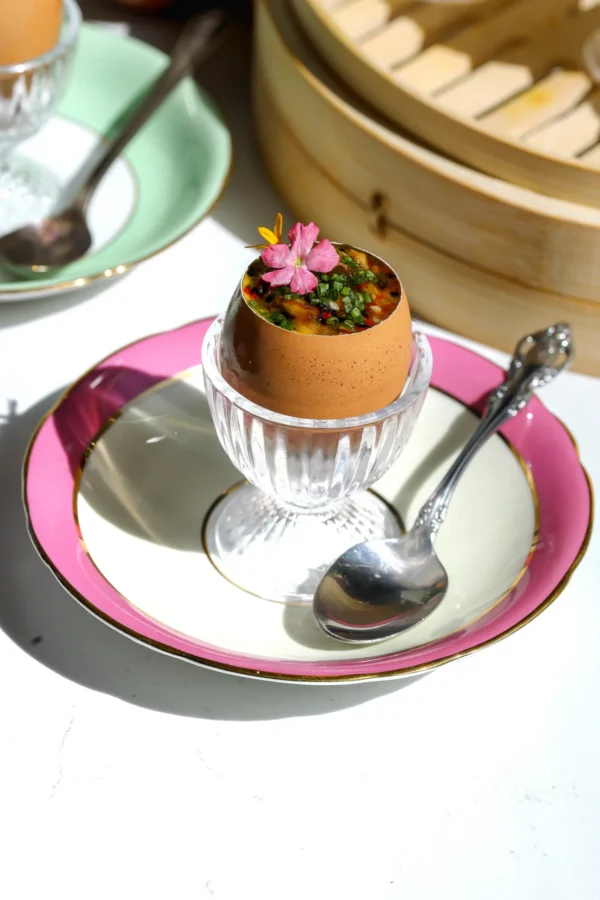
Start with a Cucumbertini, bright and cold. For an appetizer that stays on theme, Chawanmushi, a soft Japanese steamed egg custard. Serve the cod over white rice, perfect to pick up the extra sauce. A Cucumber Fennel Salad alongside it for something crisp. Finish with Amaretto Peaches, warm and caramelized.



Want to save this recipe to your collection?
Frequently Asked Questions
No. Black cod is sablefish, a different fish entirely, sometimes sold as butterfish. It got the name because the cooked flesh flakes like cod, but it’s far fattier, and that fat is what gives it the soft, buttery texture. Regular cod is lean and would dry out under the broiler before the glaze sets.
White miso, also called shiro miso. It’s mild and a little sweet, which is what this glaze is built on. I use Mellow White Miso by Cold Mountain. Red miso can work in a pinch, but it’s saltier and stronger, so start with less and taste the cooled marinade before the cod goes in.
At least 24 hours, and two to three days is better. The longer it sits, the further the miso works into the fish. Past three days the texture starts to turn, so don’t push it much beyond that.
You can, but broiling is easier and it’s what I do. Black cod is delicate and the sugary glaze burns fast over open flame, so a few things matter on the grill. Keep the fish skin-on and start it skin-side down so the skin holds the fillet together. Oil clean grates well so it doesn’t stick. Keep the heat at medium so the glaze caramelizes instead of scorching, and move the fish as little as possible, pulling it the second it flakes. If you want to grill it instead, my miso salmon skewers are the easier route, since cubes on a stick hold together when you turn them.
Yes. Chilean sea bass is the closest swap and salmon is the easiest to find. See What Other Seafood Works above for the full list and how each one behaves.
Equipment
- pot
- non-reactive dish
- baking sheet
- aluminum foil
- broiler
- Instant-Read Thermometer, highly recommended
Ingredients
- ¼ cup mirin
- ¼ cup sake
- ⅓ cup cane sugar
- ⅓ cup white miso paste
- 2 lb black cod, sablefish, skin-on, pin bones removed, cut into fillets
Instructions
- Make the Marinade: In a pot, boil the mirin and sake for 3 minutes. Stir in the cane sugar and miso and cook a few minutes more, without letting it boil. Take it off the heat and cool completely.
- Marinate the Cod: Spoon a little of the cooled marinade across the bottom of a non-reactive dish. Lay the cod skin side down, pour the rest over the top, and turn the fillets so every side is coated. Leave them skin side up, cover tightly with plastic wrap, and refrigerate at least 24 hours, up to 2 to 3 days.
- Broil: Set the oven to broil on high (about 550°F/288°C). Line a baking sheet with foil and lay the cod on it skin side down. Broil on the middle rack about 7 minutes, adjusting for thickness, until the top caramelizes and the fish flakes. Check the thickest part with an instant-read thermometer: 135°F (57°C) for moist and just flaking, or 145°F (63°C) for fully cooked.
- Optional Sauce: Pour the leftover marinade into a saucepan and boil at least 5 minutes, stirring often, since it touched the raw fish. Spoon over the cod before serving.
Kitchen Cam
Nutrition
Nutrition information is automatically calculated, so should only be used as an approximation.


I just made this and it was so delicious!! Thank you for the great recipe!
Thanks Kallie! I’m so glad you liked it!
Which sake do you use for this recipe?
Hey Ann,
For this recipe I used sho chiku bai sake. You can use any brand though. I hope you like it!