This post may contain affiliate links. Please read our disclosure policy.
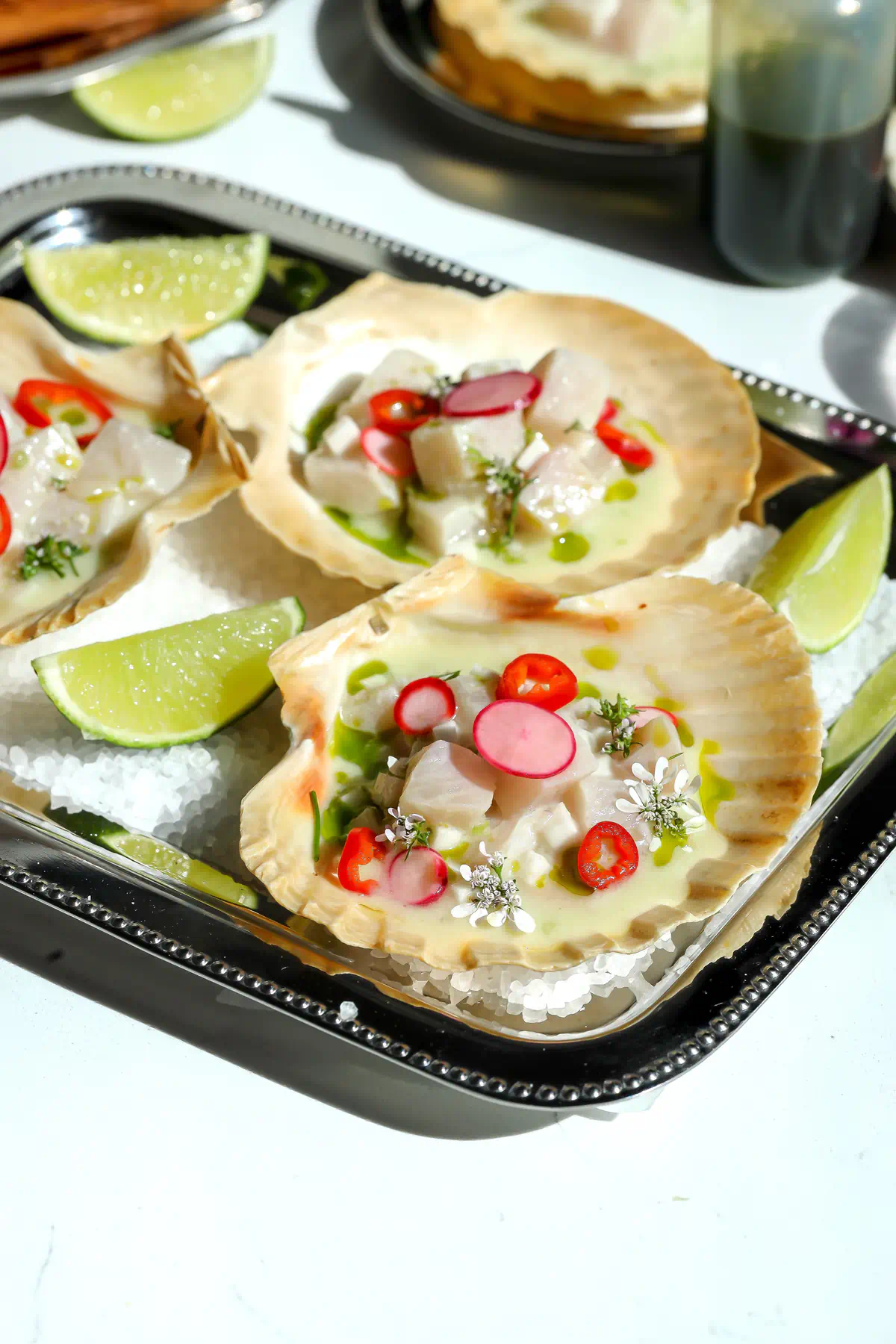
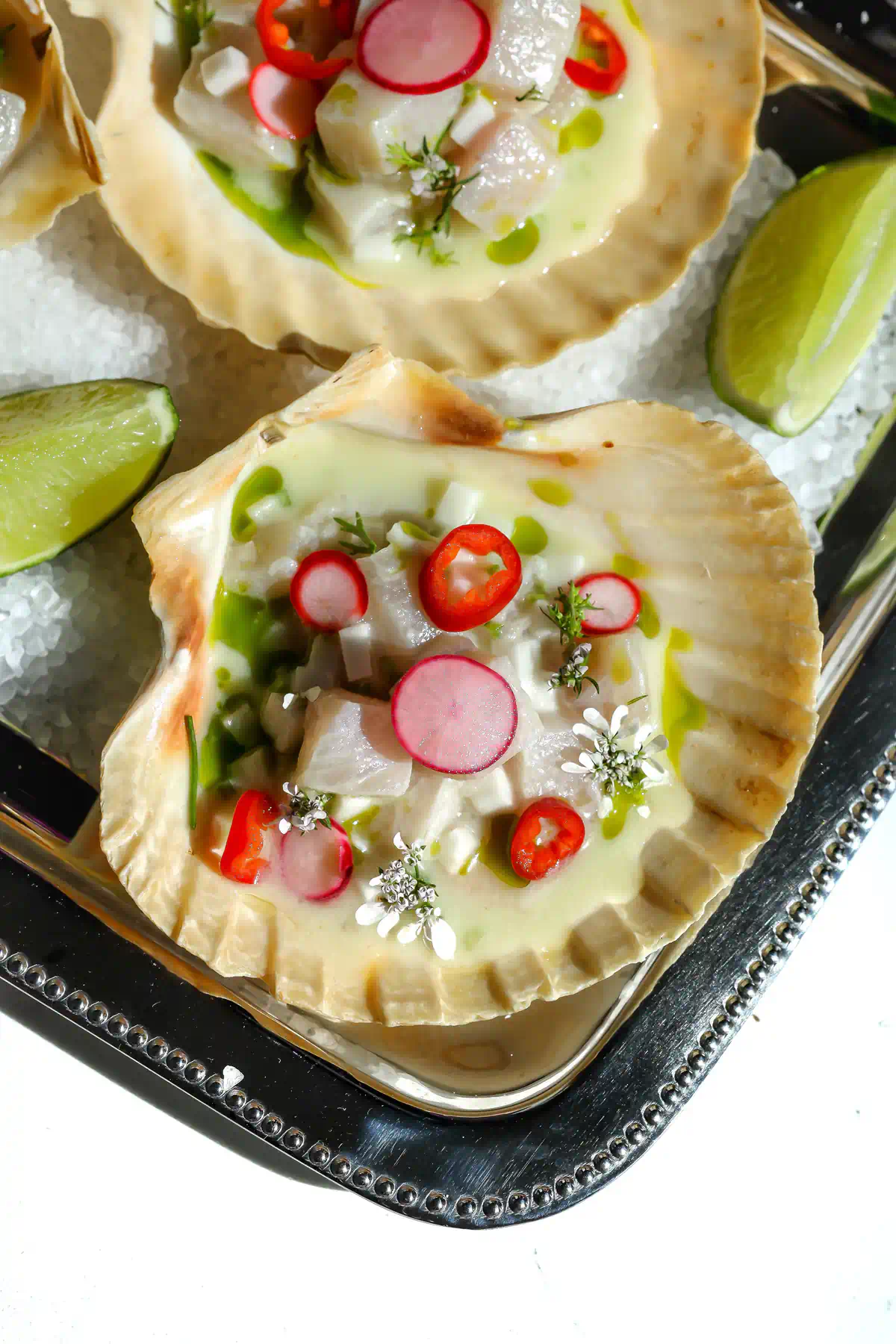
Ceviche season is here, and this yellowtail ceviche is the one to make. The same buttery yellowtail you’d order at a good sushi bar, cured in a coconut leche de tigre and finished with cilantro oil, pickled radish, and chunks of fresh coconut. Cold, citrusy, and the kind of thing you’d pay good money for at a restaurant, except this one comes together right in your kitchen.
Leche de tigre is the Peruvian citrus marinade that cures the fish, and this version uses coconut water and coconut milk, which bring in a light tropical sweetness that pairs beautifully with the hamachi. Everything in this dish just works, the lime, the coconut, the cilantro oil all play off each other and the result is something cool and silky that you’re going to want to eat standing at the counter before anyone else gets to it. Fair warning…this one’s going to be on repeat all summer.
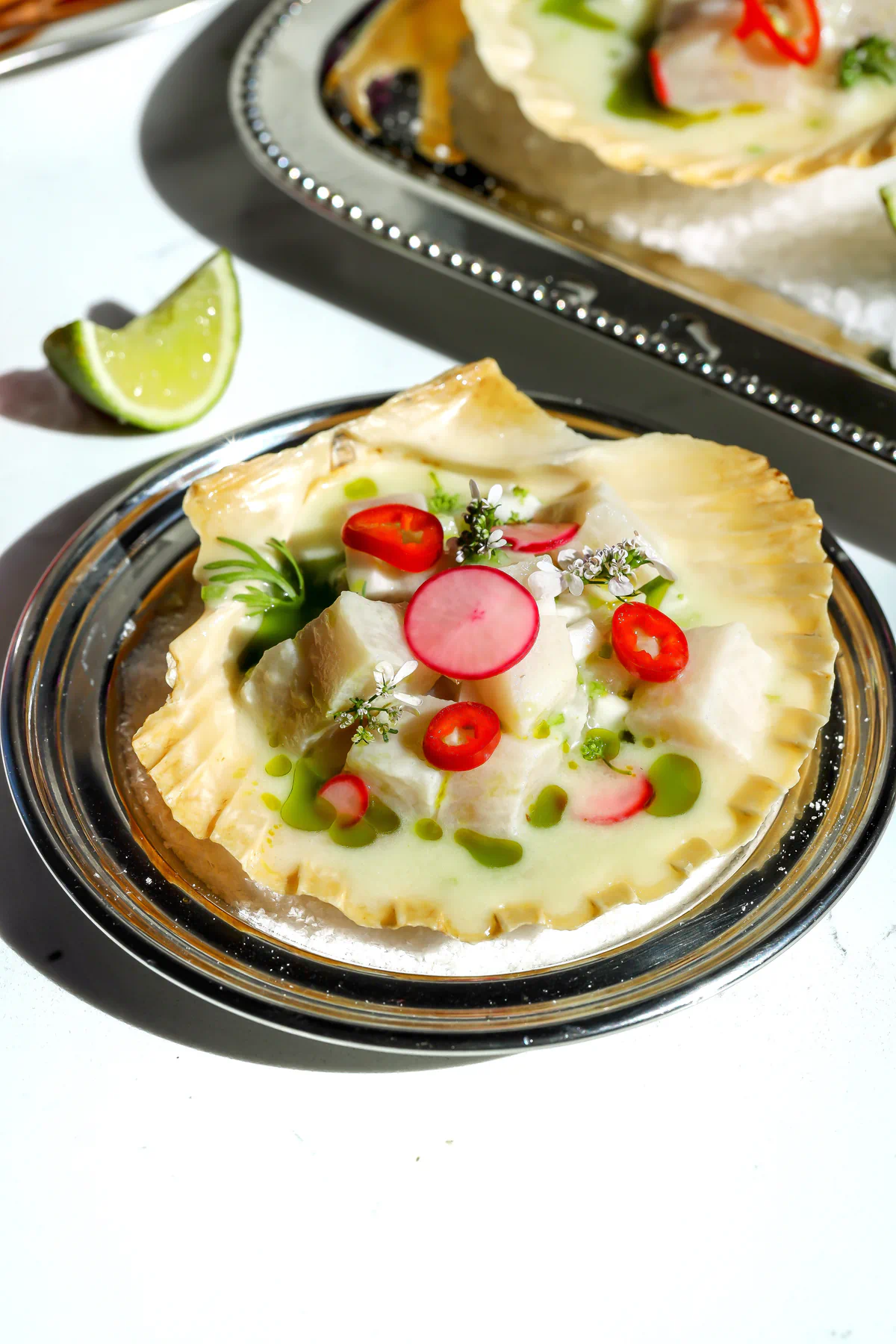
Table of Contents
Working with Yellowtail (Hamachi)
What Is Yellowtail?
Yellowtail is a mild, slightly sweet fish in the amberjack family that’s a staple at sushi bars, where it goes by its Japanese name, hamachi. If you’ve had it, you already know why it works so well raw. It’s silky, buttery, and one of the easiest raw fish to love, even if you’re normally on the fence about raw seafood.
One thing worth clearing up, yellowtail is not tuna. It gets confused with yellowfin tuna constantly, and you’ll even see it mislabeled as “yellowtail tuna” on menus and at stores. They’re completely different fish. Yellowfin tuna is lean, firm, and deep red. Yellowtail is fattier, more delicate, and pale pink. For ceviche, that richness is what you want, it keeps the fish tender and silky as the citrus cures it instead of turning it rubbery.
Most of the yellowtail you’ll find is farm-raised in Japan, which actually works in your favor here. Farmed hamachi is consistent in quality and flavor, and it’s handled specifically for raw preparation, so sourcing sushi-grade fish is easier than you might think.
How to Buy Sushi-Grade Fish
Before anything else, “sushi-grade” is not a regulated term. There’s no official grading system for fish the way there is for beef. It’s a label your fishmonger uses to tell you they consider the fish safe to eat raw, but what that actually means varies from store to store. That’s not meant to scare you off. It just means you want to buy from someone you trust, whether that’s a store or an online supplier.
In the Store
If you have a good fish counter near you, that’s the easiest route. Tell them you’re making ceviche and you need sushi-grade yellowtail. A few things to look for: the flesh should be pale pink with no dull or gray spots, it should smell clean and ocean-fresh (not fishy), and it should look moist without being slimy. If the fish is sitting behind the counter and you’re not confident in how it looks, ask when it came in. A good fishmonger won’t hesitate to tell you. If they do hesitate, buy somewhere else.
Online
If you don’t have a solid fish counter nearby, ordering online is a great option and how a lot of people source sushi-grade fish at home. My go-to suppliers are Catalina Offshore Products, Yama Seafood, and Riviera Seafood Club. All three ship overnight on ice, and it arrives vacuum-sealed and either fresh or flash-frozen.
If your fish arrives frozen, thaw it in the refrigerator overnight – not on the counter, not under warm water. You want it to come to temperature slowly so the texture stays intact. Once it’s thawed, plan to use it that day. Sushi-grade fish is best within 24 hours of thawing, and you really don’t want to push it past two days. If it smells off, looks discolored, or feels slimy once thawed, don’t use it.
What Is Leche de Tigre?
Leche de tigre translates to “tiger’s milk,” which sounds intense until you realize there’s no actual milk in it. The name comes from the cloudy, milky look the liquid gets when lime juice meets fish proteins. It’s the citrus marinade that cures the fish in ceviche, and in Peru it’s so beloved that it has its own national holiday on June 28. Originally it was just the leftover juice at the bottom of the ceviche bowl. Lime, fish juices, onion, chili, cilantro all mingled together. People loved it so much that restaurants started making it on its own, blending lime juice with fish stock, garlic, ginger, aji peppers, and cilantro stems, then straining it into something smooth and pourable. In Peru, it’s served as a shot before a meal and is considered the country’s go-to hangover cure.
Storage and Make-Ahead
Yellowtail ceviche is best eaten the day it’s made. The acid from the leche de tigre keeps working on the yellowtail even after it’s in the fridge, so leftovers will end up rubbery by the next day. If you want to get ahead, you can prep the leche de tigre and cut your vegetables in advance, but hold off on combining everything until you’re ready to serve. Store any leftovers in an airtight container in the fridge and eat within 24 hours.
How to Serve Yellowtail Ceviche
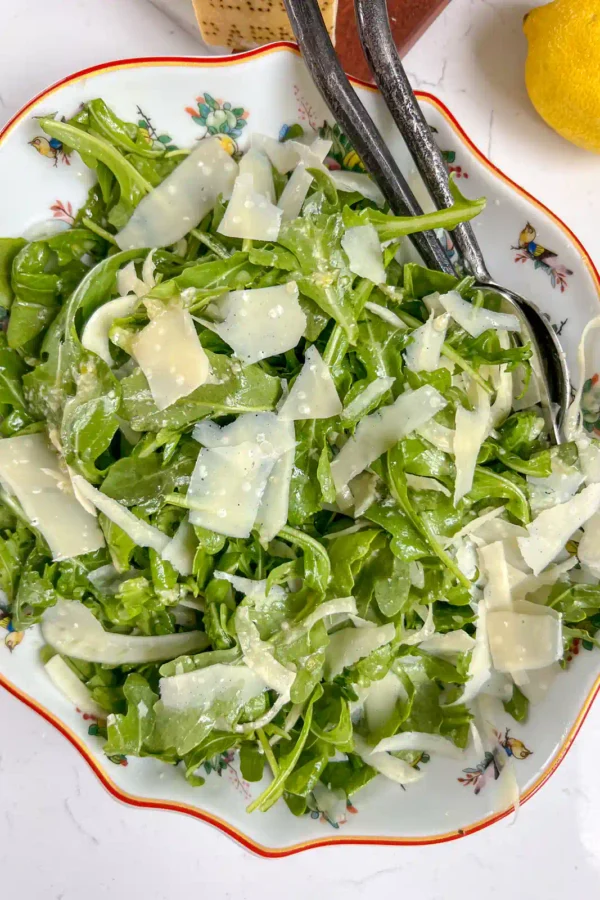
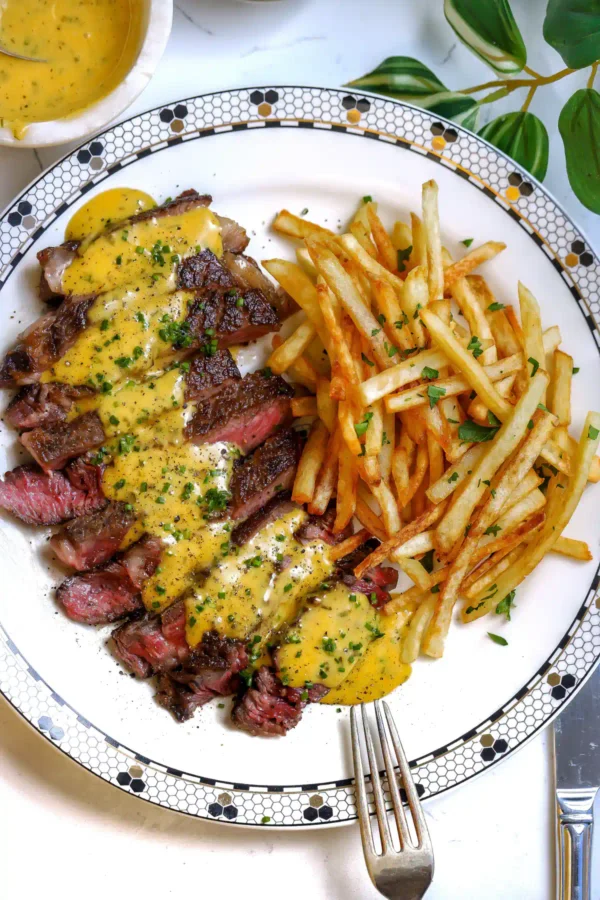
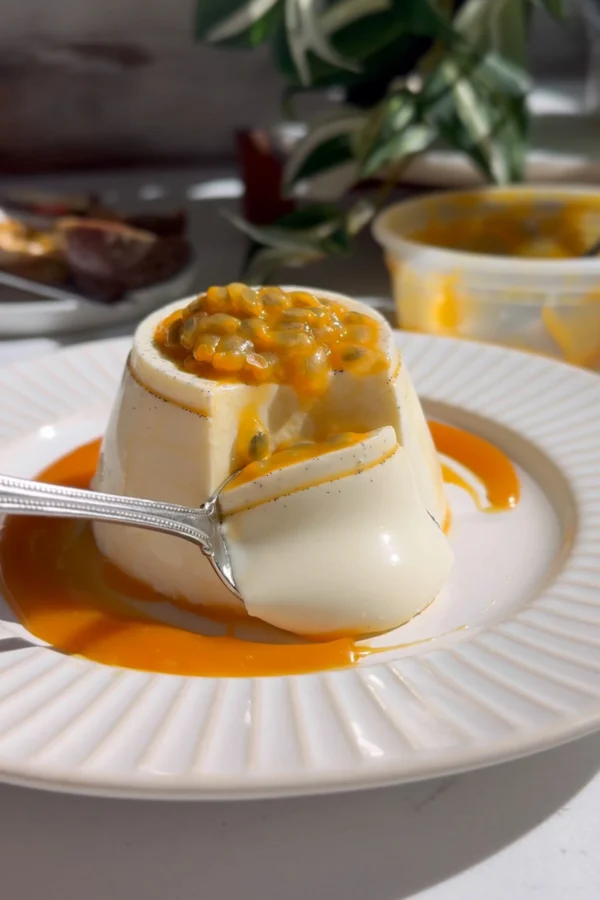
This yellowtail ceviche is best served cold, right after it’s done marinating. Scoop it into chilled bowls or serve it with tortilla chips for something more casual. For a full menu, a Cucumbertini is the right pairing. Bright, crisp, and great for the same kind of warm weather. An Arugula Fennel Salad works well alongside it, and if you want to go more filling for the main course, Steak Frites is a great contrast. For dessert, keep it light with Passion Fruit Panna Cotta.

Want to save this recipe to your collection?
Frequently Asked Questions
Yes. Hamachi is the Japanese name for young yellowtail, which is a fish in the amberjack family. It is not tuna, though it’s often confused with yellowfin tuna. They are completely different fish.
You can substitute any sushi-grade fish. Sea bass, snapper, and fluke all work well. Just make sure whatever you use is labeled sushi-grade and sourced from a trusted fishmonger or online supplier.
You can prep the leche de tigre and cut your ingredients in advance, but don’t combine everything until you’re ready to serve. The acid continues to cure the fish, so if it sits too long the texture will change.
Equipment
- blender
- fine mesh strainer
- coffee filter
- Sharp knife
- Mixing bowls
Ingredients
Pickled Radish
- 6 radishes, thinly sliced
- 3 tbsp rice vinegar
- 1 tsp sugar
- 1 tsp salt
Cilantro Oil
- 1 bunch cilantro, leaves and stems separated, stems reserved for ceviche
- 1/2 cup olive oil
Leche de Tigre
- 1 shallot, whole
- 1 oz yellowtail, reserved from fillet
- 1/2 inch ginger, peeled
- 1/4 bunch cilantro stems, reserved from cilantro oil
- 1 scallion
- 2/3 cup coconut water, from young coconut
- 1/4 cup coconut milk
- 2 lemon, juiced
- 1 tbsp shiro dashi, or white soy sauce
- 1 tsp agave syrup
- 2 tsp white miso
- 1-2 limes, juiced
- salt, to taste
Ceviche
- 15 oz hamachi, yellowtail, cut into 1/4 inch cubes
- 1 shallot, brunoised
- 1/4 bunch cilantro stems, finely chopped, reserved from cilantro oil
- coconut flesh from young coconut, cut into small pieces
Instructions
- Pickled Radish: Combine sliced radishes, rice vinegar, sugar, and salt in a small bowl. Toss to coat and set aside.6 radishes, 3 tbsp rice vinegar, 1 tsp sugar, 1 tsp salt
- Cilantro Oil: Blanch cilantro leaves in boiling water for 30 seconds. Transfer immediately to an ice bath. Squeeze out excess water. Add to a blender with olive oil and blend on high for 3 to 4 minutes. Strain through a coffee filter into a bowl and set aside.1 bunch cilantro, 1/2 cup olive oil
- Leche de Tigre: Char the whole shallot under a broiler or on a grill until the outside is blackened. Remove the skin. The inside should be soft and jammy.Add charred shallot to a blender with ginger, reserved yellowtail piece, shiro dashi, coconut milk, coconut water, scallion, lemon juice, agave, miso, and cilantro stems. Blend until smooth. Strain through a fine mesh strainer into a bowl. Add the juice of 1 lime. Taste and adjust with more lime if more if needed. Season with salt.1 shallot, 1 oz yellowtail, 1/2 inch ginger, 1/4 bunch cilantro stems, 1 scallion, 2/3 cup coconut water, 1/4 cup coconut milk, 2 lemon, 1 tbsp shiro dashi, 1 tsp agave syrup, 2 tsp white miso, 1-2 limes, salt
- Ceviche: Combine hamachi cubes, brunoised shallot, chopped cilantro stems, and coconut pieces in a bowl. Pour the leche de tigre over the mixture and gently toss. Marinate for 10 minutes in the refrigerator.Serve with a drizzle of cilantro oil, pickled radish, and a squeeze of fresh lime. You can serve these in a shareable bowl or individually in shells or small ramekins. And that is it!15 oz hamachi, 1 shallot, 1/4 bunch cilantro stems, coconut flesh from young coconut
Kitchen Cam
Nutrition
Nutrition information is automatically calculated, so should only be used as an approximation.