
This post may contain affiliate links. Please read our disclosure policy.
Steak frites with béarnaise sauce was one of the first recipes I learned to cook while working in the industry. I made it no less than 50 times before I was allowed to serve it and I’m bringing you all the tips and tricks so you don’t have to learn the hard way, like I did! From the ice water soak that removes excess starch to the double-fry method, this is the definitive guide to bistro-quality steak and fries at home.
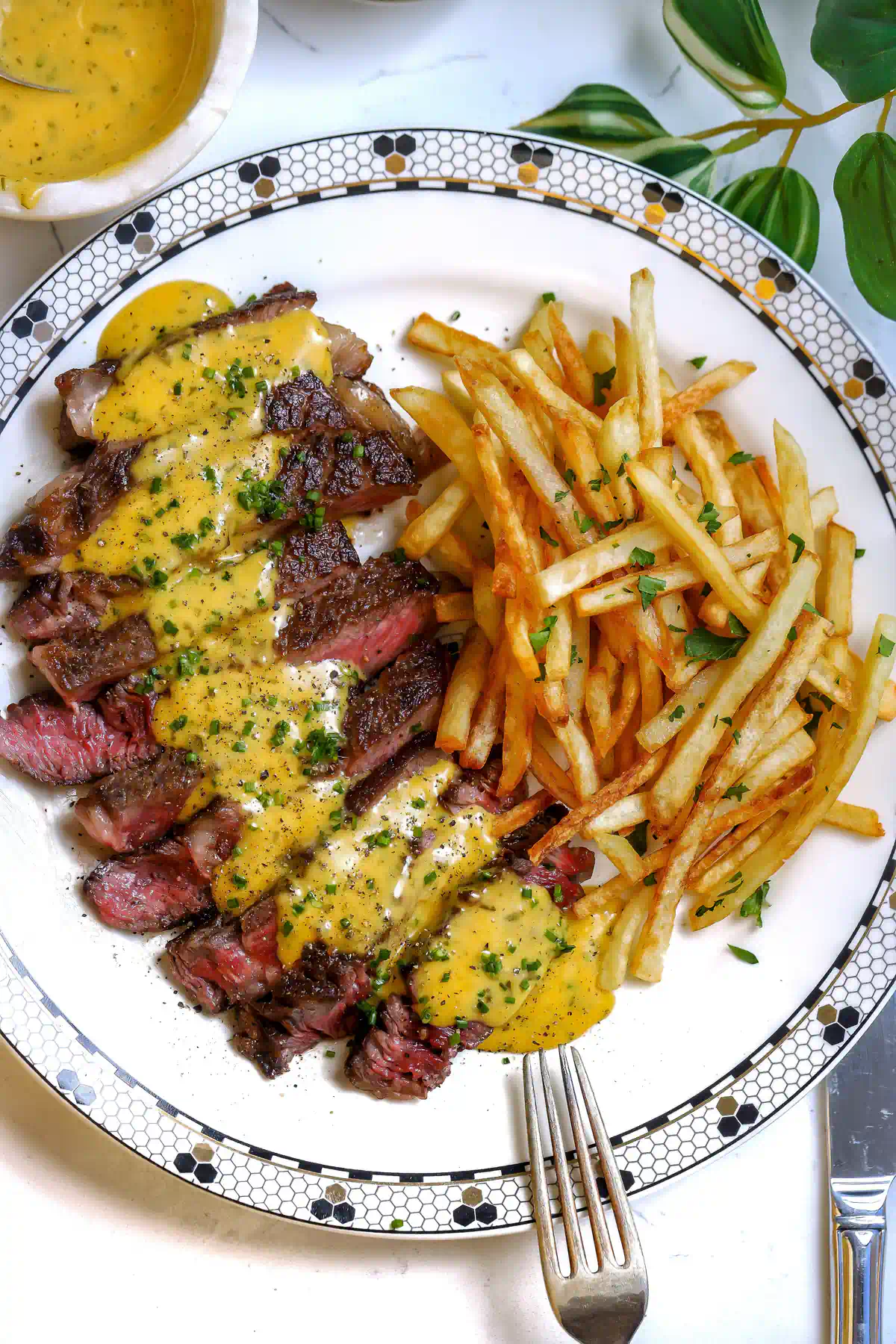
Table of Contents
What Are Steak Frites?
Steak frites literally just means “steak and fries.” It is an iconic bistro dish in France and Belgium, traditionally featuring a fast-cooking, flavorful cut of beef served alongside a mountain of hot, crispy french fries. While many brasseries use a hanger steak or bavette, this steak frites recipe upgrades the classic by pairing a highly marbled ribeye with a from-scratch béarnaise. It is a savory, umami-forward dish that relies on high-quality ingredients like unsalted butter, fresh tarragon, and shallots to create a sauce that just so happens to be my favorite in the world.
What Do They Taste Like?
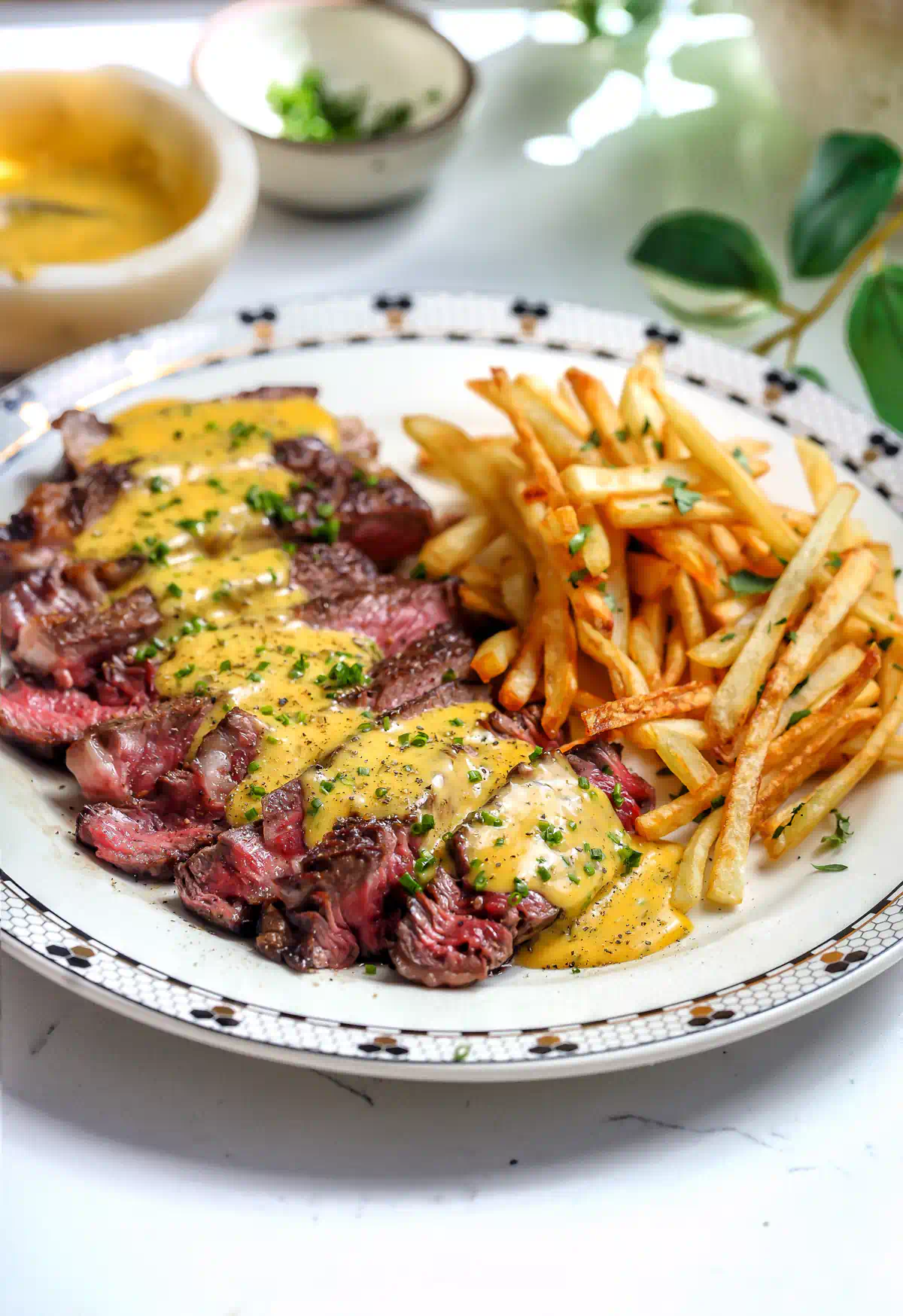
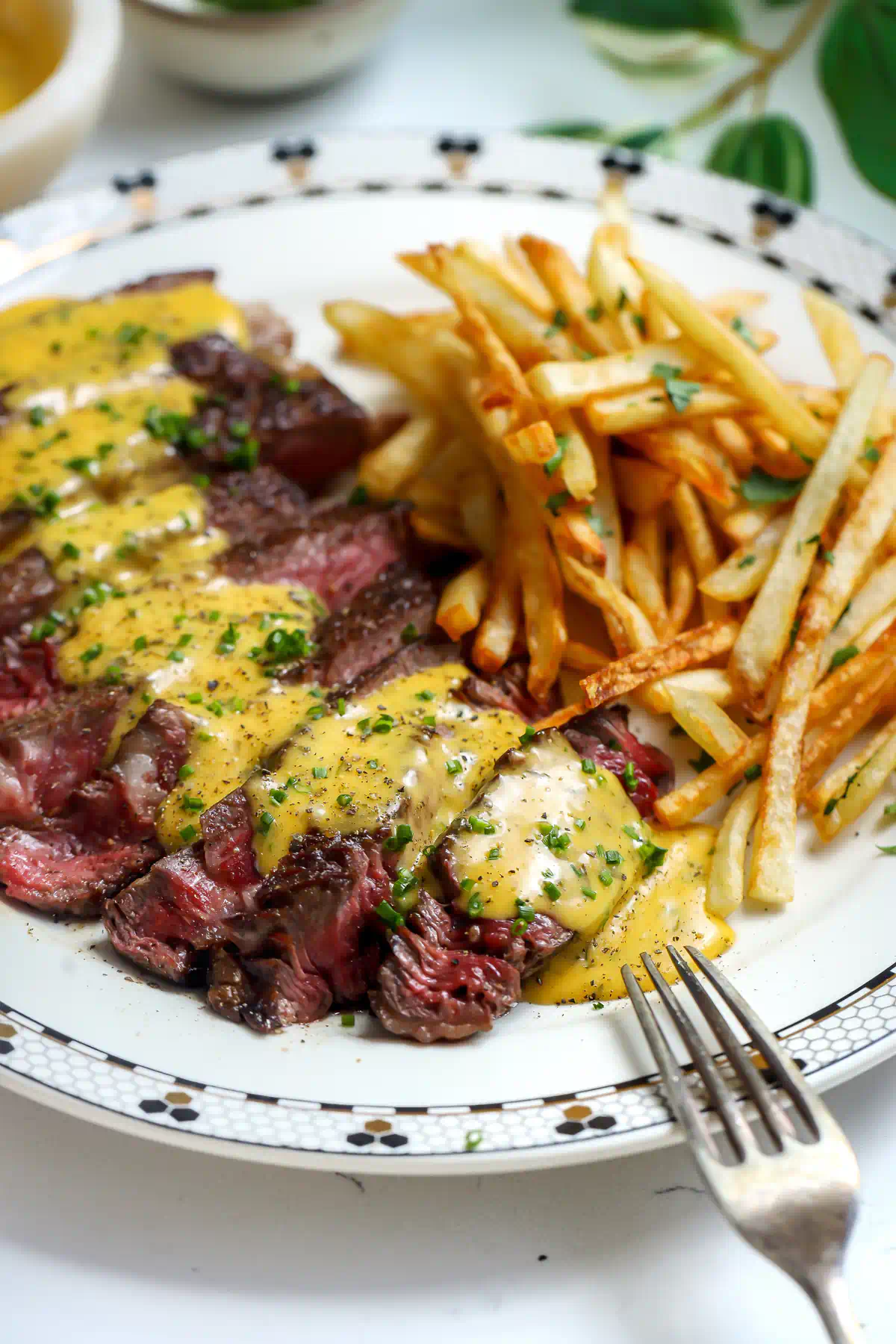
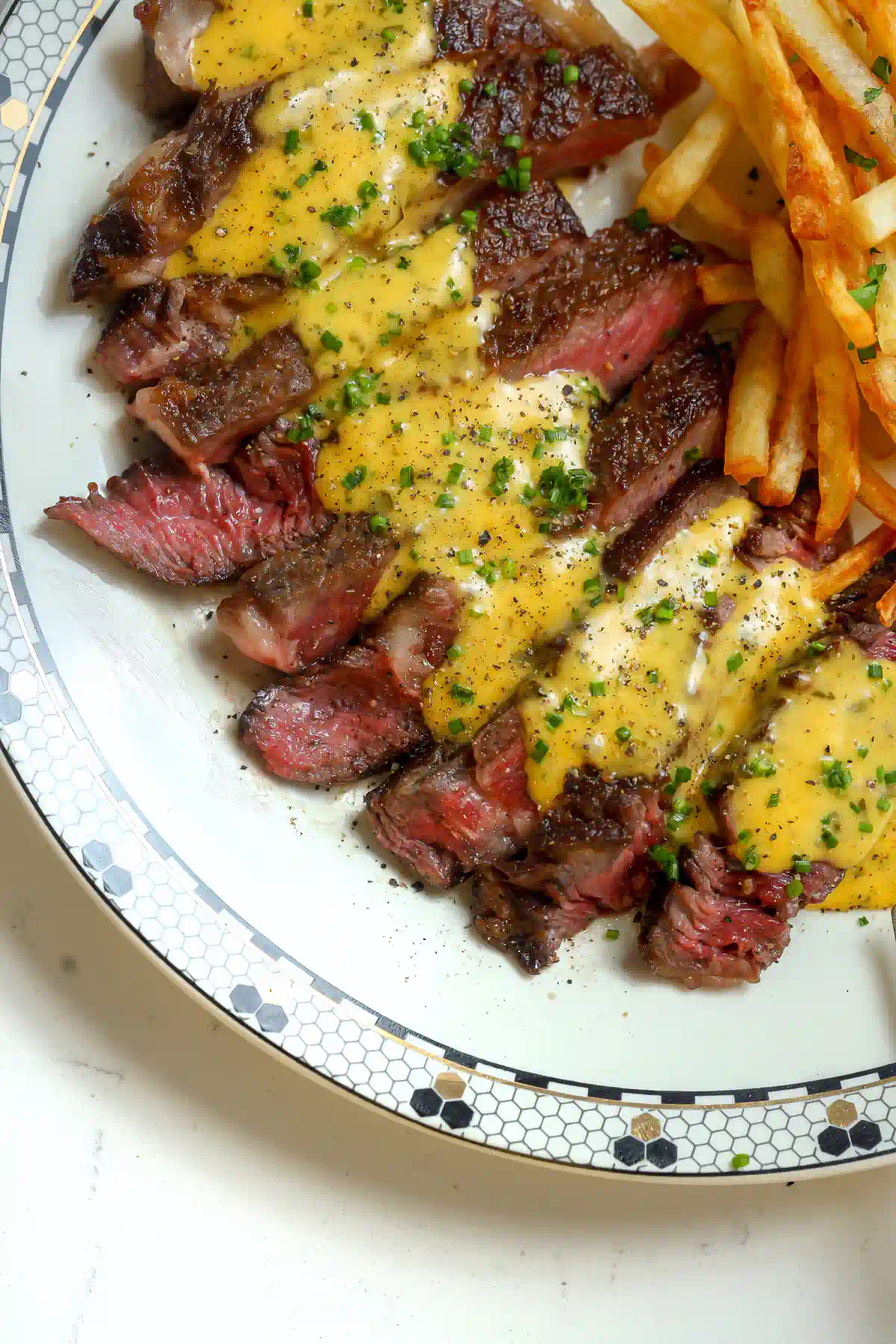
Let’s start with the steak. The dry brine is the absolute game changer here; it seasons the meat deeply all the way through and creates that incredible, salty-savory depth. Because the brine draws out and then reabsorbs moisture, it leaves the exterior perfectly dry, which is the only way to get that professional, dark-golden crust and intense sear. Topped with the rich, silky béarnaise sauce that is buttery, savory, and bright. There’s a reason this is such a popular combo.
This frites recipe uses Russet potatoes because they are hands down the best for frying. It does take extra effort (specifically the double-fry technique) but the results are a super fluffy inside and a really, really crispy outside. It is the only way to get that bistro-quality crunch you need to dip into that velvety sauce.
Tips and Tricks For Béarnaise Sauce
When people hear béarnaise, a lot of the time they get instantly intimidated. Making this traditional steak frites sauce successfully is entirely about temperature control and emulsion. An emulsion is simply forcing two liquids that naturally don’t combine to bind together by whisking really well. The egg yolks will stabilize everything and hold it together so you end up with a silky, rich sauce.
Here are the exact industry techniques that I learned to ensure your sauce never breaks or scrambles:
- Control the Heat: Scrambled eggs happen the second the bowl gets too hot. Keep your double boiler at a bare, gentle simmer. The bottom of your mixing bowl must never touch the water below it.
- Cool the Components: Hot butter will instantly break the sauce. Let your melted butter and the shallot and tarragon reduction cool until they are just warm to the touch before adding them to the raw yolks.
- Whisk Constantly: Whisk the yolks vigorously over the heat until they are pale and thick. Pull the bowl off the heat immediately. When streaming in the butter, add it drop by drop at first. Whisk constantly to build the base of the emulsion, then switch to a slow, steady stream once the sauce begins to thicken.
- The Restaurant Rescue Trick: If your sauce separates and looks greasy or broken, drop a splash of boiling hot water into it and whisk violently to bring it back together. If that fails, drop one new egg yolk into a clean bowl with a splash of warm water, and slowly whisk your broken sauce into the new yolk.
Prep the Ingredients
The Frites
Peel and slice the potatoes up to 24 hours in advance. Soak them in ice water for at least 2 hours to strip the starch. This is the secret to a cleaner, crispier fry.
Clear a flat space in your freezer for a sheet pan. You will be chilling the frites between fry sessions to lock in that fluffy interior.
Gather clean kitchen towels or a stack of paper towels. Moisture is the enemy of a golden fry. The potatoes must be bone-dry before hitting the oil to prevent splattering and ensure a shattering crunch.
The Steak
Dry brine the ribeyes at least 1 hour before cooking. This deep-seasons the meat and dries the surface for a superior, crusty sear.
Pull the steaks from the fridge 30 minutes before hitting the pan. Bringing them to room temperature ensures an even, tender cook.
Have extra paper towels ready to pat the steaks dry again right before they touch the cast iron.
The Béarnaise Sauce
Melt the butter early so it has time to cool. It should be warm to the touch. If the butter is hot, it will scramble the yolks and ruin the velvety texture.
Complete your mise en place by chopping the shallots, tarragon, and chives. Measure the vinegar and wine so the reduction is ready to go immediately.
Set up your double boiler with only an inch of water. Check that the bottom of your bowl does not touch the water. This prevents the indirect heat from becoming too intense for the delicate emulsion.
Ingredient Swaps
Russet Potatoes: Yukon Golds are an excellent substitute if you prefer a creamier, slightly denser fry. They won’t get quite as crispy as a Russet, but the buttery flavor is great.
Ribeye: A New York Strip or a traditional Hanger steak are perfect 1:1 swaps here. The dry brine method is great on both, just adjust your sear time slightly if the cut is thinner than a one-inch ribeye.
Fresh Tarragon: If you cannot find fresh tarragon, you can use all dried tarragon in the reduction, simply doubling the dried amount to 2 teaspoons. The flavor will be slightly less bright, but the classic anise notes will still be present.
White Wine: If you prefer not to cook with wine, swap it for an equal amount of additional red wine vinegar or a splash of fresh lemon juice in the reduction to keep the balance.
Nadia’s Tips
- The Frites: The double fry is worth the effort, trust me. You can also use this method by air frying them at 300°F (150°C) until soft, then freeze and fry again at 400°F (200°C) until crispy!
- The Butter: Classic Béarnaise calls for clarified butter, but whole butter brings a richer, silkier texture and superior flavor. If you want a real game changer, swap the standard butter for brown butter to get a deep, nutty finish.
- The Emulsion: Béarnaise is simple but demands your full attention. The secret to a velvety sauce and avoiding scrambled eggs is strict temperature control. Let your melted butter and your shallot-tarragon reduction cool before mixing. Keep your double boiler at a gentle, bare simmer, not a rolling boil. Whisk vigorously, and the second those yolks turn thick and pale yellow, pull the bowl off the heat. It happens fast.

Want to save this recipe to your collection?
The Perfect Pairings
Start your night off with a sweet, tangy and fresh Prickly Pear Cocktail. As an appetizer Scallop Fritters are sure to impress and they’re perfect because you can reuse the frying oil. Every dinner meal needs a fresh crisp salad, and a Handheld Wedge Salad will pair perfectly with this Steak Frites Recipe. Finish your evening off with Caramel Apple Bread Pudding.


Steak Frites FAQ
While the French traditionally use a hanger or skirt steak, a highly marbled ribeye is my absolute favorite for making steak frites at home. The dry brine method breaks down the rich fat, giving you a meltingly tender center and a thick, caramelized crust.
Medium rare is the industry standard for this dish. Pulling the beef from the cast iron at 130°F is the perfect timing since it keeps cooking while resting. If you prefer it cooked further, avoid going past medium so the steak does not become tough and difficult to chew. See my recipe card notes for more information.
Always slice your rested steak against the grain. Look for the parallel lines of muscle fiber running through the meat and cut directly across them. This shortens the fibers so every bite is incredibly tender and falls apart in your mouth.
Absolutely. You can peel, slice, and submerge your potatoes in a bowl of ice water up to 24 hours before you plan to fry them. Storing them in the refrigerator overnight pulls out excess starch, which is the exact technique for achieving a fluffy interior and crunchy exterior.
Equipment
- large mixing bowls
- wire rack
- baking sheet
- heavy-bottomed pot or dutch oven for frying
- spider strainer or slotted spoon
- Skillet
- small saucepan
- glass or metal mixing bowl (for double boiler)
- whisk
- cast-iron skillet
Ingredients
The Frites
- 4 russet potatoes, peeled and cut into fries
- ice water, for soaking
- neutral oil, for frying
- salt, to taste
- parsley, chopped, to taste
The Steak
- 2 ribeye steaks
- 2 tsp kosher salt, for brining
- black pepper, to taste
- chives, chopped, for topping
The Béarnaise Sauce
- 1 shallot, brunoise
- 1 ½ tbsp fresh tarragon, chopped
- 1 tsp dried tarragon
- 1 tbsp fresh chives, chopped
- 2 ½ tsp red wine vinegar
- 2 ½ tsp white wine
- 3 egg yolks
- 16 tbsp unsalted butter, melted and cooled
- ¼ tsp white pepper
- 2 squirts tabasco sauce
Instructions
- Prep the Potatoes: Soak the peeled and cut potatoes in a bowl filled with ice water for at least 2 hours or overnight.4 russet potatoes, ice water
- Dry Brine the Steak: Season the ribeyes evenly with the 2 teaspoons of kosher salt. Place them on a wire rack set over a baking sheet. Refrigerate uncovered for 1 hour. Remove the steaks from the refrigerator and bring to room temperature before cooking.2 ribeye steaks, 2 tsp kosher salt
- Blanch the Fries: Preheat a pot with neutral oil to 275°F (135°C). Pat the potatoes completely dry. Fry the potatoes in batches for 5 to 6 minutes each until very soft and thoroughly cooked. Transfer the potatoes to a paper towel-lined sheet pan. Place the sheet pan in the freezer for 30 to 45 minutes.neutral oil
- Herb Reduction: Combine the shallot, fresh tarragon, dried tarragon, chives, red wine vinegar, and white wine in a skillet. Heat over medium-low. Cook, stirring frequently, until the liquid is fully absorbed. Remove from heat and let cool.1 shallot, 1 ½ tbsp fresh tarragon, 1 tsp dried tarragon, 1 tbsp fresh chives, 2 ½ tsp red wine vinegar, 2 ½ tsp white wine
- Make the Béarnaise Sauce: Fill a small saucepan one-third full with water and bring to a simmer. Reduce to medium heat. In a large glass or metal bowl, whisk together the egg yolks, cooled melted butter, herb reduction, white pepper, and Tabasco sauce. Place the bowl over the simmering water. Whisk vigorously for about 2 minutes until the mixture becomes pale yellow and thick. Remove the bowl from the heat. Slowly drizzle in the remaining 14 tablespoons of melted butter, whisking constantly until fully emulsified.3 egg yolks, 2 tbsp unsalted butter, ¼ tsp white pepper, 2 squirts tabasco sauce, 14 tbsp unsalted butter
- Sear the Steaks: Preheat a cast-iron skillet on high heat for 2 minutes. Pat the steaks dry with paper towels. Sear for 3 minutes per side for medium-rare (See the notes for other temperatures). Remove the steaks from the skillet and let them rest.
- Crisp the Fries: Increase the fry oil temperature to 375°F (190°C). Fry the potatoes in batches until golden brown. Transfer to a bowl and toss immediately with salt and parsley to taste.salt, parsley
- Serve: Slice the rested steaks and set them on their plates. Spoon the béarnaise sauce across the top along with black pepper and more chives. Serve immediately with the hot frites on the side.black pepper, chives
Kitchen Cam
Notes
Steak Doneness Guide
These times are based on a 1-inch thick ribeye starting at room temperature. Always pull your meat from the cast iron 5°F (3°C) before your target. The meat continues cooking while it rests and you don’t want it overdone.- Rare (Cool red center): 2 mins/side | 120°F to 125°F (49°C to 52°C)
- Medium-Rare (Warm red center): 3 mins/side | 130°F to 135°F (54°C to 57°C)
- Medium (Warm pink center): 4 mins/side | 140°F to 145°F (60°C to 63°C)
- Medium-Well (Slight pink center): 5 mins/side | 150°F to 155°F (66°C to 68°C)
- Well-Done (No pink): 6 mins/side | 160°F (71°C)
Nutrition
Nutrition information is automatically calculated, so should only be used as an approximation.


Hello,
Do you have any suggestions for wine subs?
Thank you!
You can use broth or more vinegar, but keep in mind that it won’y yield the same results 🙂 I hope this helps!
Can I do it without eggs.
His long is the bearnaise sauce good for ?
Hey Agustina, This is a sauce that needs to be made right before eating. Béarnaise sauce breaks very easily and it just isn’t the type of sauce that can be made ahead.
This was the best steak I have ever made. That sauce was amazing. Thanks.
You’re welcome Carlos. That sauce is my absolute favorite!