This post may contain affiliate links. Please read our disclosure policy.
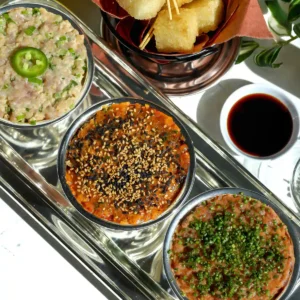
A crispy rice tartare flight is what happens when you refuse to pick between yellowtail, tuna, and salmon and decide the answer is obviously all three. It’s three separate tartares, each going in its own direction, served alongside a basket of golden crispy rice bites on toothpicks and a small bowl of eel sauce. You pick up a piece, dip it into whichever tartare you want, and go from there. Yellowtail with jalapeño and yuzu. Spicy tuna with sriracha and sesame. Salmon with salsa macha. Same rice, three completely different bites.
I’ve been obsessed with Nobu’s crispy rice for a long time – it’s always my order – but this is what I make when there are people to feed and I don’t want to commit to just one topping. Setting out all three tartares at once turns it into something interactive, and there is something about the build-your-own format that makes people stick around the table longer than they planned. It’s the kind of appetizer that holds up a dinner party in the best possible way.
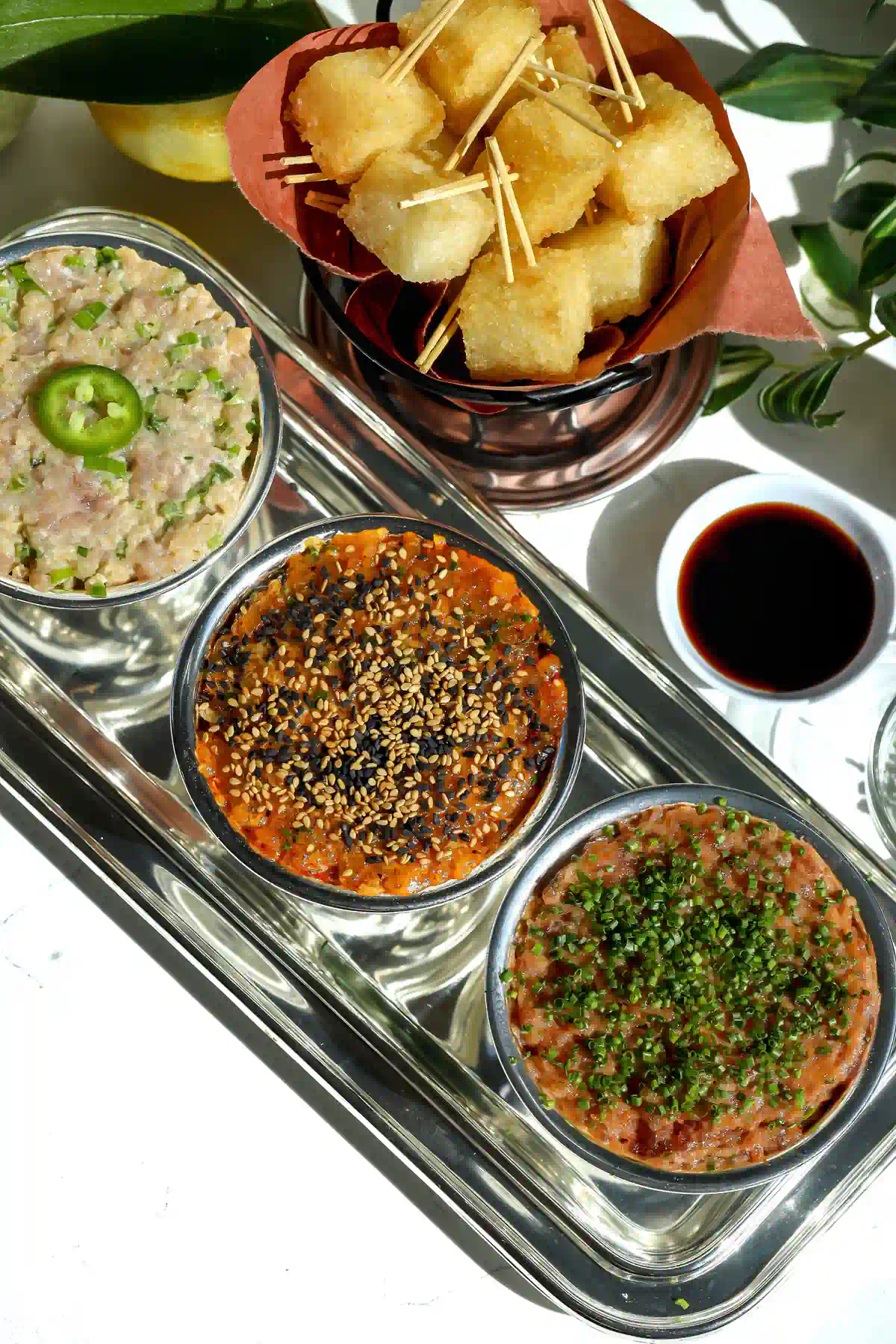
Table of Contents
About the Three Tartares
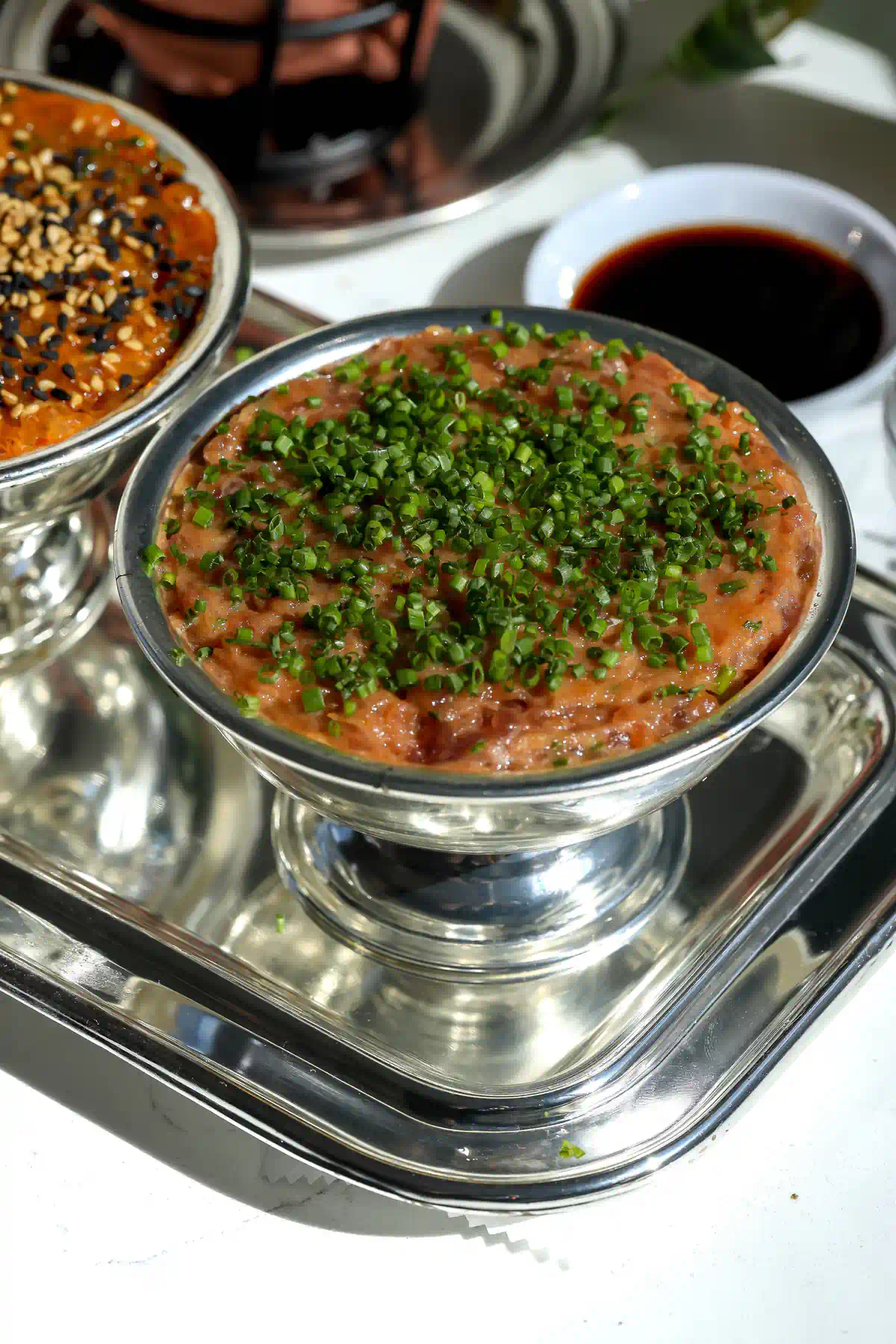
The spicy tuna is the one everyone recognizes – it’s the classic crispy rice topping for a reason. Sriracha and Japanese mayo make it creamy and hot, sesame oil gives it that nutty depth, and a little sugar, soy, chives, and lemon zest keep it balanced. If you’ve ever ordered crispy rice at a restaurant, this is the flavor you came back for.
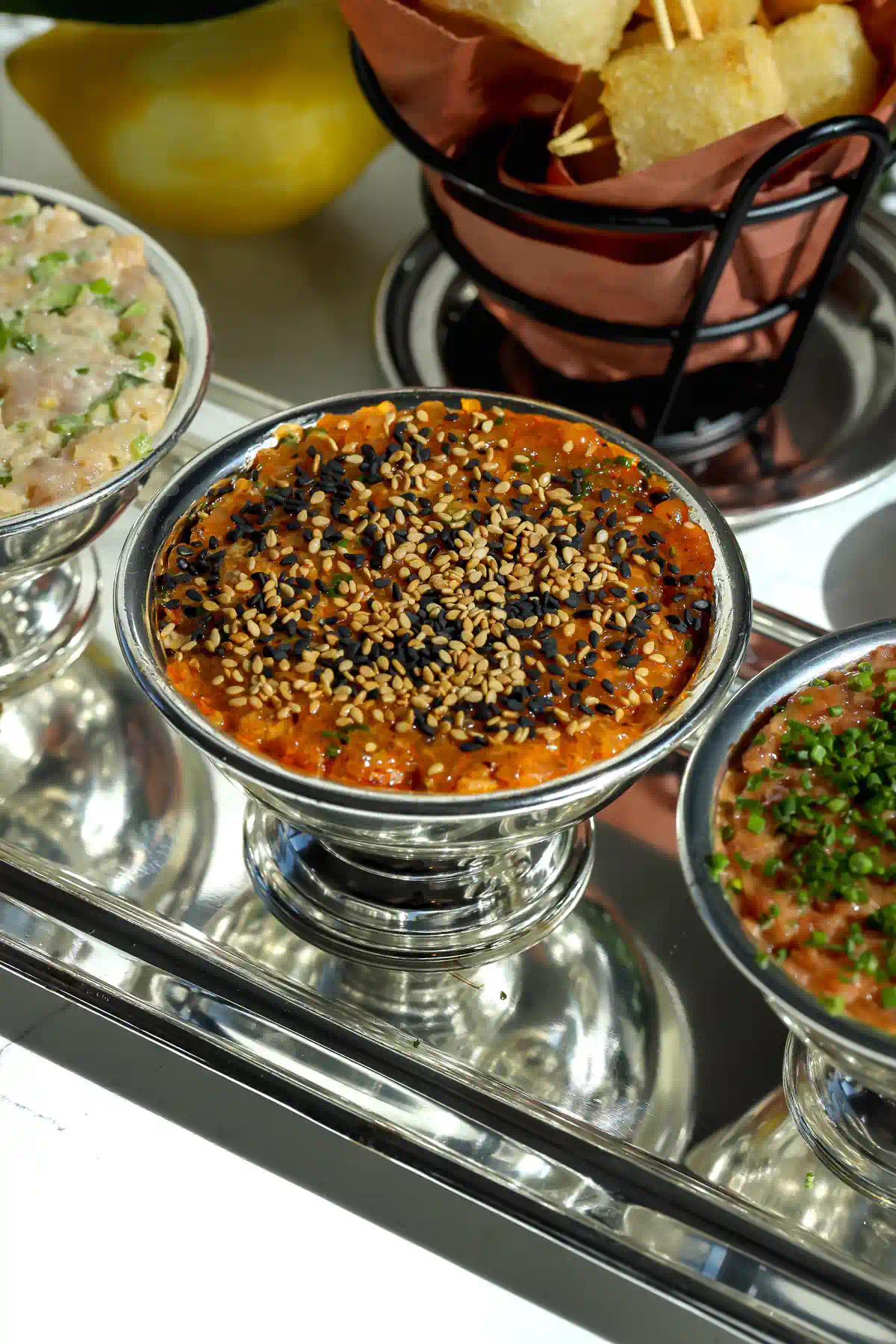
The salmon is my favorite, and I don’t say that lightly. I mix it with my salsa macha, which brings smoke, crunch, and toasted chile depth that no bottled hot sauce can touch. Rich salmon and smoky salsa macha were made for each other – this is the bowl that empties first at my table.
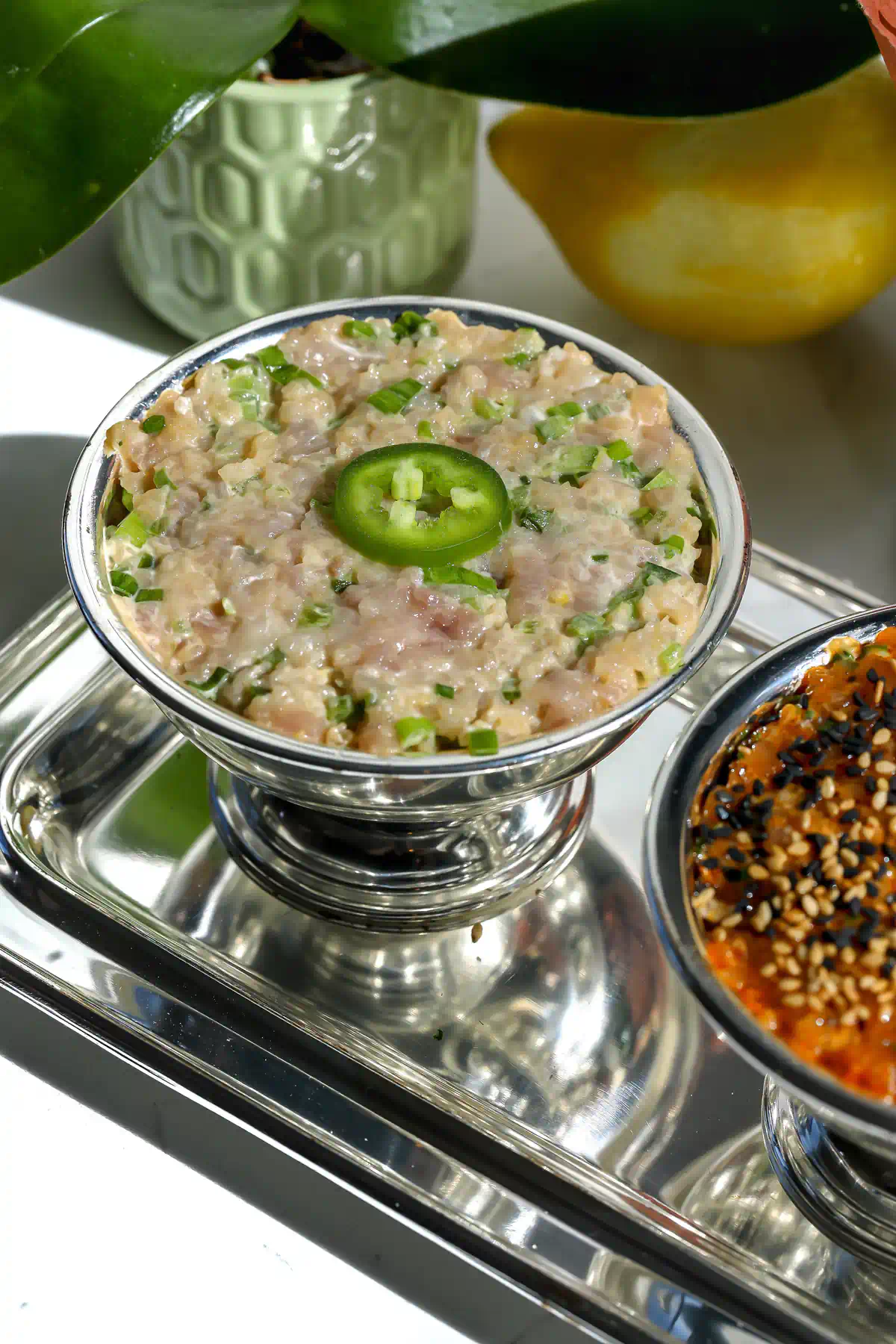
The yellowtail is the bright one. Yuzu and lemon zest carry the citrus, jalapeño and scallions bring a clean little bite, and the fish itself is so buttery it barely needs help. If anyone at your table is on the fence about raw fish, start them here.
The homemade eel sauce is tamari, mirin, and cane sugar simmered down until it thickens enough to coat the back of a spoon. It is sweet, savory, and so good on top of all three tartares.
Your Sushi-Grade Fish Guide
Where to Buy It
This recipe calls for three kinds of fish, which sounds high-maintenance until you realize you only need a little of each. At a good fish counter, the conversation is easy. Tell them you’re eating it raw and ask whether the fish has been handled for raw consumption – any counter worth your business will know exactly what you mean. You’re looking for vibrant, clean color, no sour or ammonia smell, and flesh that looks moist at the cut. If it smells fishy rather than oceanic, it’s already had a long day.
If tracking down three different sushi-grade fish locally sounds like a scavenger hunt, order online – it’s not a compromise. The fish ships frozen and properly handled, which often puts it in better shape than the “fresh” fillet at your average grocery store, and you can get all three in one box. My go-to sources are Catalina Offshore Products, Yama Seafood, and Riviera Seafood Club. These are serious operations – Catalina has been in the seafood business since 1977, and Yama sources for Michelin-starred restaurants in New York. You won’t find lesser fish.
Everything ships overnight, packed with dry ice or gel packs in insulated liners. Plan around your delivery day – open the box promptly, check that everything is still cold, and follow any storage instructions inside. These suppliers know their product better than anyone, and their instructions are worth following.
Safety and Handling
Raw fish is perfectly safe to serve at home when it’s been sourced correctly and handled well. The FDA has full guidance on seafood safety if you want the details, but what it comes down to for this recipe is a few simple rules.
The USDA advises that raw fish and shellfish can be refrigerated for 1 to 2 days. Best practice is to use it within 24 hours of it thawing or arriving fresh. Keep it in the coldest part of your refrigerator – not the door – and tightly wrapped until you’re ready to chop. Mix the tartares close to serving time and keep the bowls refrigerated right up until the flight goes on the table.
Before you use it, give it a quick check. Fresh raw fish smells clean and mild – oceanic, not fishy. The flesh should look glossy and moist with no dullness, browning, or drying at the edges. If anything smells sour or off, don’t use it. When in doubt, throw it out – it’s not worth it.
For serving, the FDA recommends not leaving raw fish at room temperature for more than 2 hours – and no more than 1 hour if you’re eating outside and the temperature is above 90°F (32°C). If the flight is going to be out for a while, set the tartare bowls over a tray of crushed ice and they’ll hold fine. Anyone who is pregnant or immunocompromised should skip the raw fish – there’s plenty of crispy rice and eel sauce to keep them busy.
Tips for Making the Flight
- Pack the rice like you mean it. Pressing the rice firmly and chilling it before frying is what keeps the bites from falling apart in the oil. Loose rice makes loose, sad squares.
- Don’t crowd the oil. Fry in batches with room between the pieces. Crowding drops the oil temperature and the rice steams instead of crisping. Drain on a rack, not a plate, so the bottoms stay crunchy.
- Fry close to serving time. Crispy rice is at its best within the hour.
- Dice the fish fine. Smaller dice means the tartare clings to the rice when you dip instead of sliding off the toothpick. This format lives or dies on the dip.
Ingredient Swaps
Yuzu: Equal parts fresh lemon and lime juice is the standard substitute, per Serious Eats. A Meyer lemon also gets you close – it has the floral, slightly sweet edge regular lemons lack. Bottled yuzu juice from an Asian market keeps for months in the fridge and is worth having around.
Salsa Macha: A good chili crisp is the closest stand-in. The flavor shifts from smoky Mexican chiles toward ginger and garlic, but the crunchy heat-in-oil role is the same. The salmon won’t complain.
Spice Swaps: Sambal oelek can stand in for sriracha if you want the heat without the sweetness – start with less and adjust.
The Fish: Any of the three can be doubled or swapped for another as long as it’s been handled for raw consumption. If your counter only has great tuna, make it a two-tuna flight and call it a choice.
How to Serve
This is the appetizer, so build the night around it. Start everyone with a Cucumbertini – clean, cold, and made for raw fish. For the main, my Crispy Chicken Thighs in sake butter sauce keep the Japanese-inspired thread going without repeating a single flavor from the flight. My Arugula Fennel Salad covers the fresh and peppery corner of the table, and a Passion Fruit Panna Cotta finishes light after all that eel sauce.
And if your crowd treats the raw bar like the main event, serve this flight next to my Sushi Board and let the table fend for itself.


Want to save this recipe to your collection?
Frequently Asked Questions
Less than you’d hope. There is no regulated definition of sushi-grade in the US – it’s a marketing term. What matters is whether the fish was frozen to FDA guidelines for parasite destruction and handled properly for raw consumption, which is exactly what to ask your fish counter. The full rundown is in my sushi-grade fish guide above.
Partially, and the part that can be made ahead has to be. The rice slab needs 4 to 8 hours in the fridge plus 30 minutes in the freezer before frying, so press it in the morning for an evening party. The eel sauce can also be made early since it needs to cool completely. Fry the rice and mix the tartares close to serving time.
No, this is the one swap that doesn’t work. Short-grain sushi rice is sticky enough to hold its shape through frying. Long-grain rice falls apart in the oil, and there’s no seasoning trick that fixes that.
Equipment
- rice cooker (recommended), or saucepan with lid
- 2 Rimmed baking sheets
- plastic wrap
- small saucepan
- heavy bottomed pot, or deep skillet, for frying
- wire rack
- Sharp knife
- toothpicks or cocktail picks
- 3 small serving bowls
Ingredients
Crispy Rice
- 1 3/4 cups sushi rice, short grain
- 2 1/2 cups water, + 2 tablespoons
- 1 kombu strip, optional
- 1 pinch salt
- 2 teaspoons sugar
- 2 3/4 tablespoon rice vinegar
- 2 3/4 tablespoon potato starch
- avocado oil, for frying
Fish Cure
- 6 tablespoons kosher salt
- 3 tablespoons sugar
Eel Sauce
- 1/3 cup tamari
- 1/3 cup mirin
- 1/3 cup cane sugar
Spicy Tuna Tartare
- 8 oz sushi-grade tuna, finely chopped
- 2 tablespoons Japanese mayonnaise
- 2 tablespoons sriracha
- 1 teaspoon sesame oil
- 1/2 teaspoon sugar
- 1 teaspoon soy sauce
- 1 lemon, zest only
- 1 tablespoons chives, finely chopped, plus more for topping
Salmon Tartare
- 8 oz sushi-grade salmon, finely chopped
- 1 tablespoon salsa macha, or chili crisp
- 2 tablespoons Japanese mayonnaise
- 1 teaspoon soy
- 2 tablespoons chives, finely chopped
- 1 lemon, zest only
- 1 teaspoon black and toasted sesame seeds, for topping
Yellowtail Tartare
- 8 oz sushi-grade yellowtail, finely chopped
- 2 scallions, chopped
- 2 teaspoons yuzu juice
- 1.5 teaspoons soy sauce
- 2 teaspoons Japanese mayonnaise
- 1 lemon, zest only
- 1 jalapeño, seeded and chopped, plus 1 slice for topping
Instructions
- Cook the Rice: Rinse your rice until the water runs clear. Add the rice, water (kombu if using) and salt to a rice cooker or saucepan.• If using a rice cooker: Cook on the standard white rice setting. Once finished, turn to warm, and let the rice sit for 10 minutes before opening the lid. Remove and discard the kombu before seasoning.• If using a saucepan: Bring everything to a boil over medium heat, cover tightly, reduce heat to low, and cook for 15 minutes. Remove from heat and let the rice steam, covered, for 10 minutes. Remove and discard the kombu before seasoning.1 3/4 cups sushi rice, 2 1/2 cups water, 1 kombu strip, 1 pinch salt
- Season: Stir the sugar and rice vinegar together in a small bowl until dissolved. Add the vinegar mixture and potato starch to the hot rice and fold until evenly combined throughout.2 teaspoons sugar, 2 3/4 tablespoon rice vinegar, 2 3/4 tablespoon potato starch
- Press and Chill: Line a rimmed baking sheet with plastic wrap. Press the seasoned rice firmly into an even layer about ¾ inch thick. Press the rice down well and cover with plastic wrap. Set a second baking sheet on top, and weight it lightly. Refrigerate for 4 to 8 hours, then transfer to the freezer for 30 minutes until firm but not frozen solid.
- Cure the Fish: Mix your salt and sugar. Place all three fish on a wire rack with a baking sheet underneath and sprinkle the salt/sugar mixture all over both sides. Refrigerate for 15-30 minutes to cure. When done, rinse and dry well.6 tablespoons kosher salt, 3 tablespoons sugar
- Make the Eel Sauce: Combine the tamari, mirin, and cane sugar in a small saucepan over medium heat. Bring to a boil, then reduce to a simmer and cook for 5 to 7 minutes until the sauce lightly coats the back of a spoon. Remove from heat and let cool completely. Transfer to a small serving bowl.1/3 cup tamari, 1/3 cup mirin, 1/3 cup cane sugar
- Fry the Rice: Cut the chilled rice slab into 1-inch squares. Heat a thin layer of avocado oil in a heavy pot over medium heat. Working in batches, fry the squares one side at a time without moving them, about 2 to 3 minutes per side, until a light golden brown. Transfer to a wire rack to drain. Insert a toothpick into each piece.avocado oil
- Make the Tartares:• Spicy Tuna Tartare – Combine the tuna, mayonnaise, sriracha, sesame oil, sugar, soy sauce, chives, and lemon zest. Top with chives.• Salmon Tartare – Combine the salmon, salsa macha, mayonnaise, sesame oil, chives, and lemon zest. Top with sesame seeds.• Yellowtail Tartare – Combine the yellowtail, scallions, yuzu juice, soy sauce, mayonnaise, lemon zest, and jalapeño. Top with a jalapeño slice.• Cover all three bowls and refrigerate until ready to serve.8 oz sushi-grade tuna, 2 tablespoons Japanese mayonnaise, 2 tablespoons sriracha, 1 teaspoon sesame oil, 1/2 teaspoon sugar, 1 teaspoon soy sauce, 1 lemon, 1 tablespoons chives, 8 oz sushi-grade salmon, 1 tablespoon salsa macha, 2 tablespoons Japanese mayonnaise, 1 teaspoon soy, 2 tablespoons chives, 1 lemon, 1 teaspoon black and toasted sesame seeds, 8 oz sushi-grade yellowtail, 2 scallions, 2 teaspoons yuzu juice, 1.5 teaspoons soy sauce, 2 teaspoons Japanese mayonnaise, 1 lemon, 1 jalapeño
- To Serve: Arrange the crispy rice on a board or platter alongside the three tartare bowls and the eel sauce. Serve immediately with the tartares straight from the refrigerator.
Kitchen Cam
Nutrition
Nutrition information is automatically calculated, so should only be used as an approximation.