
This post may contain affiliate links. Please read our disclosure policy.

Ramen eggs, aka ajitsuke tamago or ajitama, are Japanese soft-boiled eggs that have been marinated in a savory sweet sauce. Ramen eggs are a pretty common recipe used in Korean Japanese and Chinese cuisines, and after trying them, I’ve realized we are missing out! These days, I’ve been making sure there’s a full container in my fridge at all times, that’s how much I crave them!
Table of Contents
About the Taste
This Ramen Eggs recipe is simply amazing – the texture of the jammy eggs is perfect and the savory, slightly sweet marinade adds so much depth to each bite. Each bite is almost buttery, making these soft-boiled eggs super addicting!
Tips For Soft-Boiled Eggs
Pierce the Eggs First: Use an egg piercer or a thumbtack to pierce the eggs. Doing this releases the air, which makes it so you can skip adding them to cold water and bringing it to a boil so they don’t crack. If you are adding it to already boiling water you can control the outcome of how cooked your eggs are. This also really helps with getting that beautifully peeled egg.
Have your Ice Bath Ready: The inside of your eggs will continue to cook if you don’t cool them off quickly. So if you are looking for that deliciously jammy texture, make sure you submerge your eggs in an ice bath immediately to stop them from overcooking.
Roll, Don’t Crack: I like to take clean kitchen towel, fold it up and place it on the counter. Then I gently start rolling…and I roll, roll, roll. Using a light pressure while rolling helps the membrane detach from the egg white. And when that membrane detaches , the entire egg peels off so much easier.

Want to save this recipe?
Save it to your account
or email it to yourself
Ingredient Swaps
Mirin: Sweet marsala wine, dry sherry, or even a mix of sake and sugar would work as a sub for mirin.
Scallions: You can use chives, finely chopped leeks or shallots instead.
Rice Vinegar: White wine vinegar, apple cider vinegar, or champagne vinegar (use a little less of this one because it’s sharper) work as well.
How to Serve
Spicy Ramen: This spicy ramen is a recipe that is just a super simple way to elevate store-bought ramen. It comes together in 15 minutes, and it is perfect when you want a quick meal or even for sick days!
Birria Ramen: This is my ode to Disney. When I tasted a Birria Ramen recipe at Disney, I was in love! When I got home, you know I had to recreate it!
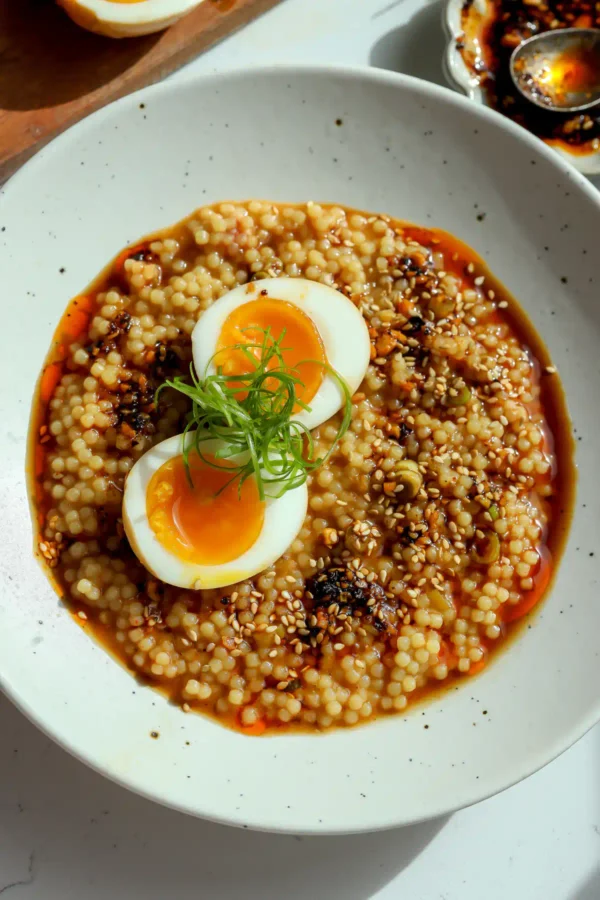
Miso Ramen Pastina: This pastina is a fusion of two amazing comfort foods: Japanese ramen and Italian pastina. It’s only takes 30 minutes to make and it always hits the spot.
Oxtail Ramen: This one is for the ones that want an amazing homemade ramen. The broth does take a bit of time, but it is worth it… trust me. And the rest is very easy to make. This is such a cozy meal that is perfect for fall/winter.


Nadia’s Tips
- Don’t Marinate in Metal: If you use a metal container to marinate the eggs in the fridge, it can change the taste of these Ramen Eggs. Make sure you allow the marinade to cool, then use a plastic container with an airtight lid to marinate these in the fridge.
- Soft-Boiled Eggs: For that perfect jammy texture and a perfect, clean peel, you need to follow three tip. Egg piercer, ice bath, and a soft roll! Check out exactly what to do in my Soft-Boiled Egg Tip section.
Frequently Asked Questions
You absolutely can! You can use it in other recipes like stir-fries or even another batch of eggs within 4-5 days. Make sure you boil it again for food safety purposes though.
Stick to the 6-6½ of cook time for soft-boiled eggs. Then immediately place them in an ice bath to stop the cooking. An egg piercer is also a big deal if you want those perfect jammy eggs. It releases the inside air from the egg, allowing you to cook the egg in already boiling water without the possibility of the shell cracking while cooking. This gives you much more control over how the egg is cooked.
Leave them stored in the marinade for up to 4 days. Although, you may want to remove them sooner based on your taste preferences. If you want to remove them sooner, continue to store them in an airtight container in the fridge and eat within the 4 days.
Equipment
- sauce pan
- egg piercer, or a thumbtack
- pot
- large bowl
- sealable container
Ingredients
- ½ cup mirin
- ½ cup tamari, or soy sauce
- 1½ tbsp cane sugar
- 2 tbsp rice vinegar
- 2 scallions, finely chopped
- ¼ cup water
- 1½ tbsp salsa macha, or chili crisp
- 8-10 eggs, room-temperature
Instructions
- Combine the mirin, tamari, sugar and rice vinegar to a sauce pan. Bring to a simmer, cook for 2 minutes and then turn off heat. Mix in the scallions, water and salsa macha. Cool completely.½ cup mirin, ½ cup tamari, 1½ tbsp cane sugar, 2 tbsp rice vinegar, 2 scallions, ¼ cup water, 1½ tbsp salsa macha
- Take your room temperature eggs and pierce each one with an egg piercer (or a thumbtack, that way the needle doesn't go in too far).8-10 eggs
- Fill a large pot with enough water to cover your eggs by 1 inch. Bring your water to a boil and carefully add your eggs. Cover and cook for 6-6½ minutes.
- Meanwhile, prepare an ice bath. Make sure the bowl is large enough to fit all the eggs. When the eggs are done, immediately add them to your ice bath.
- Take your eggs one at a time and crack them gently them roll VERY gently to release the membrane from the shell.
- Add the peeled eggs to the marinade in a sealable container and refrigerate for 1 day minimum and a maximum of 4 days in the fridge, depending on your taste preference. When they have marinated to your liking, remove from he marinade but continue to store them in an airtight container in the fridge no longer than the 4 days.
- Enjoy with rice, ramen, or by themselves!
Kitchen Cam
Nutrition
Nutrition information is automatically calculated, so should only be used as an approximation.






This worked exactly as written, thanks!
Thank you for sharing this recipe