
This post may contain affiliate links. Please read our disclosure policy.
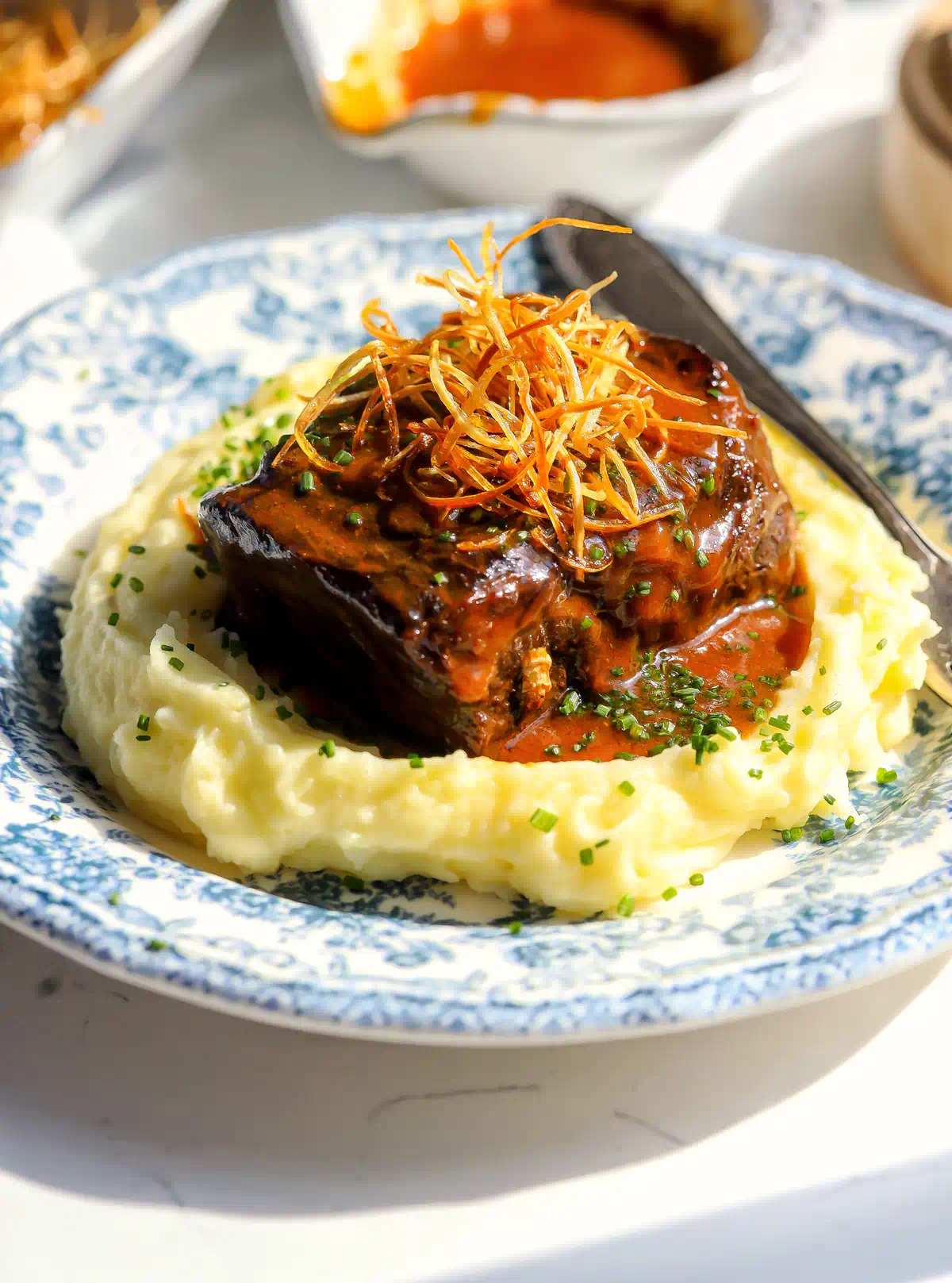
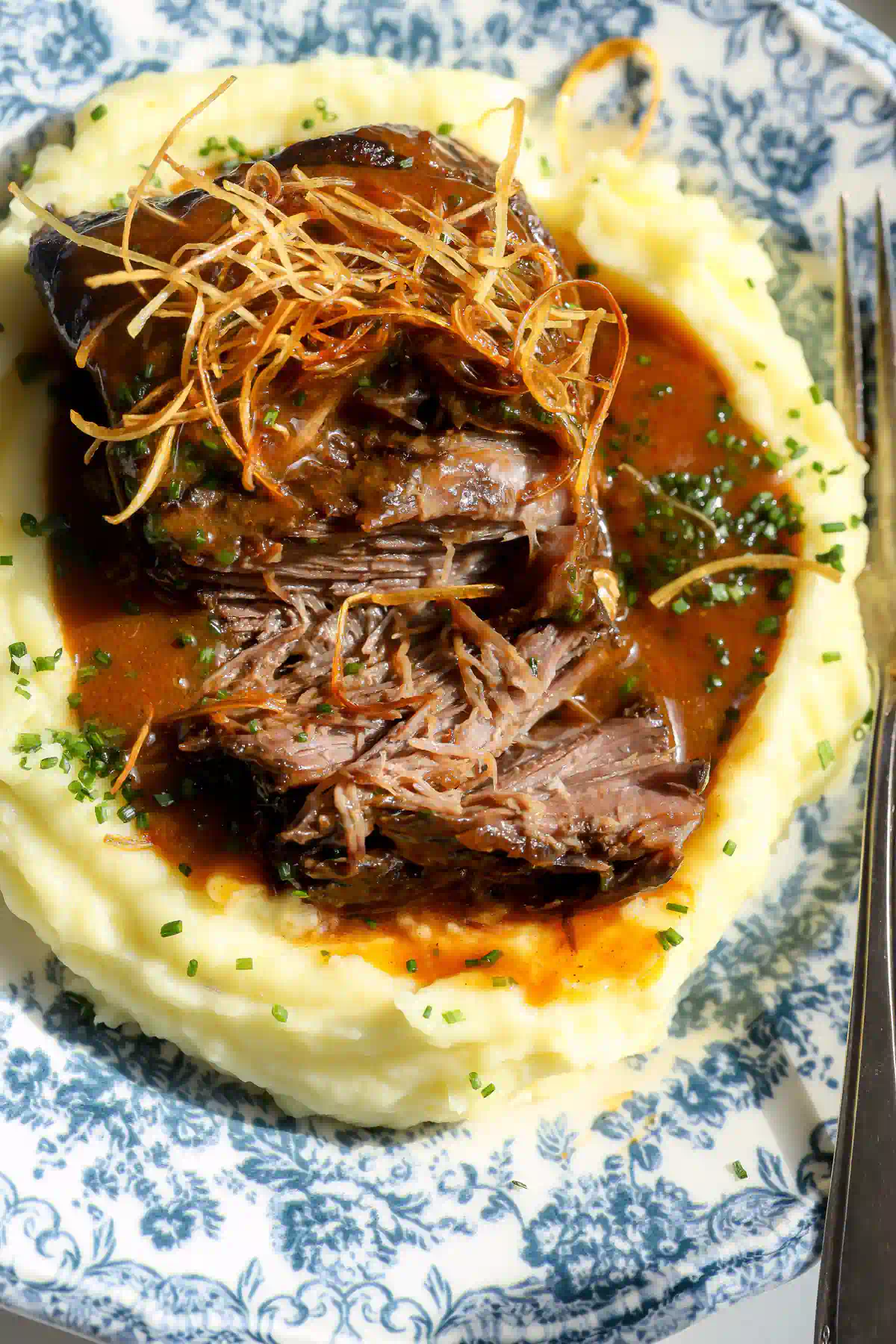
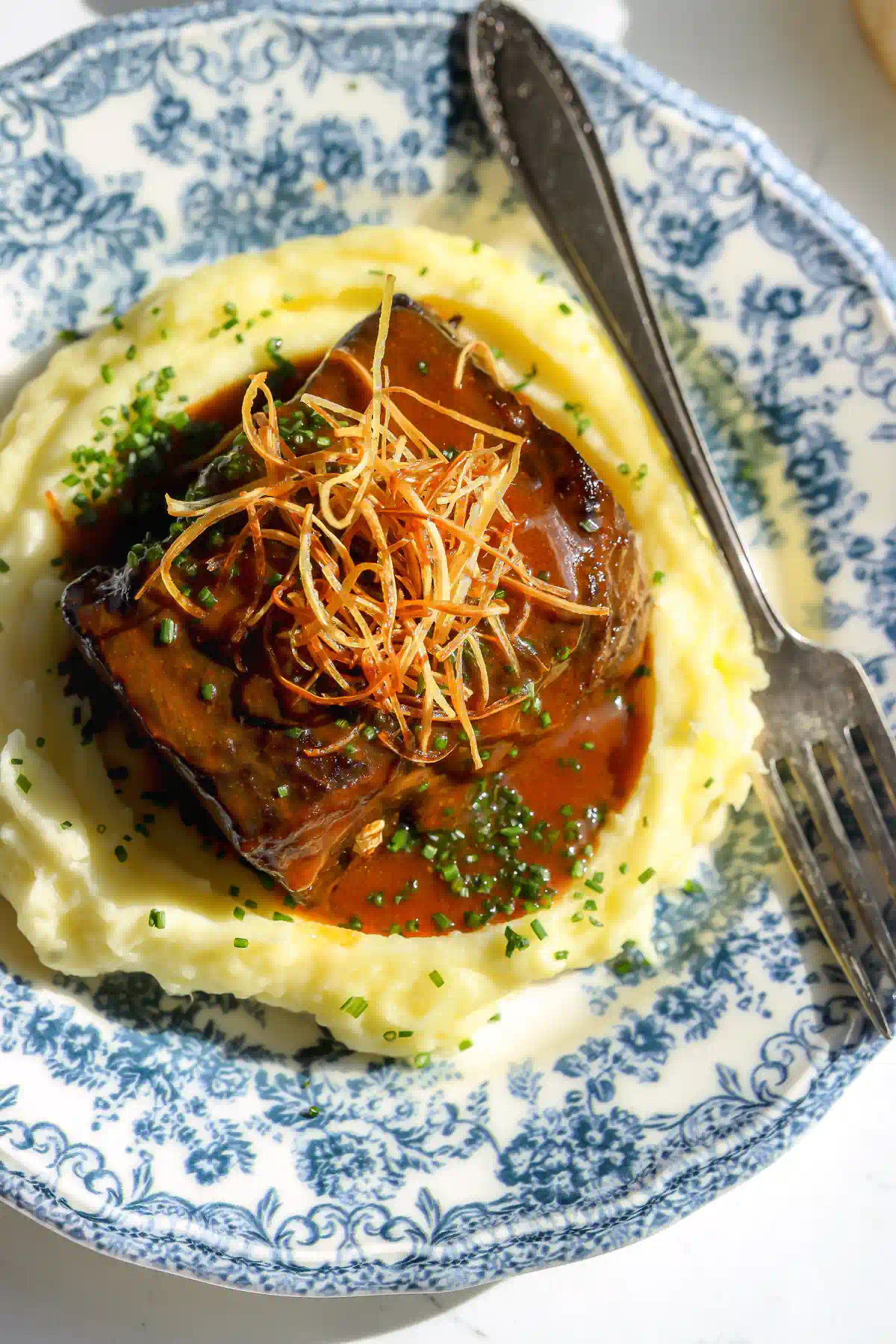
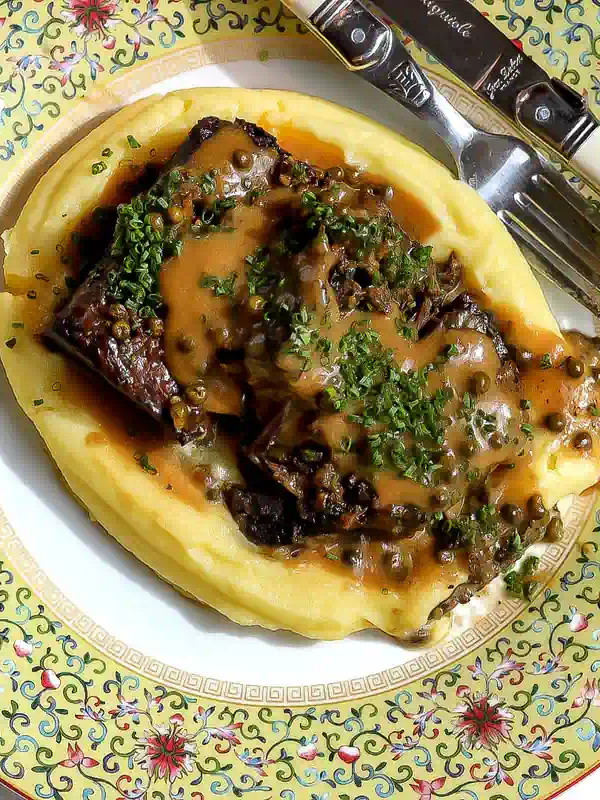
This maple miso glazed short ribs recipe is an Asian-inspired fusion. These boneless short ribs are slow-braised in a savory blend of red miso, maple, and gochujang. The tender, fall-apart beef is finished in a savory umami-forward sweet glaze and topped with crispy fried leeks.
Table of Contents
The Best Braised Miso Short Ribs for Entertaining
When I worked in the restaurant, my short ribs were a constant favorite. The catch was that once we sold out, we couldn’t just whip up a new batch mid-service because there is no rushing the braise. At home, that slow, hands-off time is exactly why this recipe works. It is the secret weapon when hosting a meal because you finish the messy searing and sautéing hours before anyone arrives. By the time your guests walk in, the kitchen is cleaned up, the entire house smells amazing, and the oven is the only one working.
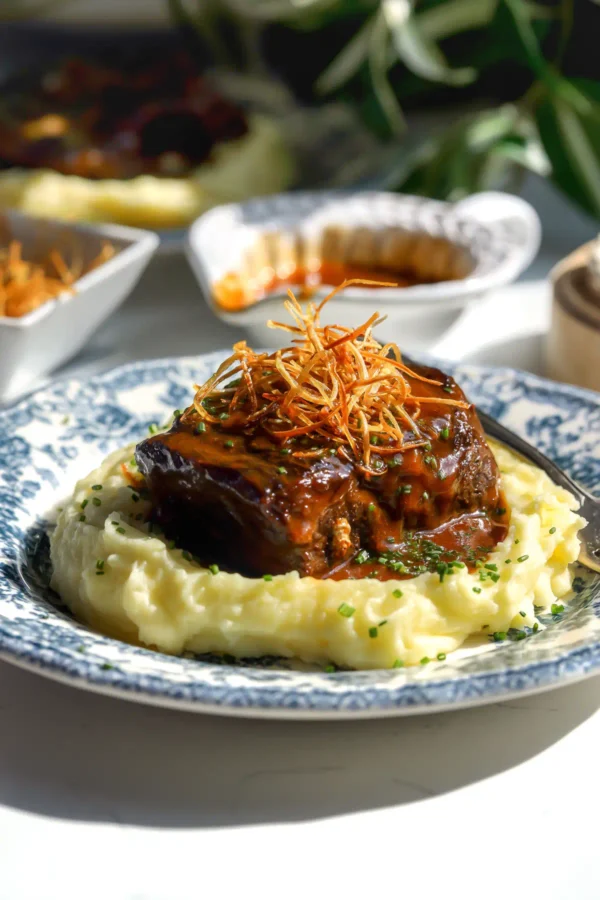
Now let’s talk about the taste. The red miso and gochujang provide a savory umami flavor, balanced by just a hint of maple and mirin. You get fork-tender beef coating in the amazing maple miso glaze, topped with the crispy leeks and herby chives. And all of this on top of a potato puree or polenta that just soaks up that amazing sauce. There was a reason why we would sell out of this all the time.
Ingredient Swaps
- Short Ribs: Boneless are my favorite here, but bone-in works beautifully too. Just add 30 minutes to the braise for that extra fall-apart texture. You can even try beef chuck if short ribs aren’t available – the flavor still runs deep.
- Gochujang: This is a very popular ingredient in gochujang Korean short ribs and it’s amazing in this recipe too so I wouldn’t skip it. You can mix chili paste, soy sauce and sugar and use that instead.
- Miso: I like red miso for its intensity, but white miso will give you a slightly lighter, sweeter result. Both work – it just depends how bold you want your sauce.
- Maple Syrup: You can swap this for honey if that’s what you have on hand.
- Beef Broth: Chicken stock or even vegetable broth will do in a pinch, though beef brings the deepest flavor.
Want to save this recipe?
Save it to your account
or email it to yourself
Similar Recipes
- Braised Beef Short Ribs with Polenta: This recipe is braised in a savory red wine reduction sauce and served along side creamy cheesy polenta.
- White Wind Braised Short Ribs and Labneh Potato Puree: These short ribs have a rich, velvety sauce balanced with bright citrus, herbal notes, and a touch of spice that keeps every bite interesting.
- Miso Red Wine Short Ribs: The bone marrow and red wine create a velvety base, while miso, tomato paste, and chile ancho add warmth, sweetness, and a slow, lingering spice.
How to Serve
Start with a London mule, the cocktail’s cinnamon and vanilla notes complement the dishes coming up. Follow with a crisp arugula fennel salad tossed in a honey dijon dressing as a bright starter. For the main course, serve the short ribs and glossy glaze spooned directly over a smooth, creamy potato purée or polenta to absorb the savory miso sauce. Finish the menu with a salted pecan pie. It has a nutty crust and dulce de leche caramel topping for a buttery, sweet ending to your savory meal.



Nadia’s Tips
- Maximizing the Sear: Even after a dry brine, surface moisture can pool. Pat the beef completely dry with a paper towel immediately before placing it in the pan. A perfectly dry surface guarantees immediate Maillard browning for a thick crust, preventing the meat from steaming in its own juices.
- Frying the Leeks: Leeks contain natural sugars that burn rapidly. Fry them over medium heat and remove them from the oil while they are still pale blonde. Residual heat will carry over, darkening and crisping them as they drain on the paper towels.
Frequently Asked Questions
Yes. These miso glazed short ribs develop deeper flavor when stored overnight. Strain the braising liquid, return the beef to the strained liquid, and refrigerate. The next day, remove the hardened surface fat before reheating the meat and adding the cornstarch slurry to finish the sauce.
Gochujang provides a specific fermented heat that is difficult to replicate. If necessary, mix equal parts sriracha and additional red miso paste. The final dish will still be delicious but will lack the exact depth of the traditional Korean ingredient.
While you can salt the meat immediately before cooking, a dry brine is strongly recommended. Salting in advance removes excess surface moisture and seasons the meat thoroughly. This guarantees a great sear which makes all the difference.
Bone-in cuts work perfectly for this method. They may require an additional 30 to 45 minutes in the oven to become fully fork-tender. Make sure that the braising pan is wide enough to hold the bone-in pieces in a single layer.
Keep the meat and sauce together in an airtight container in the refrigerator for up to four days. Reheat gently in a covered pan on the stovetop over low heat. Add a small splash of water or beef stock if the sauce becomes too thick while warming.
Create your serving timeline
What time are you serving dinner?
Equipment
- baking sheet with wire rack
- heavy oven-safe braising pan with lid
- tongs
- fine mesh strainer
- large saucepan
- small bowl
- whisk
- frying pan,
- slotted spoon
- paper towels
Ingredients
Dry Brine
- 3–4 lb boneless beef short ribs
- kosher salt, ½ tsp per pound of beef (1½–2 tsp total)
Sear and Braise
- oil, a drizzle for searing
- 1 onion, chopped
- 1 bunch green onions, roughly chopped
- 5 garlic cloves, peeled
- 1½ inch piece ginger, peeled and roughly chopped
- ⅓ cup red miso
- 3 tbsp gochujang
- 1 tbsp black peppercorns
- ⅓ cup maple syrup
- ⅓ cup mirin
- ⅓ cup rice vinegar
- 4 cups beef bone broth or stock
Sauce
- 1½ tbsp cornstarch
- cold water, enough to make a smooth slurry
Crispy Leeks
- 1 leek, cleaned, thoroughly dried, and sliced into thin matchsticks
- olive oil, for frying
- salt, a pinch
Serving
- potato purée
- chives, chopped
Instructions
- Dry Brine: Sprinkle the short ribs evenly with the kosher salt. Place on a wire rack set over a baking sheet and refrigerate uncovered for 1–12 hours. Remove from the refrigerator 30 minutes before searing.3–4 lb boneless beef short ribs, kosher salt
- Sear the Short Ribs: Preheat oven to 375°F (190°C). Pat the short ribs dry. Preheat a heavy oven-safe braising pan over medium heat for 5 minutes. Add a drizzle of oil and sear the ribs until deeply golden on all sides, working in batches as needed. Transfer to a plate.oil
- Prepare the Braising Base: Add the onion, green onions, garlic, and ginger to the same pan. Sauté over medium heat until golden, about 7–8 minutes. Stir in the miso, gochujang, black peppercorns, maple syrup, mirin, and rice vinegar. Cook for 2 minutes.1 onion, 1 bunch green onions, 5 garlic cloves, 1½ inch piece ginger, ⅓ cup red miso, 3 tbsp gochujang, 1 tbsp black peppercorns, ⅓ cup maple syrup, ⅓ cup mirin, ⅓ cup rice vinegar
- Braise: Return the meat and accumulated juices to the pan. Add the beef broth and bring to a simmer. Cover and bake at 375°F (190°C) for 30 minutes. Reduce oven temperature to 325°F (165°C) and continue braising, covered, for about 2 hours, or until very tender. Verify an internal temperature of at least 145°F (63°C), continuing to cook until fork-tender.4 cups beef bone broth or stock
- Finish the Sauce: Remove the beef and keep warm, allowing at least 3 minutes of rest before serving. Strain the braising liquid into a large saucepan, pressing the vegetables to extract the liquid. Discard the solids and skim excess surface fat. Bring to a simmer. Whisk the cornstarch with enough cold water to make a smooth slurry. Whisk into the sauce a little at a time, bringing briefly to a boil between additions, until the desired thickness is reached.1½ tbsp cornstarch, cold water
- Fry the Leeks: Add the leek matchsticks and enough olive oil to coat them to a frying pan. Fry over medium heat until lightly golden and crisp. Remove with a slotted spoon, drain on paper towels, and season with a pinch of salt.1 leek, olive oil, salt
- Assemble and Serve: Add the beef to the thickened sauce and warm through gently. Serve over potato purée with additional sauce, crispy leeks, and chopped chives.potato purée, chives
Kitchen Cam
Notes
Make Ahead: Braise the short ribs up to 1 day ahead. Cool and refrigerate promptly in the braising liquid. Add 1 extra cup beef bone broth or stock and reheat gently, covered, in the oven until the beef reaches 165°F (74°C). Strain the braising liquid and finish the sauce on the day of serving. Fry the leeks the morning of serving.
Nutrition
Nutrition information is automatically calculated, so should only be used as an approximation.


Do you think I can make this with brisket (miso maple short ribs with gouching sauce]
Hey Adrienne, Yes! The flavors would be great with that cut of meat. Brisket does cook differently than short ribs though. It dries out much easier. Make sure you adjust the oven temperature. Lower and slower is better for brisket. I would also flip it halfway through and make sure you are basting it with the sauce every once in a while. You’re looking for an internal temp around 200°F in the thickest part so it’s fall apart tender. Btw, you inspired me now, so expect a brisket recipe soon!
What red miso brand do you use?
Made short ribs for the first time tonight with this recipe and let me just say… WOAH. Followed the recipe to a T and it was 🔥! I think I’ll use this same recipe to try to make a brisket or something a little less fatty. But dang girl- absolutely amazing! Thank you!
Thanks Mandy! I’m glad you liked it! 🫶
This was phenomenal! I could eat the braising sauce like soup. I was short on time, so I finished them in a pressure cooker and then served them over brown-butter mashed potatoes, which paired perfectly with the sauce. The store only had bone-in short ribs, so I removed the bones and roasted them while the ribs were dry-brining, and then threw them into the pot for extra flavor.
That’s a great idea Sally! It’s the sauce amazing! I could eat it like a soup too! Thanks for the review ♥️