This post may contain affiliate links. Please read our disclosure policy.
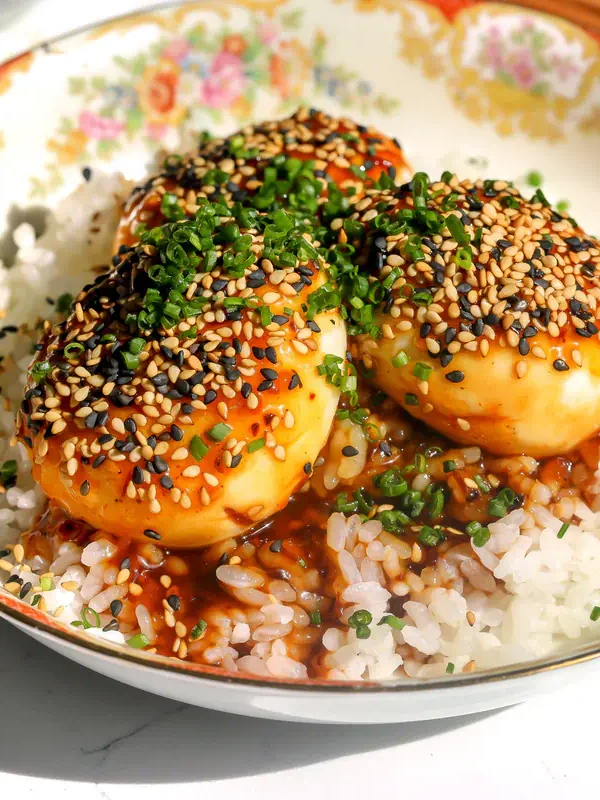
Tamago Kake Gohan (TKG), which translates to “egg over rice,” is a traditional Japanese comfort food made with piping hot dashi rice emulsified with a raw egg and soy sauce. I love how the steaming rice tempers the egg into a rich, silky sauce that clings to every grain. This authentic bowl is all about pure umami—seasoned with shoyu, mirin, and a dash of MSG. Top it with a jammy soy-cured yolk, toasted furikake, and crispy nori for the ultimate cozy Japanese breakfast. It’s fast, savory, and exactly what I crave for a late-night bite.
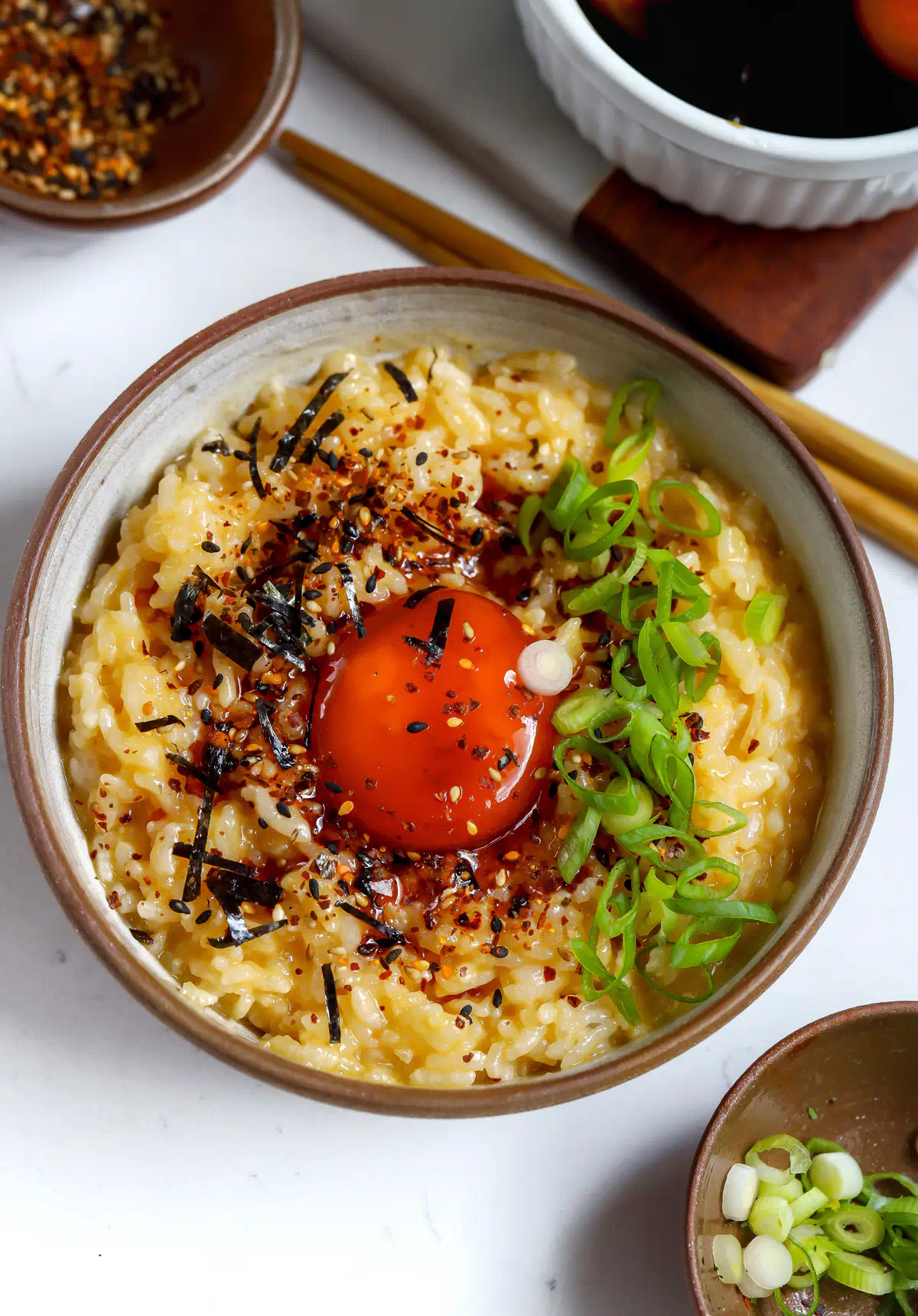
Table of Contents
What is Tamago Kake Gohan?
Tamago Kake Gohan, or TKG, is the ultimate Japanese comfort food and a beloved staple breakfast across Japan. It is deceptively simple: a bowl of steaming hot, freshly cooked short-grain rice topped with a high-quality, raw egg, a splash of soy sauce, and sometimes a few other seasonings.
The magic happens when you vigorously whip the egg into the piping hot rice with chopsticks. The heat tempers the egg, transforming it into a rich, silky sauce that clings to every single grain. A dash of high-quality soy sauce (shoyu) and MSG (Aji-no-moto) infuses the dish with a deep, savory umami flavor. This egg rice bowl is usually finished with toasted nori, furikake, and thinly sliced scallions. It is considered the true soul food of Japan because it is fast, nutritious, and deeply nostalgic, making it the perfect cozy meal to start the day or satisfy a late-night craving.
Are Raw Eggs Safe To Eat?
In Japan, raw eggs are a daily staple because their national grading system is designed specifically for raw consumption. The US standard is different but the statistical risk still remains incredibly low. The chance of encountering Salmonella in a standard US egg is roughly 0.005%, or 1 in 20,000. For the average healthy adult, practicing basic kitchen hygiene makes this a very low-risk choice.
Best Practices for Raw Consumption
- Temperature Control: Keep eggs refrigerated. Use them straight from the cold environment when you are ready to crack them.
- Shell Inspection: Discard eggs with hairline cracks or dirty exteriors. Bacteria reside on the outside and penetrate if the barrier is compromised.
- Skip the Wash: Washing eggs forces bacteria through the microscopic pores in the shell. Do not do it.
- The USDA Standard: Infants, older adults, pregnant women, and immunocompromised individuals should strictly avoid unpasteurized raw eggs.
What You Need To Know About Pasteurized Eggs
Commercially pasteurized in-shell eggs undergo a specific heat treatment to kill bacteria, making them the safest choice. They are notoriously hard to find in US grocery stores. When using delivery apps, the search algorithm almost always autocorrects your search to “pasture-raised.” Pasture-raised dictates the chicken’s lifestyle, not the bacterial safety of the egg.
Alternative Options
- Carton Egg Whites: The USDA requires all liquid egg whites to be pasteurized. They are entirely safe to consume raw. You lose the rich, savory yolk, but it maintains the creamy rice texture.
- The Sous Vide Method: You can pasteurize eggs at home to mitigate risk. Heat an immersion circulator to 135°F. Submerge uncracked, room temperature eggs for 75 minutes. Shock immediately in an ice bath for 20 minutes to halt the cooking process. The egg whites will turn a cloudy color, which is the correct visual cue.
TKG Preparation Styles
In Japan, the texture of your bowl is serious business. The Japan Tamago Kake Gohan Research Institute created an official chart classifying 16 distinct ways to mix your egg and rice. I translated their exact mixing chart below so you can see how the mechanical mixing methods change the final mouthfeel. (Spoiler: whoever wrote this chart definitely started having fun and trolling by the end of the list, at least I think).
| The Official Institute Mixing Chart: | The Results: |
| Sunrise: Pour soy sauce on the rice and mix. Pour beaten egg on top. | The soy seasons the rice directly, and the beaten egg provides a classic, uniform, creamy coating. |
| Typhoon: Mix the egg white and rice. Place the yolk on top. Add a little soy sauce. | Pre-mixing the white ensures it warms and combines thoroughly with the rice, leaving a rich, unbroken yolk to break into at the end. |
| The Fall: Drop the egg in and eat without mixing. Add a little soy sauce. Enjoy the distinct flavors of the yolk, white, and rice individually. | This method provides contrasting textures, allowing you to taste the plain rice, the silky white, and the rich yolk in separate bites. |
| Full Moon: Whip the egg white into a meringue and pour over the rice. Place the yolk on top. Add a little soy sauce. | This creates an exceptionally fluffy, airy, cloud-like texture. |
| Shooting Star: Simply add the egg and soy sauce and mix. | This is the fastest and simplest method, resulting in a classic, uniformly mixed bowl. |
| Flying Nimbus: Whip both the yolk and white into a meringue and mix with the rice. Add a little soy sauce. | Resulting in an incredibly light, almost soufflé-like rice dish. |
| Only You: Yolk only. Add a little soy sauce. | Provides an intensely rich and creamy flavor, removing the slickness of the egg white. |
| I Miss You: Mix leftover egg white with the rice. Add a little soy sauce. | A practical way to use leftover whites, resulting in a lighter, slightly less rich bowl of rice. |
| Macho Men: Mix only the egg white with the rice. Add a little soy sauce. | Ideal for those avoiding the fat of the yolk, creating a warm, light, and silky bowl. |
| Day After Tomorrow: Freeze the yolk. Thaw it and place it on the rice. Add a little soy sauce. | Freezing changes the protein structure, making the yolk incredibly dense and jam-like. |
| Dark Side: Marinate the yolk in soy sauce overnight. Place it on the rice. | The yolk absorbs the salt, making it firm, tacky, and bursting with concentrated umami. |
| Summer Salt: Salt TKG (Use salt instead of soy sauce). | Highlights the pure, clean flavor of the egg and rice without the earthiness of soy. |
| Get Wild: Mix the egg and rice. No seasoning. | Tastes only the fundamental, raw flavors of the ingredients themselves. |
| SKG: Pour soy sauce on the rice (no egg). | Let’s be honest, this one is just seasoned rice. |
| TK: Egg only (no rice). Add a little soy sauce to your liking. | This is eggs. |
| Imagination: Prepare egg, rice, and soy sauce. Do not eat it. Do not eat, just feel it. | This one would just be torture. |
The Secret to Perfect TKG Rice
Because TKG has so few ingredients, the rice has to be exactly right. You need Japanese short-grain white rice (like Koshihikari) to get that plump, sticky bite. Long-grain or jasmine rice will not absorb the egg properly.
Washing and Prep
- The Fast Way (Just Wash): Put your dry rice in a bowl, add cold water, and swish it aggressively with your hands. Drain and repeat 3 to 4 times until the water runs completely clear. This removes extra starch so your rice does not turn to mush.
- The “If You Have Time” Way (Wash and Soak): Wash the rice until clear, then let it sit in its exact measured cooking water for 20 to 30 minutes before turning on the heat. This hydrates the core of the grain so it cooks evenly.
How to Cook It
- The Preferred Method (Rice Cooker): A rice cooker yields the most consistent texture. Add your washed (and optionally soaked) rice and water to the basin. Run the standard “White Rice” or “Sushi Rice” cycle.
- The Stovetop Method: Combine your washed rice and water in a pot with a tight-fitting lid. Bring to a rolling boil over medium-high heat. Do not open the lid. Drop the heat to the absolute lowest setting and simmer for 12 to 15 minutes. Turn off the heat and let it steam, completely undisturbed, for 10 minutes.
- Add The Egg Immediately: This entire dish relies on temperature. You must use piping hot, steaming rice straight from the cooker or pot. That high heat gently cooks the raw egg as you stir, turning it into a rich sauce without scrambling the proteins.
Topping Variations
Classic TKG is a blank canvas. Once you have that rich, velvety egg and hot rice base, you can build out the texture and flavor profiles. Here are the some great ways to customize your bowl:
- The Classic Crunch: Crumbled toasted nori and thinly sliced green onions. This adds salt and a sharp bite that cuts through the heavy yolk.
- The Cured Yolk: Swap the raw egg for a kombu soy-cured egg yolk. Marinating the yolk draws out the moisture, leaving a firm, jammy texture and concentrated umami.
- The Spicy Kick: A heavy spoonful of salsa macha and a dusting of shichimi togarashi. The roasted heat of the salsa macha works well with the egg, while the seven-spice blend adds a bright warmth.
- The Heavy Route: Drop a small pat of unsalted butter directly into the hot rice with your soy sauce. The dairy melts into the starch for a very rich finish.
- The Smoky Umami (Okaka): Add a handful of bonito flakes and a drizzle of toasted sesame oil. The heat from the rice slightly wilts the flakes, releasing a smoky aroma.
How to Serve
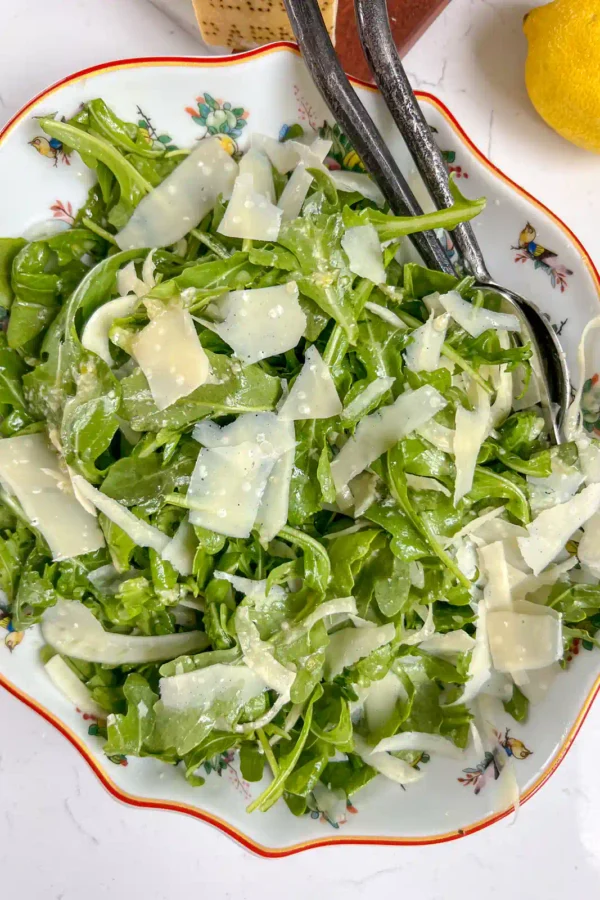
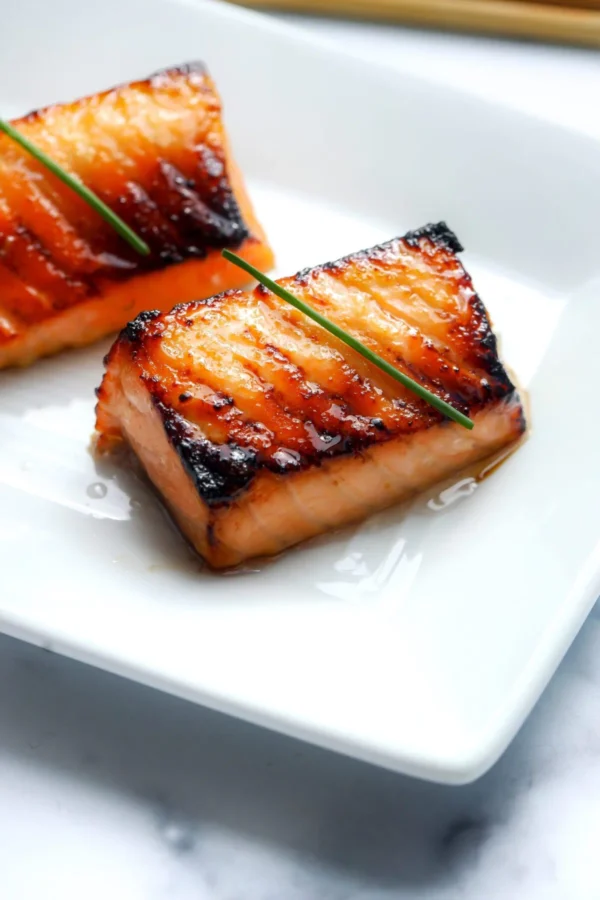
In Japan, TKG is heavily tied to the morning routine and often hits the table with a steaming bowl of miso soup, crunchy tsukemono (pickled vegetables), and some grilled fish. I personally recommend an arugula salad or a cucumber fennel salad. If you are serving this for a late weekend brunch, lean into a fresh cold cucumbertini that goes with the entire feel.



Want to save this recipe to your collection?
Tamago Kake Gohan FAQ
The risk of salmonella in a standard US egg is roughly 0.005%, or 1 in 20,000. For most healthy adults, following basic kitchen safety makes this an extremely low-risk choice. Using commercially pasteurized in-shell eggs is the best way to ensure total safety without sacrificing the raw texture. For more information, see my Raw Egg Safety Section.
Short-grain Japanese rice is required because its starch content creates the sticky base needed to hold the sauce. Jasmine or Basmati rice will not absorb the egg correctly.
Very hot rice and whip, whip, whip. You want to make sure you are using your chopsticks to whisk vigorously for at least thirty seconds. You are going for a thermal emulsion where the heat from the rice thickens the egg.
Yes. Unfortunately, there have been a lot of untrue rumors spread about MSG. The FDA has classified MSG as “generally recognized as safe” for decades. It is the sodium salt of glutamic acid, an amino acid that occurs naturally in foods like tomatoes, aged cheeses, and mushrooms. Your body processes the MSG in this recipe the same way it processes the natural glutamates in a steak or a bowl of pasta.
Chef Nadia’s Tips
- Choose high-quality soy sauce or tamari: Use a traditionally brewed soy sauce labeled Honjozo for the best flavor, or opt for tamari if you want a richer, thicker consistency that is less salty and naturally gluten-free.
- Did you know the TKG Research Institute has 16 different ways to simply add the eggs and soy sauce into the rice? I’m using Sunrise with the optional Dark Side cured egg yolk. The Flying Nimbus looks interesting though; it’s where you whip the egg into a stiff, cloud-like meringue before folding it into the hot rice. Check out my TKG Preparation Styles if you want to see all the options!
Equipment
- Small container
- chopsticks
Ingredients
Kombu Soy Cured Egg Yolk (optional, but highly recommended)
- 1 egg yolk, I personally like to make extra just in case
- soy sauce or tamari, enough to cover the yolks
- 1/4 tsp mirin
- 1/2 strip kombu
Tamago Kake Gohan
- 1 1/4 cup hot cooked white rice, short grain (1/2 cup dry)
- 1 egg
- 2 tsp tamari
- 3/4 tbsp mirin
- 1 dash msg, my favorite is aji-no-moto
Optional Toppings
- 1 green onion, green and light green part, thinly sliced
- salsa macha
- shichimi togarashi
- nori pieces
Instructions
- Mix the Rice: Add your piping hot rice to a bowl and make a well in the center of the rice. Crack a whole egg in the middle and then add tamari, mirin and msg. With chopsticks, whip vigorously to emulsify until the rice and egg are creamy and a little frothy.
Kitchen Cam
Notes
Nutrition
Nutrition information is automatically calculated, so should only be used as an approximation.