This post may contain affiliate links. Please read our disclosure policy.
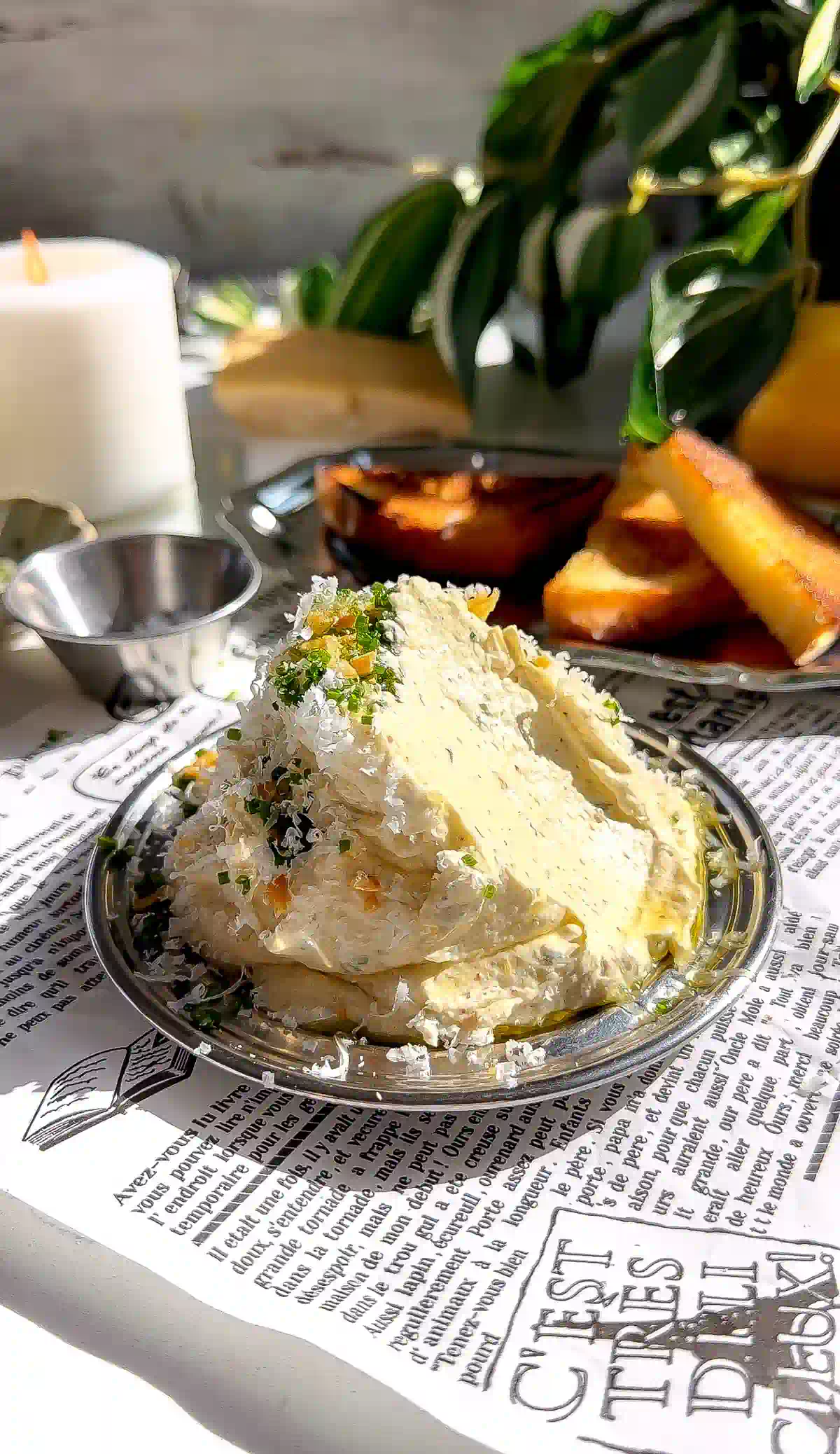
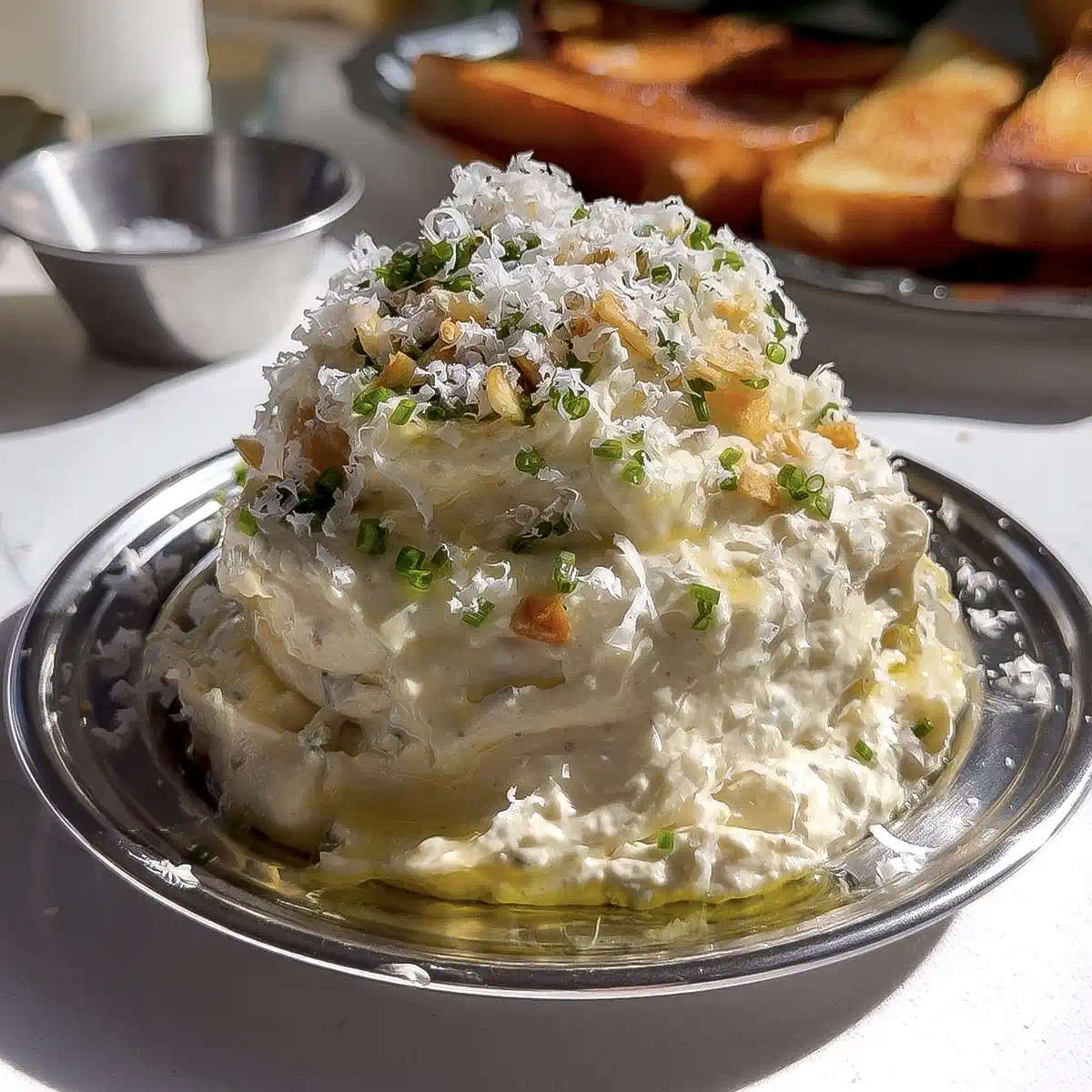
This roasted garlic and Parmesan whipped butter is such a classic flavored butter pairing. Brown high-quality butter and then whip it with caramelized roasted garlic, Parmigiano-Reggiano, and herbs until it’s a savory, fluffy butter dream. The texture and flavors are perfect when spread across crispy toast or melted on top of savory dishes.
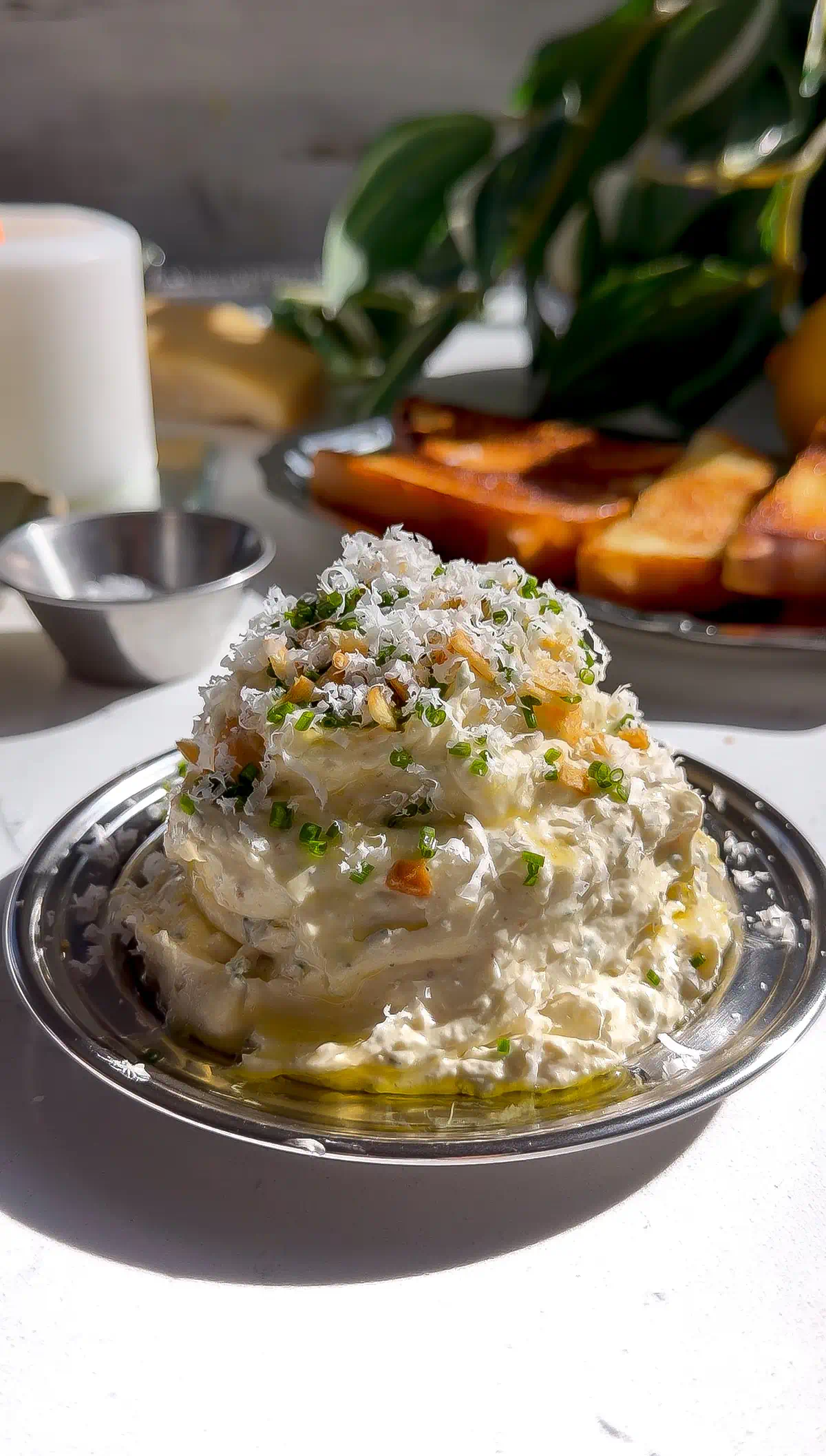
Table of Contents
Mastering the Whipped Butter Technique
For more details on getting the perfect texture, the right equipment, and the best ways to soften butter, read my complete classic whipped butter guide.
The Brown Butter Chill: Browning melts the butter completely to get that nutty flavor. You must chill it over an ice bath until it gets back to a firm but soft room temperature. You should be able to press your thumb into it easily. If you rush and add the heavy cream while the butter is still warm, the mix will separate. You will end up with a greasy liquid instead of a light, whipped spread.
Skip the Browning: If you are short on time, skip browning the butter and just use a high-quality, room-temperature butter. You will lose the toasted caramel notes, but the sweet roasted garlic still gives it plenty of flavor. To soften butter quickly, slice it into small cubes. Do not use a microwave. The microwave ruins the structure of the butterfat, making it impossible to trap the air you need for a fluffy whip.
Whipping Technique: Start your mixer on low speed to cleanly mix in the heavy cream and the sticky roasted garlic paste. Once it is blended together, turn the speed up to high. Whip it for 3 to 5 minutes until it becomes light, creamy, and fluffy.
Choosing the Best Mixer
When making whipped butter, use a mixer with a wide range of speeds. You need a slow start to incorporate the liquid and a high-power finish to build that silky, aerated structure.
• Stand Mixer: This is the best tool for a larger batch. Use the whisk attachment instead of the paddles for best results.
• Handheld Mixer: This option works perfectly for smaller batches. Use the standard double beaters or the whisk beaters and a deep bowl to prevent the heavy cream from splashing. Move the mixer in a slow, steady circle to catch every bit of butter on the sides for an even, fluffy whip.
Make-Ahead Ingredient Prep
Roasted Garlic: You can roast the garlic up to 3 days in advance. Squeeze the soft garlic out of the skins into an airtight container and keep it in the fridge. When you are ready to make the butter, let the garlic sit on the counter for 15 minutes. This helps it mix smoothly into the butter without leaving cold lumps.
Brown Butter: You can brown the butter up to 2 weeks ahead of time. Pour the hot melted butter and the browned bits straight into an airtight container and store it in the fridge, where it will harden into a block. Do not whip it before chilling. When it is time to make the recipe, let the container sit on the counter until the butter softens to room temperature. It should be firm but easy to press. Do not use a microwave to speed this up, or you will melt the butter too much, making it impossible to whip air into it.
Crispy Fried Garlic: You can fry the garlic slices up to a week in advance if you keep them in an airtight container at room temperature. To make sure they stay super crunchy, fry them over low heat until the oil stops bubbling heavily. No bubbles means the water inside the garlic is completely gone. Drain them on paper towels and let them cool all the way before putting the lid on, so they do not get soggy. If your kitchen is warm or damp and they lose their crunch, spread them in an air fryer or toaster oven at 250°F for 2 to 3 minutes to dry them out. Watch them closely so they do not burn and turn bitter, then let them cool again before serving.
Toppings: Grate the Parmigiano-Reggiano up to 4 days in advance and keep it in an airtight container in the fridge. Chop the parsley 1 to 2 days ahead of time, storing it in the fridge wrapped in a slightly damp paper towel. Wait to chop the chives until right before serving, because they will lose their fresh flavor and get mushy if cut too early.
How To Roast Garlic
Slice 1/4 to 1/2 inch off the top stem end to expose the beautiful cloves inside. Remove the loose outer layer of the garlic bulb. Make sure you leave the tight skins intact that hold the cloves together.
Drizzle high-quality olive oil directly onto the exposed cloves so it seeps down deep inside the bulb. There are two roasting options:
• The Garlic Roaster: Place the oiled garlic heads inside a terracotta or ceramic garlic roaster. Put the lid on and roast at 400°F for 1 hour until the cloves are deeply golden and jammy. If you are using unglazed terracotta, soak the roaster in water for 15 minutes first and always start it in a cold oven so the clay does not crack.
• Aluminum Foil: Place the oiled garlic in a small baking dish to catch any delicious, savory oil leaks. Wrap the bulb tightly in aluminum foil and roast at 400°F for 1 hour.
Let the garlic cool at room temperature for 10 to 15 minutes before you touch it. Squeeze the bulb from the root end up to easily get out those caramelized cloves.
Storage, Freezing, and Best Practices
Storage: Because this recipe uses heavy cream, you must store any leftover butter in the fridge. Keep it in an airtight container for up to 1 to 2 weeks. Before serving, let it sit on the counter for 15 to 20 minutes so it softens up and is easy to spread.
Freezing: You can freeze the whipped butter base for up to 3 months. Store it in a freezer-safe, airtight container so it does not pick up other smells from your freezer. To serve, thaw it overnight in the fridge, then let it sit at room temperature. Freezing can sometimes make the butter lose air, so you may need to give it a quick mix with a hand mixer to get it fluffy again.
Fresh Ingredients: Don’t freeze or refrigerate the butter with the fresh herbs and crispy fried garlic mixed in or sprinkled on top. Scrape them off first. Keep your crispy garlic separate at room temperature in a dry container, and always add your fresh garnishes right before you serve.
When To Throw It Away
You can leave this butter out during a meal so it stays soft and easy to spread. But do not leave it on the counter overnight. Garlic mixed into butter creates an oxygen-free space where harmful bacteria can grow if left out at room temperature for days. Always put it back in the fridge after you finish serving. For general food safety, do not leave it out for more than two hours.
If you are unsure if your butter is still good, check for these signs:
- Smell: If it smells sour, soapy, or like old paint, the butter has gone bad.
- Mold: Any white, green, or black fuzz means the whole container is ruined. Do not scrape it off; throw the entire batch away.
- Color: Fresh roasted garlic butter is an even golden-brown. If you see gray or dark spots, it is no longer safe to eat.
- Texture: If the butter separates, gets grainy, or feels slimy instead of creamy, the mix has broken down and bacteria may be growing.
More Savory Whipped Butter Recipes
Caesar Whipped Butter: Combines browned butter with capers, grated garlic, and anchovies for a rich, umami profile.
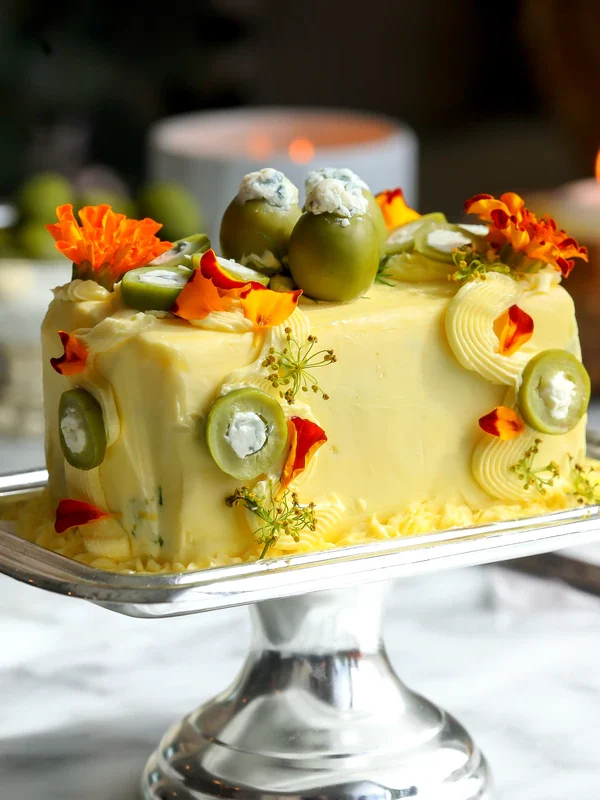
Dirty Martini Whipped Butter: Blue cheese, Castelvetrano olives, and vodka for a sharp, briny spread.
Crispy Shallots Whipped Butter: A sweet and savory spread infused with shallot oil, topped with crispy fried shallots, garlic, and honey.
Whipped Butter Radish Tower: This is a layered whipped butter tower, topped with fresh chives and paper-thin radish slices.
How to Serve Roasted Garlic Parmesan Butter
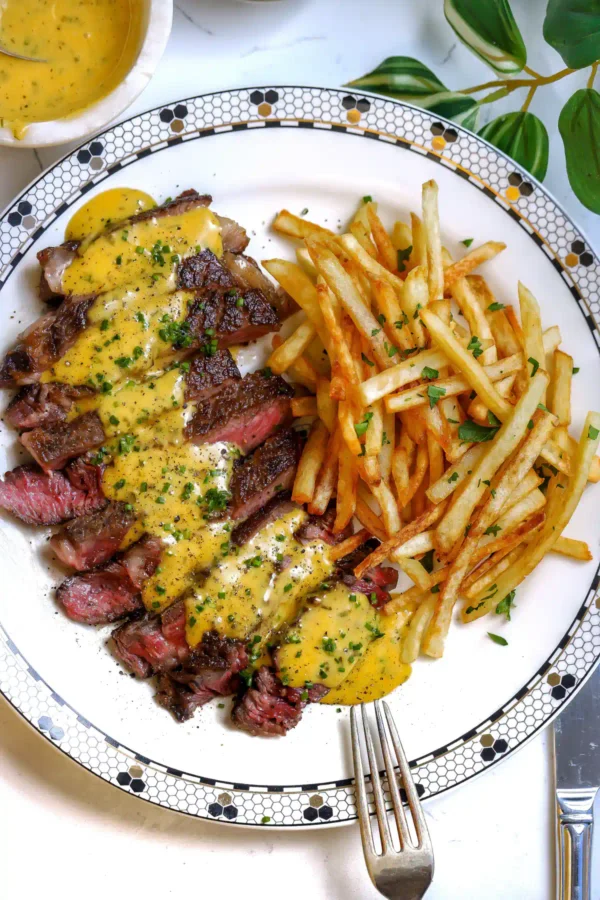
Steak Frites: Skip the traditional béarnaise and drop a dollop of this roasted garlic brown butter onto the hot ribeye while it rests. That roasted garlic butter will be soaked right into the steak, giving you that delicious flavor all the way through.
Domino Potatoes: These thinly sliced, herb-roasted potatoes feature perfectly crisp edges that are ideal for dragging through a soft, aerated butter.
Chicken Francese: Serve this spread alongside these lemony, lightly breaded chicken cutlets to complement the bright, citrus profile.
French Onion Bread: Instead of the standard butter used to toast the baguette in this recipe, swap in the roasted garlic whipped butter for a deeper, caramelized base.


Want to save this recipe to your collection?
Frequently Asked Questions
Yes, but you will need to adjust the salt. Different brands use varying amounts of salt, making it hard to control the final flavor. If you use salted butter, skip the flaky sea salt during the whipping process. Taste the finished butter at the end and gently fold in a pinch of salt only if the spread still needs it.
Yes, but the standard substitution ratio is 1:3 because dried herbs have a highly concentrated flavor. For every 1 tablespoon of fresh herbs required, use 1 teaspoon of dried herbs. Dried herbs need time to hydrate in the butter to release their flavor, so you must mix it in at least an hour ahead of time.
Raw garlic is very sharp and aggressive. It will completely ruin the sweet, caramelized flavor profile required for this spread. Store-bought roasted garlic paste often contains citric acid as a preservative, adding an unwanted sour tang. You can use pre-peeled cloves, but they will dry out and burn if roasted dry. Submerge the peeled cloves completely in olive oil in a small baking dish. Slow-roast them at 300°F until soft and spreadable, creating a garlic confit.
It really is best to grate it yourself. Pre-shredded cheese is coated in anti-clumping ingredients. These starches won’t emulsify well with the fat, leaving your butter gritty and sandy. Using freshly grated Parmigiano-Reggiano ensures a velvety texture and a sharp, punchy saltiness that store-bought tubs cannot match.
Equipment
- garlic roaster, or aluminum foil
- saucepan
- Mixing bowls
- Ice bath
- Skillet
- hand mixer, or stand mixer with paddle attachement
Ingredients
- 1 head garlic
- 1 tbsp olive oil
- 8 oz unsalted butter
- 1/3 cup Parmigiano-Reggiano, grated
- 3 cloves garlic, thinly sliced
- olive oil, for frying
- 2 tbsp heavy cream
- 1 lemon, zest only
- 1 tsp honey
- 2 tbsp parsley, chopped
- 1 tsp oregano
- flaky salt, to taste
Toppings
- 1 drizzle olive oil
- chives, chopped
- Parmigiano-Reggiano, freshly grated
- flaky salt
Instructions
- Roast the Garlic: Preheat oven to 400°F (204°C). Peel the loose outer layers from the head of garlic, leaving the bulb intact. Cut 1/4 to 1/2 inch off the top. Place the garlic in a garlic roaster, drizzle the top with 1 tbsp olive oil and cover. Roast for 1 hour, or until the cloves are soft.1 head garlic, 1 tbsp olive oil
- Brown the Butter: Add butter to a saucepan over medium heat. Cook, stirring frequently, until the butter reaches a deep golden brown and develops a nutty aroma.8 oz unsalted butter
- Chill the Butter: Transfer the butter to a mixing bowl and add half of the grated Parmigiano. Place the bowl over an ice bath and whisk until thickened.⅙ cup parmigiano reggiano
- Fry the Garlic: Place sliced garlic cloves in a cold small skillet and pour in enough olive oil to fully cover. Set the pan over medium-low heat and gently fry until the slices turn a light golden color, about 5 to 8 minutes. Remove with a slotted spoon let drain on a paper towel, then chop.3 cloves garlic, olive oil
- Whip the Butter: Squeeze in the roasted garlic, remaining Parmigiano, heavy cream, lemon zest, honey, parsley, oregano, and salt to the chilled butter bowl. Using a hand mixer or stand mixer, whip until fluffy.⅙ cup parmigiano reggiano, 2 tbsp heavy cream, 1 lemon, 1 tsp honey, 2 tbsp parsley, 1 tsp oregano, flaky salt
- Assemble: Spoon the whipped butter to a serving dish. Drizzle of olive oil, and top with chives, freshly grated parmigiano, flaky salt, and the crispy garlic.chives, Parmigiano-Reggiano, flaky salt, 1 drizzle olive oil
Kitchen Cam
Nutrition
Nutrition information is automatically calculated, so should only be used as an approximation.