
This post may contain affiliate links. Please read our disclosure policy.
Miso glazed Chilean sea bass is about as easy as an impressive dinner gets. Four ingredients, and the marinade does all the work for you. It tenderizes the fish and seasons it all the way through, sweet and savory right to the center, while it sits in the fridge and you do nothing.
Then the heat hits it. The sugar in the glaze caramelizes under the broiler into a dark, sticky crust while the fish stays rich and buttery underneath. It’s the same marinade behind my miso black cod, and sea bass takes to it just as well. A restaurant plate with very little work.
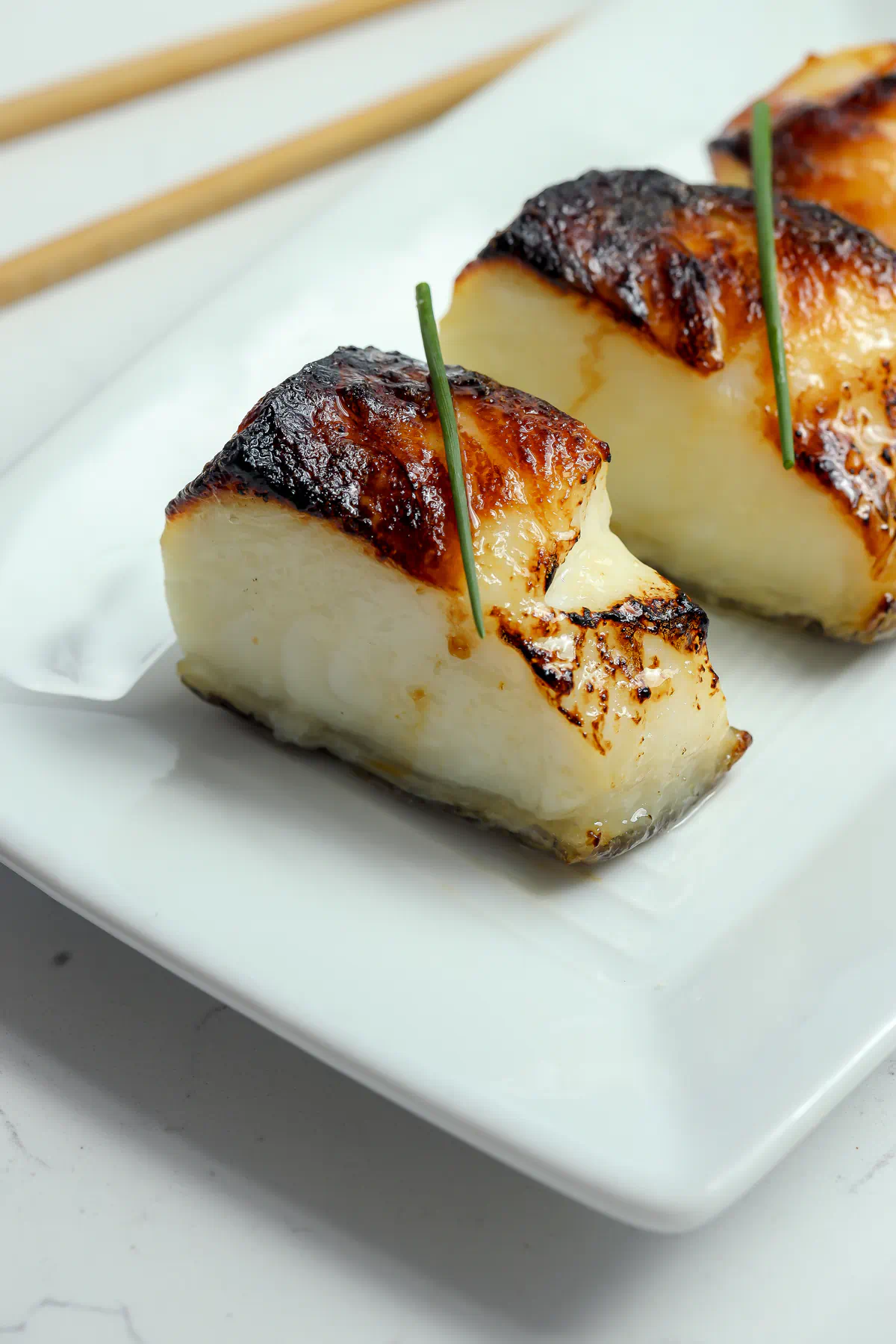
Table of Contents
About Chilean Sea Bass
Chilean sea bass is one of the most forgiving fish you can cook. It’s rich and buttery, with enough natural oil that it soaks up two days of miso without falling apart, and under the broiler it stays moist while the sugar on top turns into a dark, caramelized crust. Pull it a minute late and it won’t dry out on you.
What It Is and Other Names
It isn’t a bass. It’s Patagonian toothfish, a deep-water fish from the cold Southern Ocean around Antarctica, and “Chilean sea bass” is a name a Los Angeles wholesaler named Lee Lantz came up with in 1977 because nobody was going to order something called a toothfish. It worked. The name caught on so completely that the FDA made it official in 1994, and most people have never heard the real one. You’ll still see it sold as toothfish, or as merluza negra and mero in other countries.
Where to Find It
This is the hard part. Regular grocery stores rarely carry it, and the ones that do charge for the privilege. It sells almost entirely frozen, usually frozen right on the boat, so the freezer case is your best bet, or ask the fish counter to order it. Online seafood shops ship it too. It also has a real overfishing history, so if sustainability matters to you, the simplest thing to look for is the blue MSC label, which means it came from a fishery certified as sustainable.
Buying It Frozen
Almost all of it is sold frozen. It’s caught far out in the Southern Ocean and frozen right on the boat, and even the “fresh” fillets at most counters were frozen first and thawed. If yours is still frozen, thaw it in the fridge overnight, never on the counter, and don’t refreeze it once it’s thawed.
Make-Ahead and Storage
Make Ahead: The marinade can be made a few days ahead and kept covered in the fridge. The fish needs at least 4 hours, but I strongly recommend 24 hours and up to 2 days. This is a make-ahead dish either way, so plan accordingly.
Freezing: If you found truly fresh, never-frozen fish, you can freeze it raw in the marinade for two to three months, then thaw it in the fridge before broiling. But since almost all sea bass is frozen on the ship, it will already be frozen and thawed once. So unthawing it again, adding the marinade, then refreezing it will make it mushy when you go to actually make it.
Leftovers: Cooked sea bass keeps in an airtight container in the fridge for three to four days. Reheat it gently in a low oven or a hot pan. Don’t microwave it, it dries the fish out and turns the glaze gummy.
How to Serve
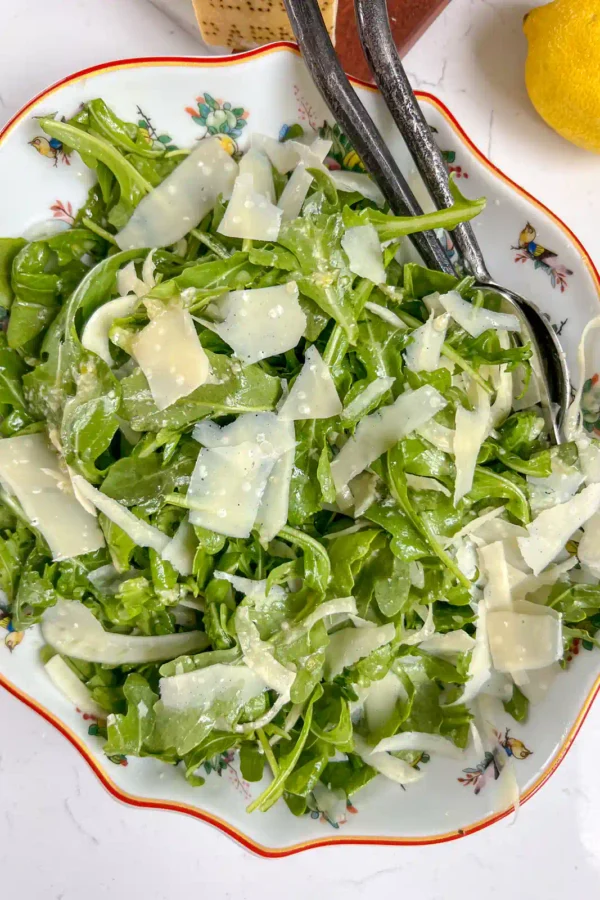
I keep this one simple. The miso glaze is too good to leave on the foil, so steamed white rice goes underneath to catch it. Pour a cold Cucumbertini to start, add a bright, peppery Arugula Fennel Salad or Cucumber Fennel Salad on the side. Finish with Amaretto Peaches, warm over ice cream.Title goes here



Want to save this recipe to your collection?
Frequently Asked Questions
I pull mine at 135°F at the thickest part, where it’s moist and just flaking. At 145°F it’s fully cooked and a little firmer. Chilean sea bass has so much natural oil that it’s hard to overcook, so it holds up well across that range. No thermometer? Go by the flake. When it pulls apart easily with no raw look left in the center, it’s done.
No, they’re different fish. Black cod is sablefish, Chilean sea bass is Patagonian toothfish. They get compared because both are rich, fatty white fish that take beautifully to a miso marinade, but sea bass holds together a bit firmer where black cod cooks up softer and almost spoonable. Either one is great with this glaze.
The broiler is what gives you that dark, caramelized top, so it’s how I make it. If you can’t broil, bake it at 400°F until it flakes, then run it under the broiler for the last few minutes for the crust. You lose a little of the char going straight to the oven, but it still tastes great.
White miso, the mild, slightly sweet kind sometimes labeled shiro. I use Cold Mountain’s Mellow White. You can get away with red miso, but it’s much saltier, so cut the amount back and taste it once it’s cooled, before the fish goes in.
Salmon is the easy swap and far easier to find. Try my miso salmon, same marinade, same broiler. Black cod is the closest match if you can track it down. Both take this glaze just as well.
Equipment
- small saucepan
- non-reactive dish, or Zip-Top Bag
- Rimmed baking sheet
- aluminum foil
- pastry brush
Ingredients
- 1/4 cup mirin
- 1/4 cup sake
- 1/3 cup cane sugar
- 1/3 cup white miso
- 2 lb Chilean sea bass, (aka Patagonian Toothfish)
Instructions
- Make the Marinade: Boil the mirin and sake for 3 minutes. Add the sugar and miso and cook a couple of minutes over medium-low, without letting it boil. Let it cool completely.1/4 cup mirin, 1/4 cup sake, 1/3 cup cane sugar, 1/3 cup white miso
- Marinate: Pour the cooled marinade over the sea bass, cover it very tightly, and refrigerate for 24 to 48 hours.2 lb Chilean sea bass
- Broil: Position an oven rack about 6 inches from the broiler and preheat the broiler to high. Line a baking sheet with foil. Broil for about 7 minutes, until the top caramelizes and the fish is opaque and flakes easily, about 135°F (57°C). Watch closely because the miso and sugar darken quickly.
- Finish: Add the leftover marinade to a saucepan and boil for at least 5 minutes, stirring frequently. Brush over the cooked fish before serving.
Kitchen Cam
Nutrition
Nutrition information is automatically calculated, so should only be used as an approximation.





Thanks for publishing this fabulous recipe. My friend made this for me and then I finally got to make it myself but with cod, as one cannot find Seabass anywhere in Colorado (that I know of!) Anyway, I would like to make this recipe for our camping trip. I don’t use the oven just the stove top. Would it be OK to sauté it do you think? Maybe 4 min per side or what is your suggestion?
Hey Janet. I’m so glad that you love this recipe! Seabass can definitely be hard to find but cod is a great fish to switch it for. It will be great sautéed instead of broiled. As for the how long you should sauté it, that really depends on the thickness of the filet. Sear each side for 2-4 minutes on medium-high heat, and you’ll know the fish is cooked when it turns opaque and flakes easily with a fork. Hope that helps!
Fabulous recipe!!! I have tried both your miso salmon and sablefish recipes, but THIS RIGHT HERE…. Wow. I picked up a lb of fresh Chilean sea bass, and marinated for 2 days. Magically. Sea bass is already so perfect with simple salt and pepper, but the miso marinate took it to a different level. Your recipes are beautiful and have convinced my family I know how to cook lol!! Please never stop posting recipes. #TeamNadia