This post may contain affiliate links. Please read our disclosure policy.
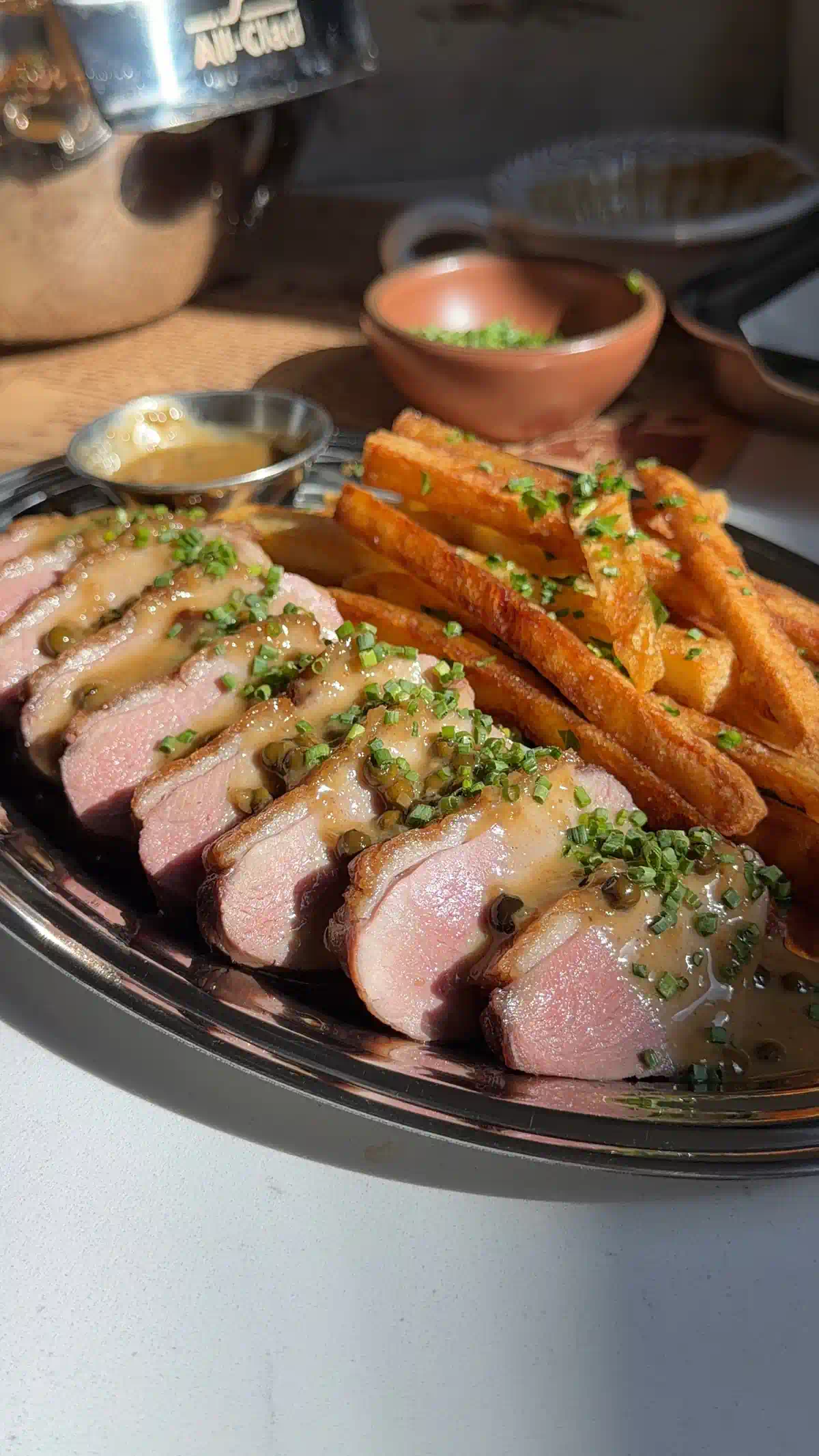
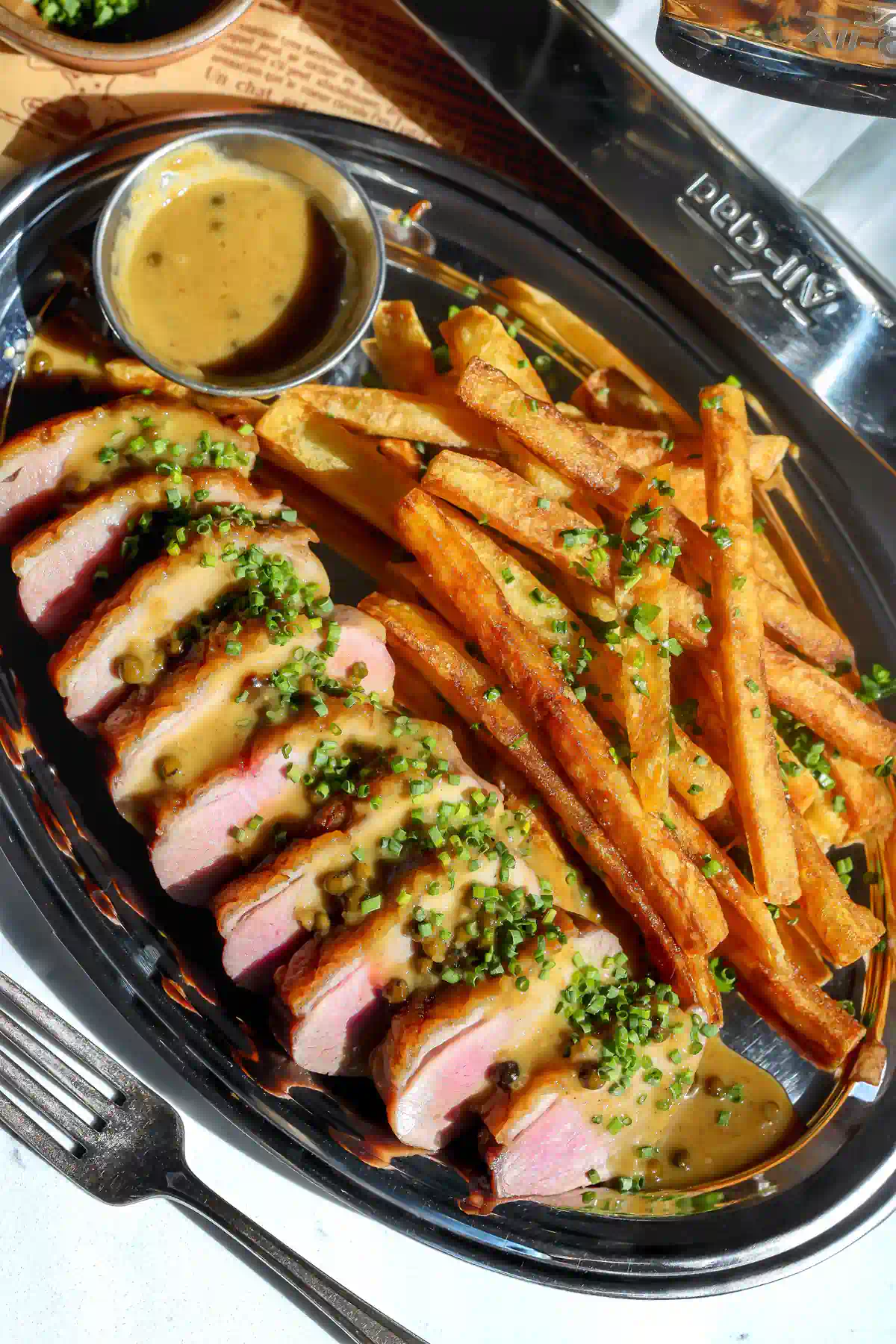
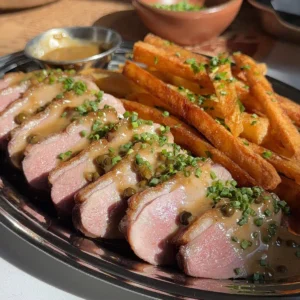
Perfectly crispy pan-seared duck breast covered in a savory, creamy, buttery pan sauce, and frites to go with it. This recipe comes out like a restaurant dish without the restaurant, and it’s easier than you’d think.
A lot of people are intimidated to cook duck breast because it’s not a typical protein that people use. But here’s the good news. I have a simple secret weapon that gives you a perfectly crispy skin and gorgeous sear every time.
Dry brine the duck first, then the duck breast goes skin side down, straight into a cold pan. You don’t even need to worry about you preheating the pan with this one. There’s no technique to get wrong. Then you pan-sear it low and slow. Duck is easier to cook than you would think and you end up with an impressive and delicious dish, every single time.
Table of Contents
Prepare the Duck Breast
Even though duck is poultry, it tastes and cooks more like a tender steak. By following these couple of tips, your duck will be moist and juicy in the center, with a gorgeous criss-cross scored, crispy skin.
Dry-Brine the Night Before: This is such a simple step that really sets you up for success. The night before, you pat the duck breasts dry, sprinkle them with kosher salt, set them on a wire rack with a baking sheet underneath, and pop them uncovered in the fridge. That’s it. This step that takes a few minutes seasons the meat and dries out the skin, and that makes all the difference when you go to sear it.
Score the Duck Breast Skin: Lightly scoring the duck skin does more than just look pretty. Cut a criss-cross through the fat but not into the meat. It opens the skin up so the heat can reach the fat and render it out. Instead of rubbery skin, you get crispy skin, and it looks pretty too.
Pan-Seared Duck Breast
Don’t Preheat the Pan
This is for all you people out there that struggle to get your pan temperature right. You don’t have to, and you shouldn’t preheat the pan for this recipe. You do need to make sure you use the right pan. A heavy-bottomed stainless steel skillet or a cast-iron pan is best. My favorite pan for this is All-Clad’s D3 12-inch.
Pick the Temp
Duck breast is red meat, not white like chicken, so you cook it to temperature the way you would a steak and most restaurants serve it medium-rare. Cook it too far and the meat firms up and dries out, so a rosy pink center is where it tastes best. The USDA veers on the side of safety and recommends 165°F. The risk with duck is low, but you should still pick the temperature you are comfortable with. I pull mine at 133°F for medium-rare and let it rest. There is a full doneness chart in the notes.
Sear Low and Slow
The duck goes into the cold pan skin side down, and you keep the heat low. You don’t want to rush this part and turn the heat too high. Doing that makes the skin brown too fast, before the fat underneath has had a chance to render, so you get color on the outside and a chewy layer of fat under it. Low and slow gives that fat time to melt out and the skin time to crisp, while the meat cooks up gently from the one side. The skin is ready when it is deep golden and stiff. Then you flip, and the meat side only needs a minute or two till it reaches the correct temperature.
Rest, Then Slice Against the Grain
Give the duck 10 minutes before you cut it so the juices settle back into the meat. Then look at the breast and you will see the muscle fibers running in one direction, the long lines down the meat. Cut across those lines, not along them. Hold your knife at a 90 degree angle to the grain and slice. Cutting against the grain shortens the fibers so every bite is extra tender.
The Pan Sauce
While your duck rests, it’s time to make the pan sauce. The pan sauce uses the same pan that you just seared the duck in, so not only do you have less dishes, you also get all the amazing flavors from the leftover brown bits. It is savory, creamy, and buttery, with a mixture of miso, ginger, and orange flavors, the perfect complement for your pan-seared duck. I like to dip my frites in the sauce too.
Do I have to flambé? No. The flambé burns off the alcohol in the cognac fast and adds a little toasted depth, but you can get there without the flames. Just add the cognac and let it simmer for a couple of minutes until it cooks down and the raw alcohol smell is gone.
If you want to flambé, light the cognac with a long lighter instead of tipping the pan toward the stove flame, then let it burn off on its own. Keep a lid nearby to smother it if you want to, and keep your face and anything flammable back from the pan. Never use water on a kitchen flame.
The Crispiest Frites
Why Soak Your Potatoes
Soaking the cut potatoes in cold water rinses off the surface starch, and you will see the water go cloudy as it does. Less surface starch means the fries brown more evenly and crisp better. The splash of vinegar adds some acid that keeps them firm, so they hold their shape through the boil and double fry. Drain and dry them well before they go in the oil.
Is the Double Fry Worth It?
Yes. The two fries do two different jobs. The first fry is low and slow and cooks the potato all the way through on the inside without coloring it. The second fry is hot and fast and is all about the outside, crisping and browning the shell. Doing it this way gives is a great way to keep that fluffy inside and still get the crispiest outside. I used All-Clad’s deep fryer for this recipe, for those that were wondering.
Why Freeze the Fries in Between?
Once the potatoes come out of their first fry, they go into the freezer before the second. The cold pulls moisture out of the surface, and the drier they are, the harder they crisp in the hot oil.
Optional Shortcut
If you don’t want to double fry, you have options. For a single fry, skip the freezer step and fry the potatoes at 350°F for 5 to 6 minutes until golden and cooked through, though they won’t get quite as crisp. To bake them, toss the soaked and dried potatoes in a couple tablespoons of oil and roast at 425°F for 30 to 35 minutes, flipping halfway, until golden. Once again, not as crispy but still good.
Want to save this recipe?
Save it to your account
or email it to yourself
How to Serve
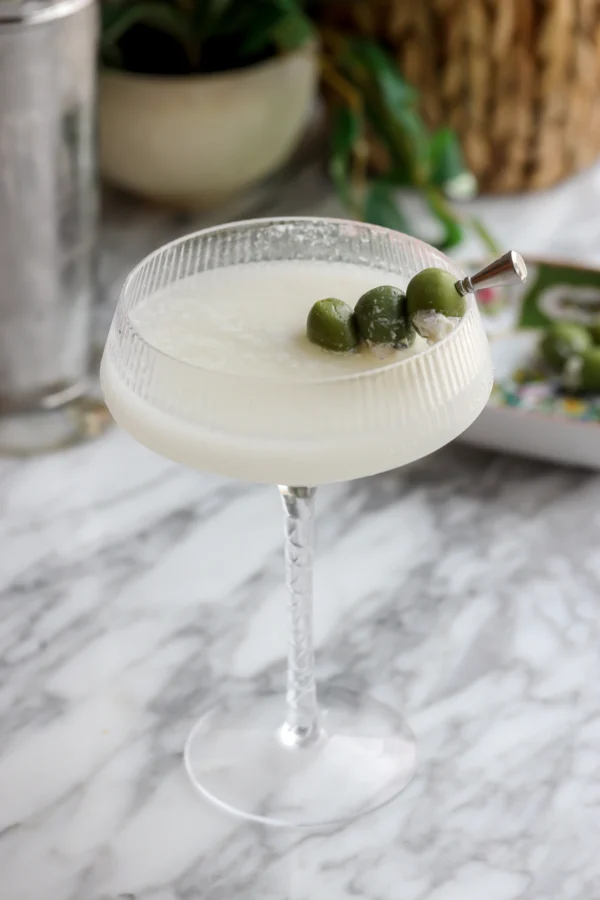
Start with a Blue Cheese Dirty Martini. It is briny, a little funky, and exactly the kind of drink to hand someone before they sit down.
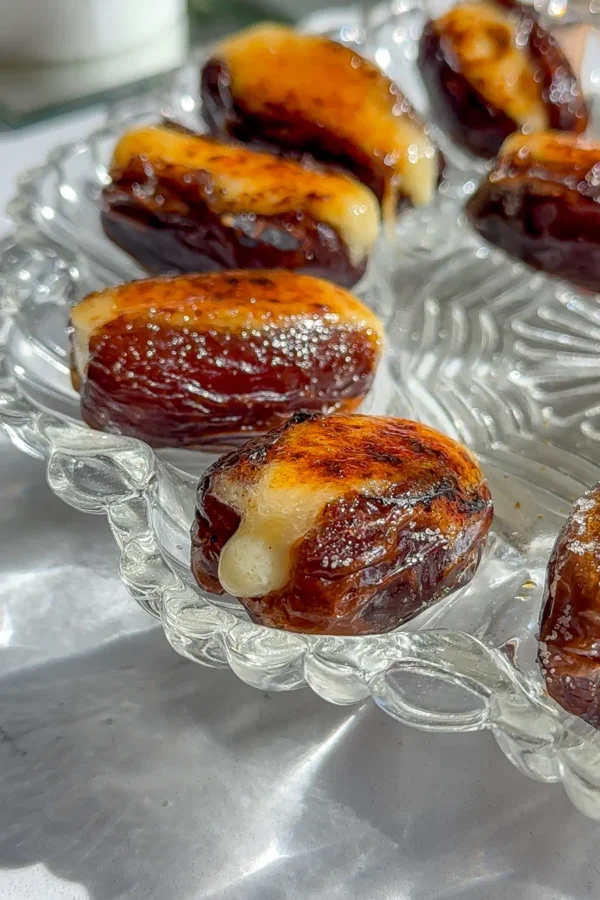
For the appetizer, Cheese Stuffed Dates, Medjool dates filled with whipped brie and a cashew, finished with a torched sugar crust.
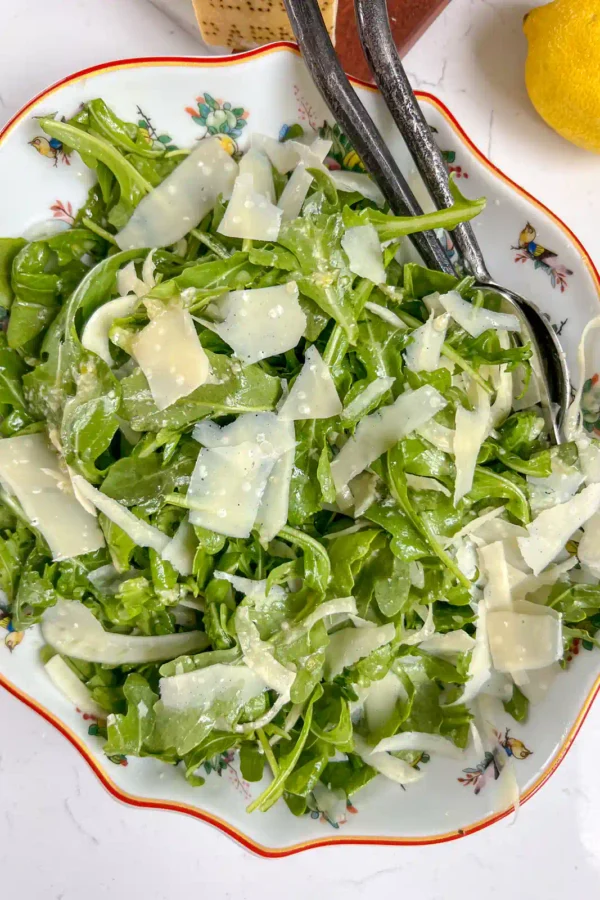
On the side, Arugula Fennel Salad, peppery arugula and shaved fennel in a honey dijon dressing. This is my go-to salad and it is a simple fresh side for your pan-seared duck breast, pan sauce, and frites.
For dessert, Cherries Jubilee, warm caramelized cherries over cold vanilla ice cream with shaved chocolate on top.
Cocktails
Blue Cheese Dirty Martini
Appetizers
Cheese Stuffed Dates (Brûlée Edition)

Desserts
Cherries Jubilee
Frequently Asked Questions
Duck is poultry but it eats like red meat. It’s dark meat all the way through, so it stays pink even when fully cooked, and ducks are raised in cleaner conditions than most factory chickens, so they don’t carry the same salmonella risk. Chicken breast is white meat and turns opaque, so pink reads as underdone. Different meat, different rules.
You can, and plenty of recipes do, especially to mellow the gamier flavor of wild duck. This recipe doesn’t, because a wet marinade leaves the skin damp and damp skin won’t crisp. Crisp skin is the whole point here, so instead of marinating you dry-brine, salt the breasts and leave them uncovered in the fridge overnight. You still season the meat, and you get the crackle.
Dry-brine it uncovered overnight, score the skin in a criss-cross, and start it in a cold pan over low heat so the fat renders out slowly. Full method is in the tips above.
No. Simmer the cognac for a couple of minutes until the raw alcohol smell cooks off and you’re there. If you do flambé, pull the pan off the heat before adding the cognac and keep a lid nearby.
Yes. Dry-brine the duck up to 24 hours ahead, that’s built in. The potatoes can soak and get their first fry a day ahead, then wait in the freezer. The final fry and the sauce come together right before serving.
Equipment
- 2 Rimmed baking sheets
- wire rack
- Cast iron or heavy stainless skillet
- Dutch oven or deep fryer
- Deep-fry thermometer
- Spider or slotted spoon
- fine mesh strainer
Ingredients
Duck
- 2 duck breasts, about 8 oz each, skin on
- 1 1/2 tsp kosher salt
Frites
- 2 lb russet potatoes, peeled
- 2 tbsp distilled white vinegar
- 2 tbsp kosher salt, for the blanching water
- 2 qt neutral oil, for frying
- kosher salt, to taste
- 2 tbsp chives, chopped
Miso Ginger Sauce
- 1 large shallot, brunoise
- 2 tbsp green peppercorns in brine, drained
- 1 orange, juice and 3 strips of the peel
- 1/2 inch ginger, peeled and sliced
- 1 garlic clove, smashed
- 1/4 cup cognac
- 1.5 tbsp white miso
- 2 cups beef stock
- 1 tbsp agave
- 1 tsp rice vinegar
- 1/4 cup heavy cream
- 3 tbsp cold unsalted butter, cubed
- chives, chopped, to taste for topping
Instructions
- Dry Brine the Duck: Pat the duck breasts dry. Score the skin in a crosshatch about 1/4 inch apart, cutting through the fat but not into the meat. Season all over with the kosher salt. Set skin side up on a wire rack over a rimmed baking sheet and refrigerate uncovered 12 to 24 hours.2 duck breasts, 1 1/2 tsp kosher salt
- Soak the Potatoes: Cut the potatoes into 1/2 inch planks, then cut the planks lengthwise into 1/2 inch batons. Transfer to a large bowl, cover with ice water and the vinegar by 2 inches, and refrigerate 2 to 24 hours.2 lb russet potatoes, 2 tbsp distilled white vinegar
- Blanch the Potatoes: Drain the potatoes and transfer to a large pot. Cover with cold water by 2 inches and add 2 tbsp kosher salt. Bring to a boil over high heat, reduce to a simmer, and cook until tender but not cooked, about 7 minutes. Drain and spread in a single layer on a wire rack set over a rimmed baking sheet. Air dry 10-12 minutes.2 tbsp kosher salt
- First Fry: Heat 2 inches of oil in a Dutch oven to 300°F-325°F. Fry the potatoes in batches until set and still pale, 4 to 5 minutes, returning the oil to 275°F (135°C) between batches. Transfer to a parchment-lined baking sheet in a single layer. Freeze uncovered for 1 hour.2 qt neutral oil
- Render the Duck: Place the duck breasts skin side down in a cold heavy skillet. Set over medium-low heat and cook without moving until the skin is deep golden and the fat has rendered, 12-15 minutes, spooning off fat as it collects and reserving it. Flip and cook 1 to 2 minutes, to 133°F (56°C) for medium rare. See notes for additional temperatures. Transfer skin side up to a rack and rest 10 minutes.
- Build the Sauce: Pour off all but 2 tbsp of the duck fat. Add the shallots and cook over medium heat until softened, 3 minutes. Add the green peppercorns and cook 1 minute. Add the orange peel, ginger, and garlic and cook 1 minute more.1 large shallot, 2 tbsp green peppercorns in brine, 1/2 inch ginger, 1 garlic clove
- Flambé: Add the cognac and flambé. Cook until the pan is nearly dry, about 2 minutes.1/4 cup cognac
- Reduce and Finish: Lower the heat. Whisk in the orange juice, miso, then add the beef stock, agave, and rice vinegar. Simmer gently until reduced by half, 8 to 10 minutes. Add the cream and simmer until the sauce coats the back of a spoon, 3 to 4 minutes. Remove from the heat, strain through a fine-mesh sieve, and return the green peppercorns to the sauce. Whisk in the cold butter a few cubes at a time. Do not return to a boil.1 orange, 1.5 tbsp white miso, 2 cups beef stock, 1 tbsp agave, 1 tsp rice vinegar, 1/4 cup heavy cream, 3 tbsp cold unsalted butter
- Final Fry: Heat the oil to 385°F (200°C). Fry the frozen potatoes in batches until golden and crisp, 3 to 4 minutes. Transfer to a bowl, season with salt and chives, and toss.kosher salt, 2 tbsp chives
- Serve: Slice the duck against the grain and place nicely on your plate. Spoon the sauce over the duck. Top with chives and serve the frites alongside.

Notes
Rare: 125°F (52°C)
Medium Rare: 133°F (56°C)
Medium: 140°F (60°C)
Medium Well: 150°F (66°C)
Well Done: 160°F (71°C) Carryover: Pull the duck about 5°F below your target. It keeps cooking while it rests.
The USDA recommends 165°F (74°C) for all poultry, duck included.
Nutrition
Nutrition information is automatically calculated, so should only be used as an approximation.