This post may contain affiliate links. Please read our disclosure policy.
Spicy Tuna Pressed Sushi is my sheet pan take on oshizushi, the Japanese art of pressed sushi. Gochujang-spiced tuna, crisp Persian cucumber, and creamy avocado get layered under seasoned Calrose rice, pressed, flipped, and sliced into clean squares. It is the rectangular cousin of my sushi bundt cake, and it feeds a crowd without a single roll.
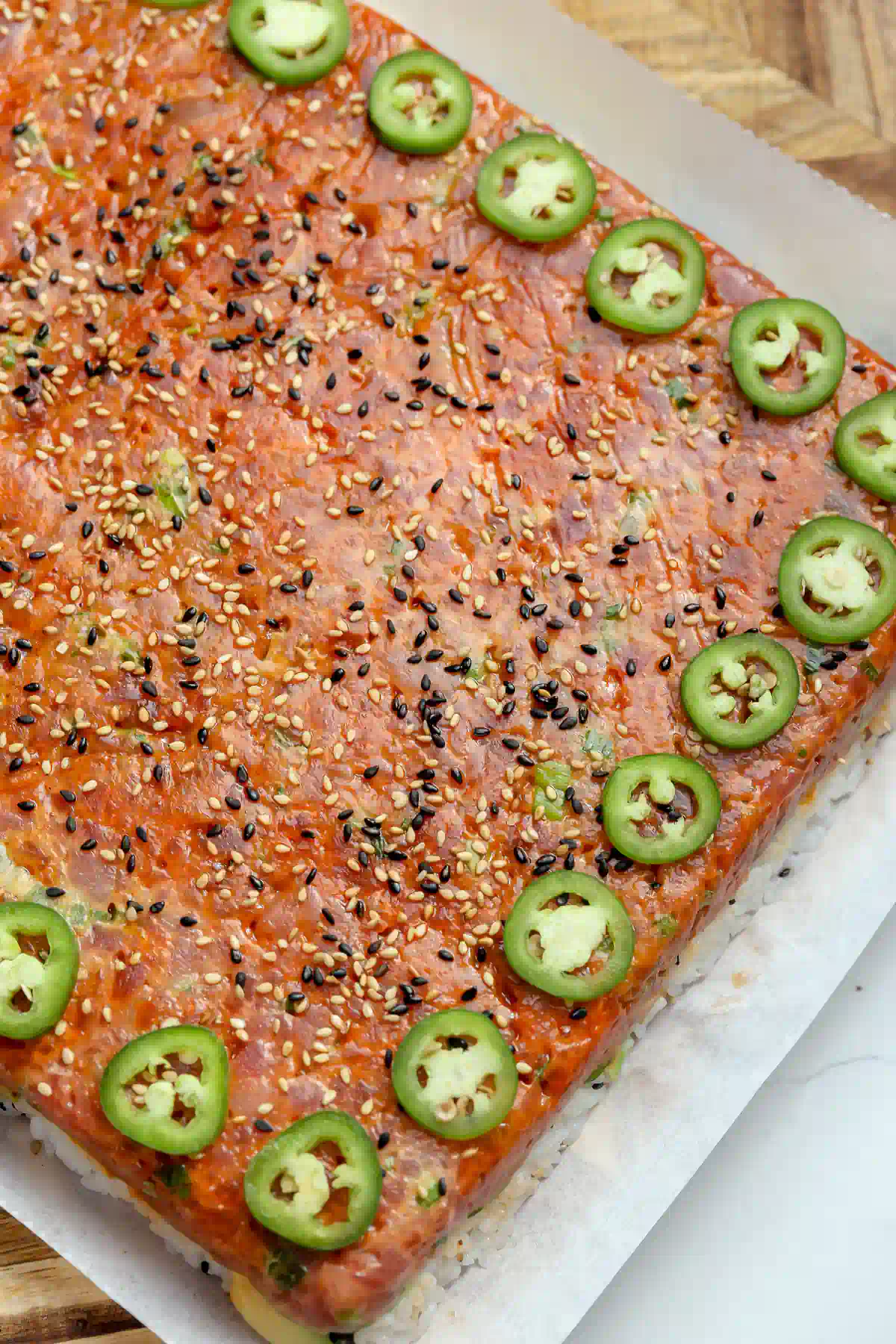
Table of Contents
What is Oshizushi?
Oshizushi is pressed sushi from Osaka, and it is one of the oldest styles of sushi there is. Long before anyone was hand-rolling maki, cooks were layering fish and vinegared rice in a wooden box called an oshibako, pressing it into a dense block, and slicing it into neat rectangles. Traditional versions use cured or cooked fish like mackerel, which is how the dish started as a way to preserve fish before refrigeration existed.
Mine is not traditional, and I want to be upfront about that. I am borrowing the technique, not the recipe. Instead of cured mackerel in a wooden box, I press spicy raw tuna under rice in a sheet pan. Same idea, same satisfying pressed texture, very different flavor. If sushi rolls and a party platter had a baby, this would be it.
About the Taste
The gochujang is what separates this tuna mixture from the spicy tuna you know from rolls. Sriracha brings straight heat, but gochujang brings heat with a deep, slightly sweet, fermented backbone. Underneath that, the cucumber stays crisp, the avocado is creamy, and the rice holds a gentle tang from the vinegar. Every slice gets a little of everything, plus a fresh bite of jalapeño and the toasty crunch of sesame on top. The citrus tamari sauce on the side is great for dipping or just pouring it right on top.
The Pressed Sushi Mold
The traditional pressed sushi mold is an oshibako, a small wooden box with a removable lid you press down to compact the layers. They are beautiful, and if you own one, use it and adjust the quantities down since most make individual portions.
You do not need one for this recipe. A standard quarter sheet pan (9 x 13) lined with plastic wrap does the same job at party scale. The plastic wrap is your release mechanism, the second sheet of wrap on top lets you press hard without rice sticking to your hands, and the flat bottom of the pan gives you that signature pressed finish. A second sheet pan or a flat-bottomed dish works as your press.
Prep the Ingredients
This comes together fast if your components are ready. Here is how far ahead you can make each one.
Seasoned Rice: Make this first, even a few hours ahead. It needs to cool completely before pressing, you don’t want to put your sushi-grade tuna on anything warm. Cool rice also presses cleaner.
Citrus Tamari Sauce: Whisk it up to 24 hours in advance and keep it in the fridge. The scallion mellows into the tamari as it sits and it gives everything time to marinate.
Spicy Tuna Mixture: Chop the tuna and prep the aromatics ahead, but mix everything no more than an hour before assembling. Raw tuna is at its silkiest fresh, and the seasonings start to change its texture the longer they sit.
Cucumber and Avocado: Slice the cucumber up to a day ahead and store it with a dry paper towel in the container. The avocado waits until assembly or it will turn brown.
Ingredient Swaps
- Tuna: Sushi-grade salmon or hamachi work beautifully with the same gochujang treatment. Whatever you choose, it must be sushi-grade.
- Gochujang: Sriracha is the closest swap if you can’t find it. You will lose some of the fermented depth but keep the heat.
- Japanese Mayo: Whisk regular mayo with a splash of rice vinegar and a pinch of sugar to get close to that Kewpie richness.
- Tamari: Soy sauce works in both the tuna mix and the sauce. It’s a touch saltier, so taste as you go.
- Jalapeños: Serranos bring the same flavor with a little more heat, or skip the fresh pepper entirely if the gochujang is enough for you. You can also seed it, chop it, and sprinkle the diced jalapeño on top if you want the taste with less heat.
Chef Nadia’s Pressing Tips
- Wet Knife, Clean Squares: Slice with a sharp, thin blade and wipe it with a damp cloth between cuts. Pressed rice grabs onto a dry knife.
- Press Like You Mean It: The whole dish depends on the press. Use even, firm pressure across the entire pan so the slices hold together instead of shedding rice at the table.
- Cool Rice or No Deal: Warm rice will not press into clean layers and it is a food safety issue sitting against raw fish. Patience here pays off everywhere else.
Storage & Raw Fish Safety
Sushi-Grade Tuna Only: To meet FDA guidelines for eating raw seafood, the tuna must have been commercially flash-frozen to destroy parasites. Ask your fishmonger specifically for sushi-grade tuna, or order from a trusted supplier. I buy mine from Riviera Seafood Club, Catalina Offshore Products, or Yama Seafood when I cannot find it locally.
Room Temperature Limit: Raw tuna and cooked rice should not sit out longer than 2 hours. Above 90°F, that drops to 1 hour. Build your serving window around that.
Leftovers: This is a serve-and-eat dish. The rice hardens in the fridge, the avocado browns, and raw tuna has a short safe window once mixed. Plan the amount for the crowd you have, and discard anything that has been sitting out past the safety limit.
Do Not Freeze: Freezing destroys the texture of every single layer. Just don’t do it.
What To Serve with Pressed Sushi
Start the night with a crisp cucumbertini, which was practically invented for raw tuna. If you want an appetizer from the same flavor family, crispy rice with spicy tuna uses the same fish so your shopping list stays short. The famous din tai fung cucumber salad is the side I reach for, and a scoop of dragon fruit ice cream ends things on a fresh note.

Cocktails
Cucumbertini 🍸

Appetizers
Crispy Rice with Spicy Tuna (Nobu-Style)


Desserts
Dragon Fruit Ice Cream
Want to save this recipe to your collection?
Frequently Asked Questions
No. A quarter sheet pan lined with plastic wrap does the same job and makes enough for a crowd. If you own an oshibako, you can absolutely use it, just scale the quantities down since most molds make individual portions. And if individual portions are the whole goal, my mini sushi bundt cakes are built for exactly that.
Yes, oshizushi translates to pressed sushi and the two names refer to the same Osaka-born style. Traditional oshizushi uses cured or cooked fish pressed in a wooden box. My version borrows the pressing technique and uses spicy raw tuna in a sheet pan instead.
The rice and the sauce can be made ahead, and the cucumber can be sliced a day in advance. The tuna should be mixed no more than an hour before assembly, and the finished dish is best within 1 to 2 hours of pressing. The full breakdown is in the Prep the Ingredients section.
Ask the seafood counter at a well-stocked grocery store specifically for sushi-grade tuna, which has been flash-frozen to meet FDA standards for raw consumption. If you cannot find it locally, online suppliers like Riviera Seafood Club ship it overnight.
They do not. The rice hardens in the fridge, the avocado browns, and mixed raw tuna has a very short window. Make the amount you plan to serve and enjoy it the day of.
Equipment
- rice cooker, optional but recommended
- quarter sheet pan, 9 x 13
- plastic wrap
- parchment paper
Ingredients
Rice
- 2 cups calrose rice, washed well
- 2 1/2 cups water
- 1 strip kombu
- 1 pinch salt
- 3 tbsp rice vinegar
- 1 tbsp sugar
- 2 tbsp black sesame seeds, plus more for topping
- 2 tbsp toasted sesame seeds, plus more for topping
Spicy Tuna Mixture
- 1 lb sushi-grade tuna, finely chopped
- 2 tbsp japanese mayo
- 2 tbsp gochujang
- 3 tbsp chives, chopped
- 1 1/2 tsp sesame oil
- 1 tsp mirin
- 1 1/2 tsp tamari
Pressed Sushi
- 2 persian cucumbers, thinly sliced
- 2 large avocados, sliced
- shichimi togarashi, to taste
- roasted nori sheets, crumbled
- 2 large serranos, thinly sliced
Citrus Tamari Sauce
- 1/4 cup tamari
- 1 tbsp mirin
- 1 tbsp rice vinegar
- 1 lemon, juiced
- 1 scallion, chopped
Instructions
- Rice: Cook the rice with the water, kombu, and salt in a rice cooker or according to package directions. Remove the kombu. Stir the rice vinegar and sugar together and fold into the cooked rice. Let cool completely, about 30 minutes. Fold in the black and toasted sesame seeds.
- Spicy Tuna Mixture: Combine the tuna, Japanese mayo, gochujang, chives, sesame oil, mirin, and tamari in a bowl. Mix until evenly coated.
- Citrus Tamari Sauce: Combine the tamari, mirin, rice vinegar, lemon juice, and scallion in a small bowl.
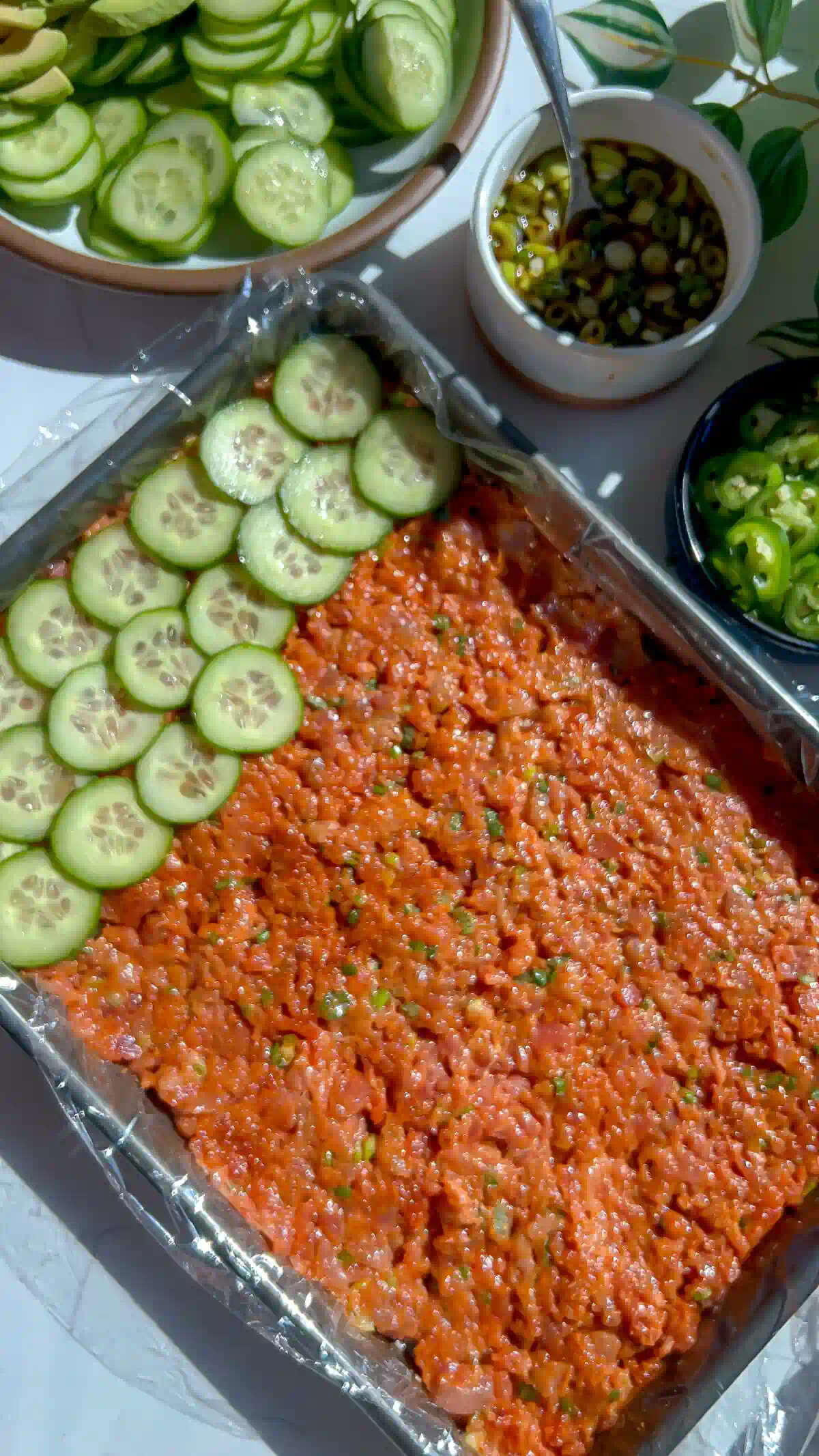
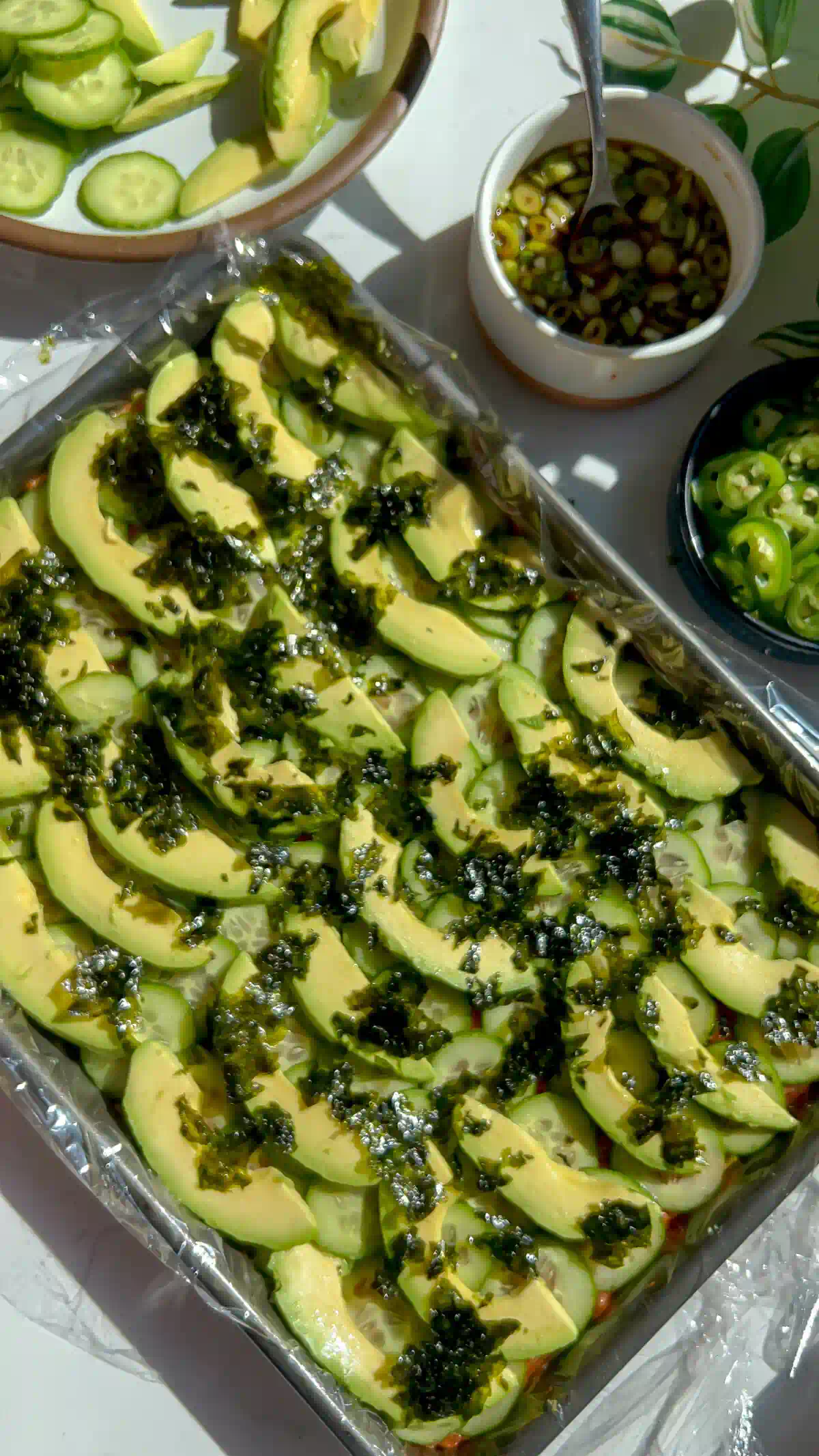
- Line a quarter sheet pan with plastic wrap, leaving overhang on all sides. Spread the tuna mixture evenly across the bottom. Layer the cucumber slices over the tuna, then the avocado. Sprinkle the crumbled nori over the avocado. Spread the cooled rice evenly over the top. Cover with a second sheet of plastic wrap and press firmly and evenly across the entire surface. Refrigerate for 10 to 15 minutes.
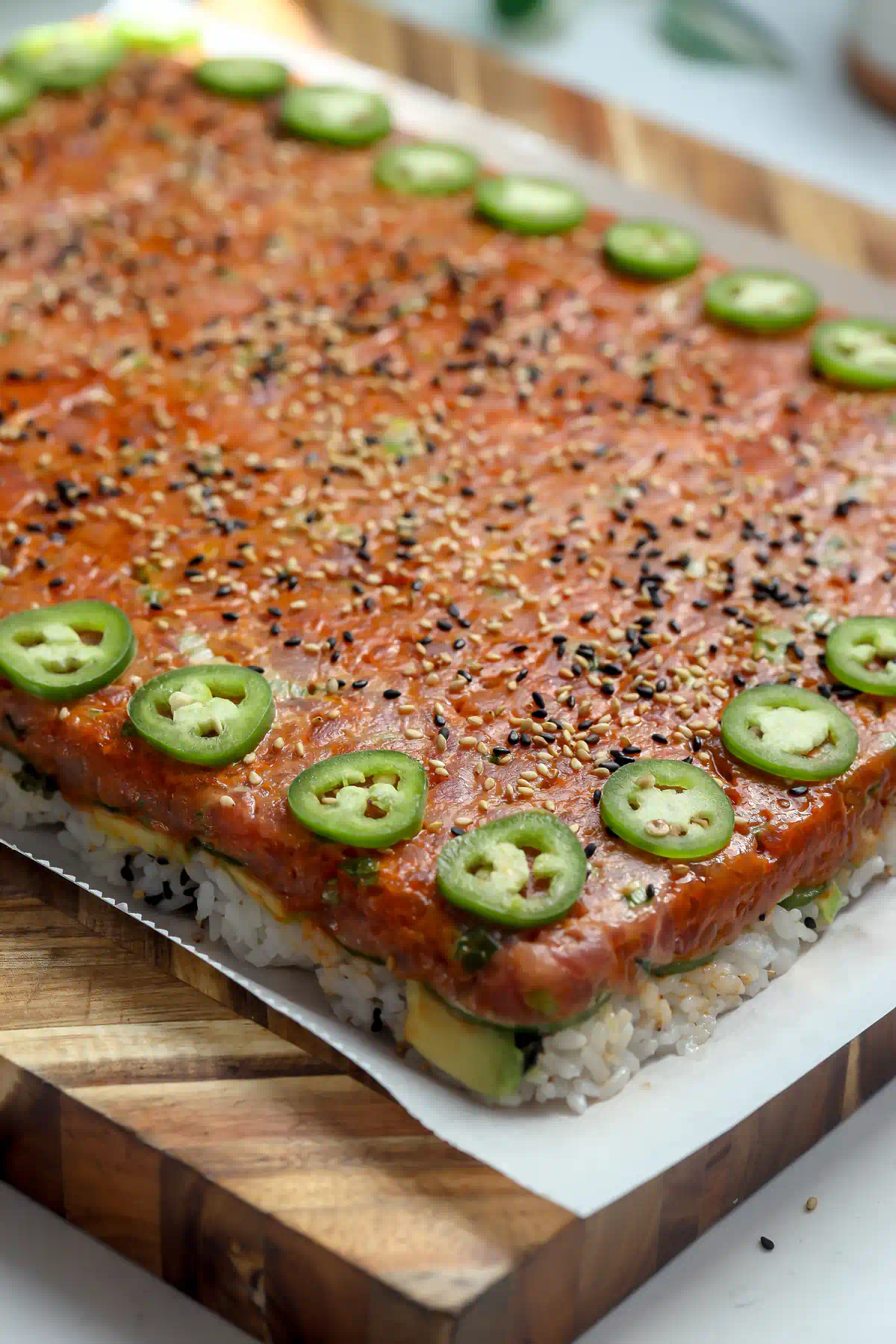
- Flip and Slice: Place parchment paper on a serving board. Remove the top plastic wrap, invert the pan onto the board, and lift the pan away. Peel off the remaining plastic wrap. Top with sliced serranos and additional sesame seeds. Slice into squares with a sharp, damp knife.
- Serve: Serve with the citrus tamari sauce on the side.
Kitchen Cam
Nutrition
Nutrition information is automatically calculated, so should only be used as an approximation.