This post may contain affiliate links. Please read our disclosure policy.
A Little Dinner Party Drama
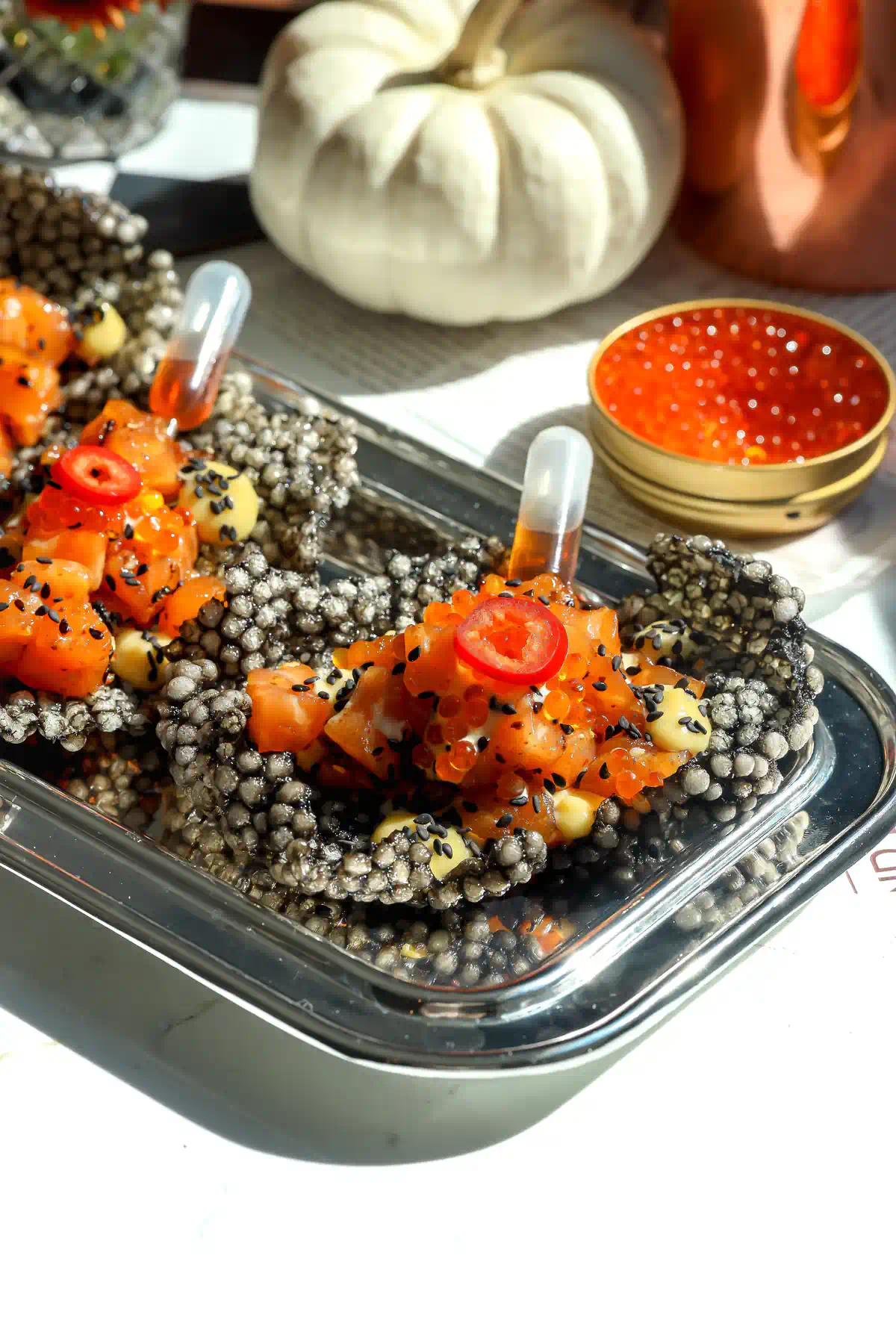
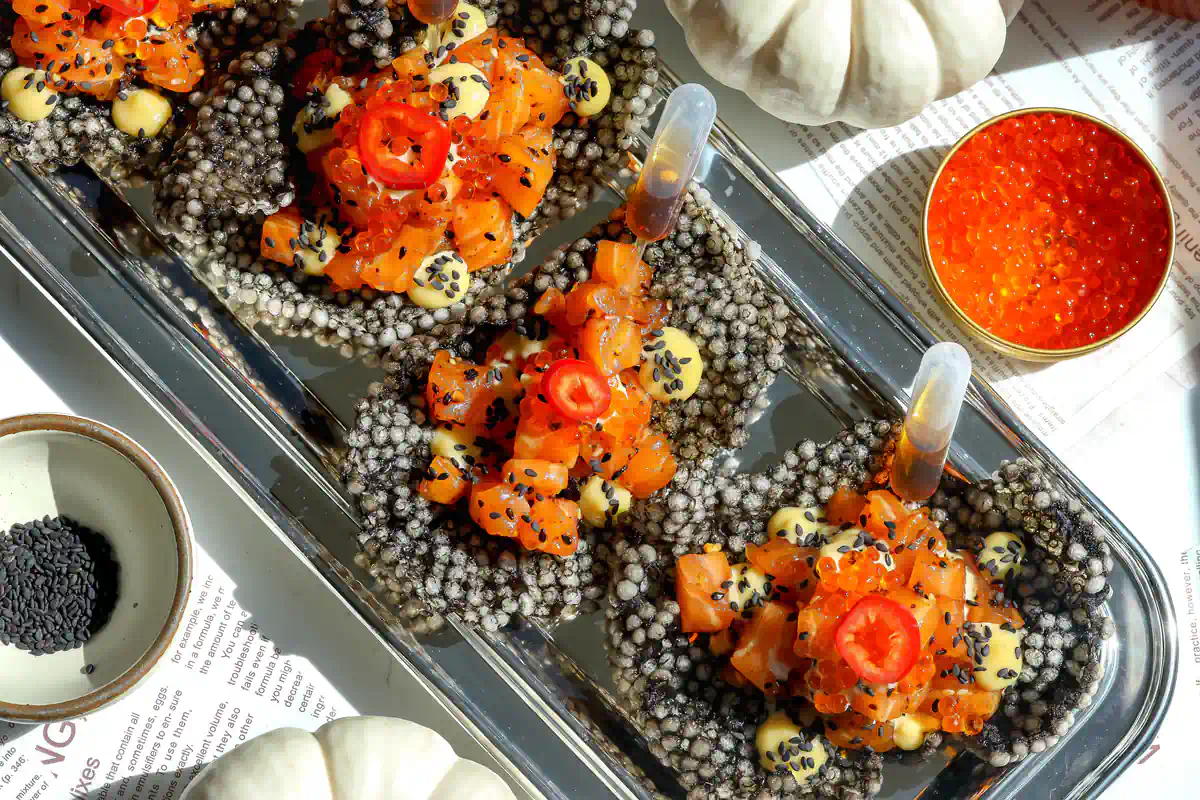
Put these on the table and the appetizer gets everyone’s attention. These squid ink tapioca crisps with salmon tartare start as a thin sheet of cooked tapioca, then puff into little bowls in hot oil. Fill them with salsa macha salmon, dot on miso ginger mayo, and finish with trout roe and a little pipette of ponzu. You get that airy crunch against the cold salmon, with toasted chile heat and a creamy finish. The black and orange make them a natural for Halloween, but I would serve these at a dinner party any time of year.
Table of Contents
Key Takeaways
- Give the tapioca time to dry. The sheets need about 4 to 6 hours in the dehydrator and should snap cleanly before frying. If this is your first time making them, the tapioca crisp tips explain what to look for.
- You can get a head start the day before. Dry the tapioca and store the cooled pieces in an airtight container, then refrigerate the mayo and ponzu separately. Save the salmon preparation and frying for serving day.
- Choose salmon intended for eating raw and keep the cure to 20 minutes. Leaving it in the salt and sugar longer can make it too firm and salty. The salmon section includes where to shop and what to ask for.
- Fill the crisps just before serving. Let them cool after frying, then add the cold salmon and toppings. Serve the ponzu alongside so everyone can add it when they’re ready to eat.
A Few Things For Your Shopping List
Ingredient Notes & Substitutions
Tapioca Pearls: I use Bob’s Red Mill Small Pearl Tapioca. The pearls give the crisps that bubbled texture you see in the photos. Buy the small pearls for this method. Tapioca flour, instant tapioca, and large brown boba pearls are not direct substitutes.
Squid Ink: I use Marky’s cuttlefish ink, which comes in small packets. If the cuttlefish label throws you off, this is the product used for the squid ink crisps. It gives them their dark color and adds a little savory, briny flavor. Measure the amount in the recipe rather than assuming one packet equals one teaspoon, and follow the package’s storage instructions.
Smoked Trout Roe: I use Imperia Smoked Trout Roe for the little orange pearls on top. It adds a salty pop with a smoky finish. You can order it directly from Imperia, or ask a specialty seafood shop for smoked trout roe. Keep it refrigerated and use it within 48 hours of opening, following Imperia’s guidance. Plain trout roe is an option if you prefer to leave out the extra smoke.
Salsa Macha: My salsa macha has peanuts, sesame seeds, garlic, and three kinds of dried chiles. Give it a good stir before measuring so you get the chile mixture along with the oil. Momofuku Chili Crunch is a good alternative. It brings crunchy garlic, shallots, sesame, and chile heat, though it won’t taste exactly like the salsa macha. Start with a little less and adjust to taste. My salsa macha contains peanuts and sesame; check the jar’s ingredients when using a substitute.
Shiro Dashi: I use Ninben Shiro Dashi for the ponzu. It’s a concentrated blend of dashi, soy sauce, and seasonings. For this recipe, measure the 3 tablespoons straight from the bottle, then mix with the other ponzu ingredients. Plain dashi broth or powder won’t give you the same result.
Japanese Mayo: Kewpie mayo makes a rich, creamy base for the miso ginger sauce. Regular mayonnaise works here too. Taste before adding any extra agave, since the sweetness will depend on the mayo you use.
White Miso: I use this white miso in the ginger mayo. The recipe only needs 2 teaspoons, but it gives the sauce a fuller, more savory flavor. If you have red miso instead, start with less since it can be stronger.
Choosing and Preparing the Salmon
Start with a specialty seafood market and ask for sushi grade salmon for tartare. Tell them you’ll be eating it raw, and confirm that it has been sourced and handled for that purpose. The label alone doesn’t tell you how the fish was handled or whether it received any freezing needed to control parasites.
If you can’t find it locally, my go-to online sources are Catalina Offshore Products, Yama Seafood, and Riviera Seafood Club. Choose salmon specifically sold for raw preparations, and contact the supplier if the listing isn’t clear. Check the delivery schedule and leave time for thawing if it arrives frozen.
Keep the salmon refrigerated until you’re ready to prepare it, and follow the supplier’s storage and thawing instructions.
Set a timer for 20 minutes when you start the cure. Leaving the salmon in the salt and sugar longer can make it too firm and salty for this tartare. Rinse the cure off when the timer goes off, then pat the fish thoroughly dry. This is a quick cure for seasoning and texture; the salmon is still raw afterward.
Cut the salmon into small cubes so you can get a little of everything in each bite. Gently mix in the salsa macha, lemon zest, and sesame seeds, then tuck the bowl back in the refrigerator while you fry the crisps. Have the mayo and roe ready so you can fill the cooled crisps and serve them right away.
Watch Them Puff
Making the Squid Ink Tapioca Crisps
These puff up in seconds once they hit the oil, but getting them ready takes a few hours. I like to cook and dry the tapioca the day before so I’m not waiting on the dehydrator when it’s time to serve. Here’s what to look for along the way.
Cook until the pearls are translucent. Add them to boiling liquid and keep stirring so they don’t catch on the bottom. Make sure there are no opaque centers before spreading the mixture. If it gets too thick to stir while the pearls are still cooking, add water a tablespoon at a time.
Spread an even sheet. Avoid thick mounds in the middle and very thin edges. Uneven spreading leaves you with sections that are ready to fry while others still need more drying.
Use the snap test. Dehydrate at 140°F (60°C), allowing about 4 to 6 hours. Start checking at 4 hours, but let the texture decide when the sheet is ready. It should be completely dry and brittle and snap cleanly. If it bends or feels tacky, keep dehydrating.
Check the oil with a thermometer. Heat it to 350°F (175°C) and fry one piece at a time. A small scrap makes a useful test before you commit a larger piece.
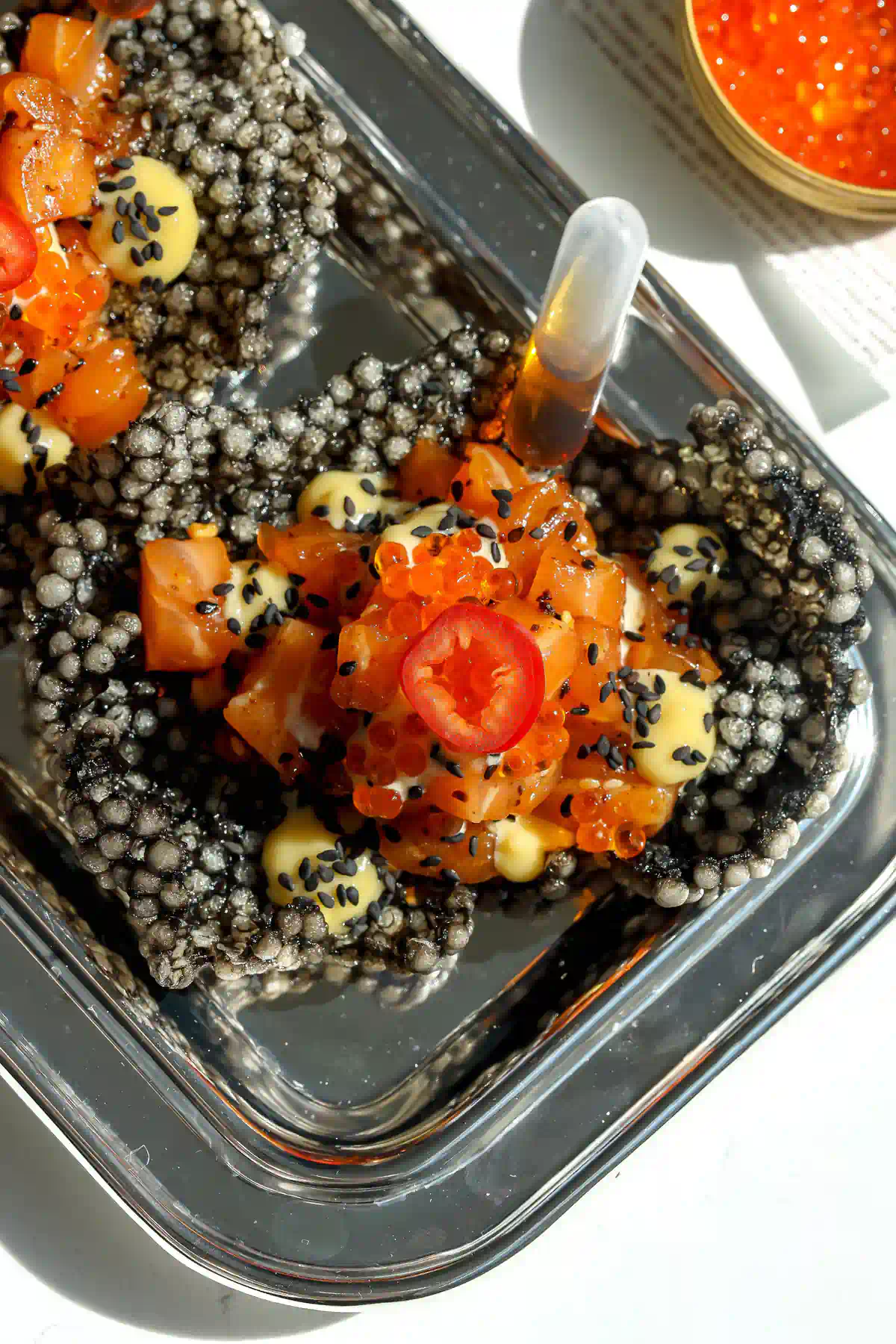
Shape it as it puffs. Gently press the center with a metal ladle for about 10 seconds to create a shallow bowl. Transfer it to a wire rack and let it cool before adding the salmon.
For another version of this technique, try my Wonderland Bluefin Tapioca Crisps, made with purple crisps, bluefin tuna, and beet ginger mayo.
A Little Planning Helps
What to Make Ahead
The day before: Cook and dehydrate the tapioca. Once the sheets are completely dry, let them cool, break them into pieces, and store the unfried pieces in an airtight container in a cool, dry place. Save the frying for serving day.
Make the miso ginger mayo and ponzu up to one day ahead. Store them in separate covered containers in the refrigerator. Remove the garlic from the ponzu after its 5 to 10 minute infusion, even when preparing the sauce ahead.
About 45 minutes before serving: Cure the salmon, rinse and dry it, then dice and dress it. Keep it refrigerated while you set up the toppings and fill the ponzu pipettes.
Just before serving: Fry the crisps, drain them on a wire rack, and let them cool. Add the salmon, mayo, smoked trout roe, and chili slices. Serve immediately.
Keep the roe refrigerated until assembly. For the Imperia smoked trout roe used here, follow the brand’s instructions to use it within 48 hours of opening.
Perfect Pairings
A cold Cucumbertini would be my first pick with these. The cucumber and lemon are refreshing alongside the salsa macha salmon and smoked trout roe.
If you’re serving a full dinner, follow with Crispy Chicken Thighs with Sake Butter Sauce. The chicken cooks in one skillet, which is helpful when you’ve already spent some time on the appetizer.
Add my Arugula Fennel Salad for something fresh and peppery on the table. You can make the honey Dijon dressing ahead and toss the salad just before dinner.
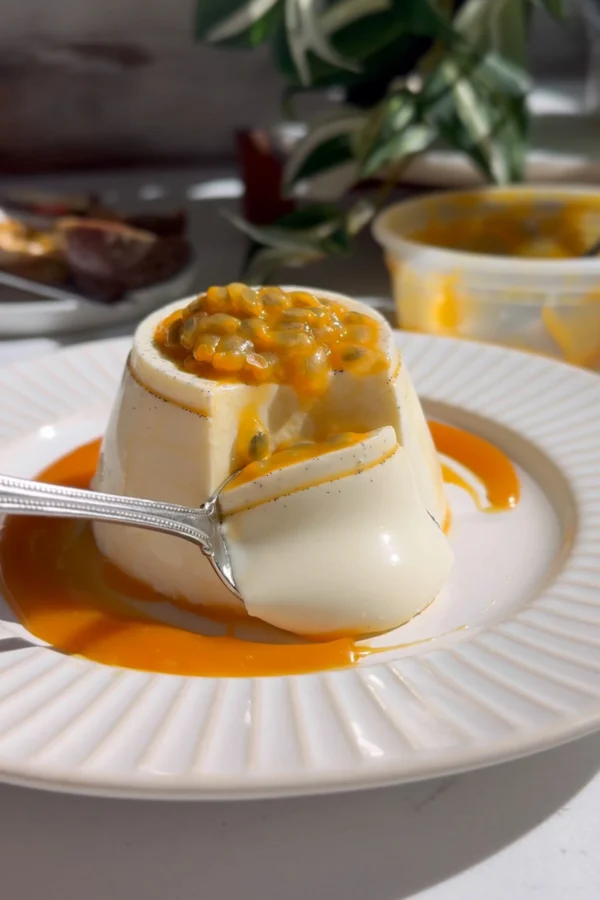
For dessert, Passion Fruit Caramel Panna Cotta gives you something creamy and tart that you can have ready in the refrigerator before guests arrive.


Want to save this recipe?
Save it to your account
or email it to yourself
Frequently Asked Questions
Check that the dried pieces are completely brittle and that the oil is at 350°F (175°C). Thick or uneven sections may need longer in the dehydrator. Test a small piece before frying the rest.
A dehydrator is my first choice, but I don’t want you to rule these out if you don’t have one. I’ve found tapioca pearl cracker recipes that use a low oven to dry the sheets before frying. I haven’t tested my version in the oven, but here’s the approach those recipes use.
Spread the cooked tapioca thinly on a silicone baking mat set on a baking sheet and dry it at about 175°F (80°C). Start checking around 3 hours, allowing more time as needed. The sheet should be completely dry and brittle enough to snap cleanly. If it bends or feels tacky, keep drying it.
The timing may be different for this recipe, so use that texture as your guide. Once the sheet is dry, break it into pieces and fry as directed to puff and shape the crisps.
No. The squeeze pipettes let everyone add ponzu to their own bite, but a small bowl and spoon work too. Add the sauce when you’re ready to eat so it doesn’t sit in the crisp.
Have the components ready, but wait to fill the crisps until you’re serving them. Keep the salmon, mayo, and roe refrigerated, then assemble in small batches if people will be eating over time.
Equipment
- saucepan
- heatproof bowl
- whisk
- silicone spatula
- Dehydrator with compatible tray
- Shallow dish
- Mixing bowls
- heavy pot
- Frying thermometer
- Metal ladle
- slotted spoon
- wire rack
- baking sheet
- Squeeze pipettes, optional
Ingredients
Squid Ink Tapioca Crisps
- 2 1/3 cups water, plus more as needed
- 1 tsp squid ink
- 1/3 cup small tapioca pearls
- 1 pinch salt
- neutral oil, as needed, for frying
Miso Ginger Mayo
- 1/3 cup Japanese mayo
- 2 tsp white miso
- 1 tsp ginger, finely grated
- 1 1/2 tsp sesame oil
- 1 tsp agave
Ponzu Sauce
- 3 tbsp shiro dashi
- 2 tbsp rice vinegar
- 2 tbsp mirin
- 1/2 tsp sugar
- 1 garlic clove, whole and peeled
Salmon Cure
- 2 tbsp kosher salt
- 1 tbsp sugar
- 12 oz salmon, sushi-grade
Salmon Dressing
- 1 tbsp salsa macha
- 1 lemon, zest only
- black sesame seeds, to taste
Toppings
- smoked trout roe, to taste
- 1 red chili pepper, thinly sliced
Instructions
Tapioca Crisps: Start the Day Before or Early the Same Day
- Prepare the Squid Ink Water: Bring the water to a boil in a saucepan. Transfer 1/4 cup of the boiling water to a heatproof bowl. Whisk in the squid ink until smooth. Stir the mixture back into the saucepan and return to a boil.2 1/3 cups water, 1 tsp squid ink
- Cook the Tapioca: Add the tapioca pearls to the boiling liquid. Cook, stirring constantly, until all pearls are translucent. Add water 1 tbsp at a time as needed if the mixture becomes too thick. Stir in the salt.1/3 cup small tapioca pearls, 1 pinch salt
- Dehydrate the Tapioca: Spread the tapioca mixture in a thin, even layer on a silicone baking mat set on a dehydrator tray. Dehydrate at 140°F (60°C) for 4 to 6 hours, or until completely dry and brittle. Break into approximately 12 pieces large enough to hold the salmon.
Miso Ginger Mayo & Ponzu: Up to 1 Day Ahead
- Make the Miso Ginger Mayo: Whisk the Japanese mayo, white miso, ginger, sesame oil, and agave in a bowl until smooth. Cover and refrigerate until ready to serve.1/3 cup Japanese mayo, 2 tsp white miso, 1 tsp ginger, 1 1/2 tsp sesame oil, 1 tsp agave
- Make the Ponzu: Stir the shiro dashi, rice vinegar, mirin, and sugar in a small bowl until the sugar dissolves. Add the whole peeled garlic clove and let infuse for 5 to 10 minutes. Remove and discard the garlic. Fill food-safe squeeze pipettes if using, or transfer to a serving bowl. Refrigerate until ready to serve.3 tbsp shiro dashi, 2 tbsp rice vinegar, 2 tbsp mirin, 1/2 tsp sugar, 1 garlic clove
Salmon, Frying & Assembly: Start About 45 Minutes Before Serving
- Cure the Salmon: Mix the kosher salt and sugar in a shallow dish. Coat the salmon evenly with the mixture. Refrigerate uncovered for 20 minutes. Rinse thoroughly under cold water and pat completely dry.2 tbsp kosher salt, 1 tbsp sugar, 12 oz salmon
- Dress the Salmon: Cut the cured salmon into small cubes. Gently toss with the salsa macha, lemon zest, and black sesame seeds. Cover and refrigerate while frying the crisps.1 tbsp salsa macha, 1 lemon, black sesame seeds
- Fry the Tapioca Crisps: Pour about 2 inches of neutral oil into a medium saucepan, keeping the pot no more than half full. Heat to 350°F (175°C). Lower a dried tapioca piece into the oil and gently press the center with a metal ladle for about 10 seconds, until puffed and shaped into a shallow bowl. Remove with a slotted spoon and drain on a wire rack set over a baking sheet. Repeat with the remaining pieces, maintaining the oil temperature between batches. Let the crisps cool before filling.neutral oil
- Assemble: Divide the salmon among the tapioca crisps. Top with the miso ginger mayo, smoked trout roe, and sliced red chili. Serve immediately with the ponzu in pipettes or on the side.smoked trout roe, 1 red chili pepper
Kitchen Cam
Nutrition
Nutrition information is automatically calculated, so should only be used as an approximation.