This post may contain affiliate links. Please read our disclosure policy.
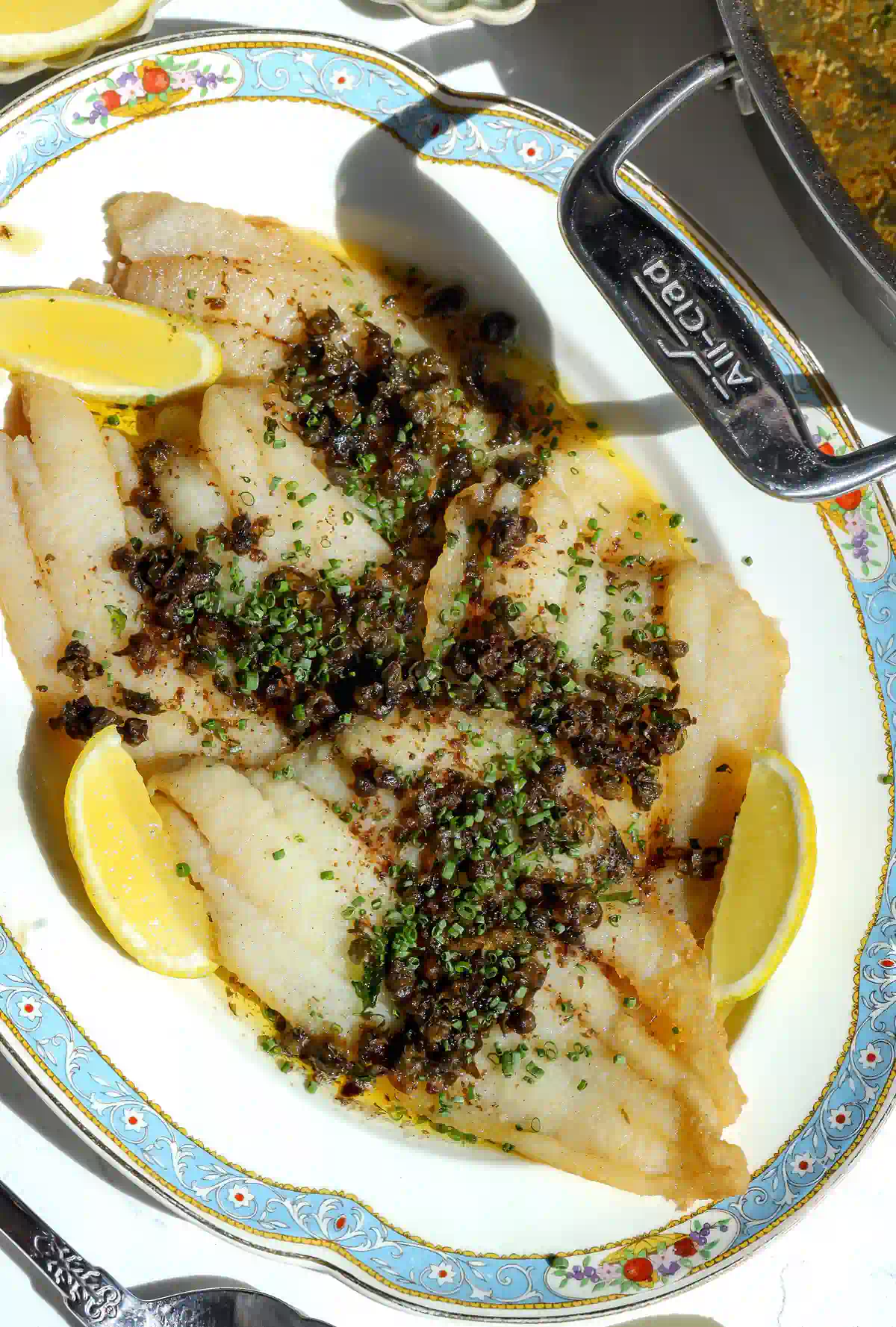
Sole Meunière is the legendary dish that famously sparked Julia Child’s entire career – the meal she described as “the most exciting meal of my life.” One bite of that perfectly seared fish and nutty butter sauce and she never turned back, and I honestly get it. It’s elegant, it’s vibrant, and it’s surprisingly simple when you know the technique. This recipe walks you through exactly how to get that clean, golden sear on your fish and how to build a classic meunière sauce. And yes – this bright, nutty browned butter sauce on top of the delicate fish really is that good.
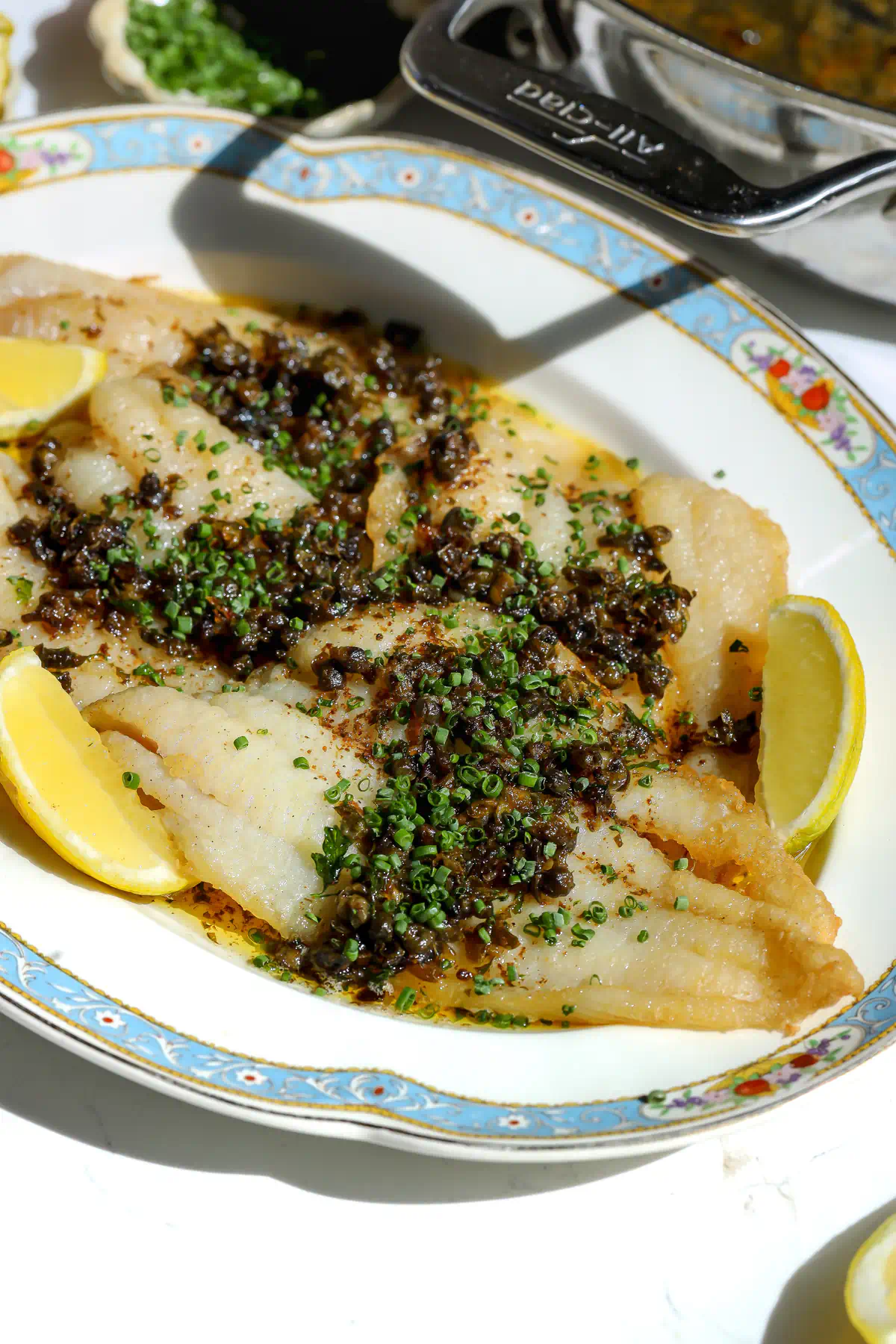
Table of Contents
Ingredients You’ll Need
Sole Filet: I prefer to use petrale sole. The texture is delicate and it has a nutty, slightly sweet flavor. Dover is the traditional fish used, and you can swap it no problem. True Dover sole has a mild, sweet flavor with very firm, small-flaked flesh. Whichever one you go with, make sure the fillets are skinned and deboned. If you can’t find sole near you, you can buy online or swap for a different fish:
- Flounder: This is the best substitution choice for sole. In fact, there are no “true” sole in North American waters. So almost all fish sold as “sole” in the US are actually a flounder species. They have a very similar flavor and texture to sole.
- Halibut: This fish is a little bit firmer and thicker than sole, but it has a nice mild flavor and flaky texture that make it a good for this recipe. Since it is thicker, make sure you adjust how long you sear it and make sure it’s fully cooked.
- Tilapia: This is an inexpensive, easy to get option. It does have a stronger flavor, but not overwhelmingly so.
Clarified Butter: You can’t use regular butter to pan-fry the fish because it will burn at the high heat. You need to use clarified butter, aka ghee. This has the milk solids removed, so it can handle the heat of the pan without burning and turning bitter while you cook the fish. You can buy it at the store as ghee, or make it yourself by melting regular butter and skimming the white foam off the top. If you don’t have time, you can use neutral, high-smoke-point oil like avocado oil. It won’t be as buttery but it will still turn out nice.
The Meunière Sauce: You need regular unsalted butter for the sauce because those milk solids are exactly what toast up to give you that deep, nutty brown butter flavor. I know this isn’t traditional, but I like to add a teaspoon and a half of tamari right at the end. It’s totally optional, but that savory umami flavor adds to the nutty notes of the butter and I love the results.
The Coating and Toppings: You need standard all-purpose flour mixed with salt to dredge on the fish. For the rest of the sauce, grab capers and a splash of their juice and a fresh lemon. For topping, wash, dry and chop up a little flat-leaf parsley.
How to Pan-Fry Sole
It Starts with the Pan: If you want that perfect sear, you can’t just use any pan. You need a non-stick, heavy bottom skillet. My go-to is the All-Clad D3 Everyday Skillet.
Prep the Fish: Pat the fillets totally dry with paper towels before you start. Dredge them in the flour mixture and shake off the excess. Let rest in the fridge for 15-20 minutes on a baking sheet before starting.
Heat the Pan Properly: Don’t add fat to a cold pan. Heat a dry stainless steel skillet on high for about two minutes. To test it, flick a little water in. If it sizzles and disappears right away, it needs more time. When the water beads up and rolls across the surface, the pan is ready. Once the pan is ready, drop the heat to medium-high right before adding the clarified butter so it doesn’t burn.
The Initial Wiggle: Once the butter is bubbling, lay the fish in and immediately give the fillet a quick wiggle with your spatula. This gets the fat right under the fish before it has a chance to stick.
Don’t Crowd It: Only cook two fillets at a time. If they touch, the temperature drops too fast and the fish ends up steaming instead of frying.
Flipping: Sole is super delicate. Leave it alone after that first wiggle. Let it fry for 2 to 3 minutes until it gets a nice crust and naturally lets go of the pan. Use a wide, thin metal spatula to flip it. The second side only takes a minute or two.
Wipe Between Batches: If you’re cooking more than two fillets, wipe the skillet clean with a paper towel in between. Leftover flour will burn in the hot pan and can ruin the next batch.
Building the Meunière Sauce
Use the Same Pan: This recipe is great because it’s all in one pan, and who doesn’t want easy clean up? Just make sure you whip it out before starting your sauce.
Build the Sauce: Start by melting your butter. You cook it initially just long enough to develop a nutty scent, but not until it’s fully browned. Adding the capers, juice, and zest at this stage lets those flavors infuse into the butter as it continues to brown over the next 3 to 5 minutes.
Watch the Color: Keep an eye on the milk solids as they cook. You want them to reach a golden-brown color. Since you have other ingredients in the pan, the butter will look darker, so rely on the smell and the color of the solids rather than just the butter’s appearance.
Finish: Turn off the heat before adding the final lemon juice and tamari. This stops the cooking process immediately and ensures the butter stays golden instead of darkening to burnt.
New Orleans Variation: A classic French meunière uses just butter, lemon, and parsley. To make a New Orleans-style Creole version, whisk in a splash of Worcestershire sauce, a dash of hot sauce, and a little heavy cream to thicken the sauce.
How to Serve
A great welcome cocktail to start the night off is a grapefruit elderflower sour. It brings floral notes that go really well with the delicate sole. As your sides, crispy potatoes (skip the sauce) bring a great crunch and are perfect for soaking up the meunière butter sauce. Something fresh, an arugula fennel salad is my go-to. To finish off the night, pistachio crème brûlée is a great choice for dessert. This takes a spin on the classic, but makes it easier.


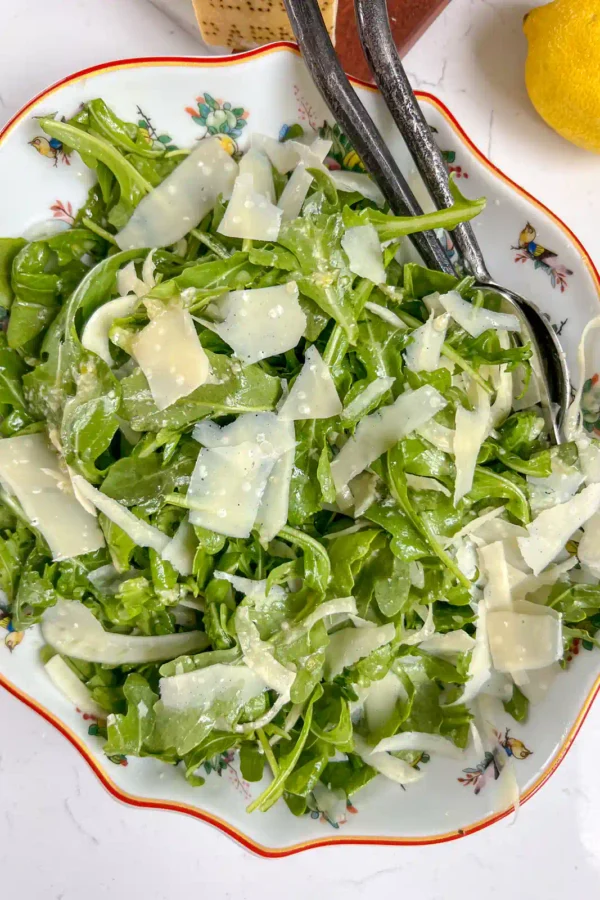
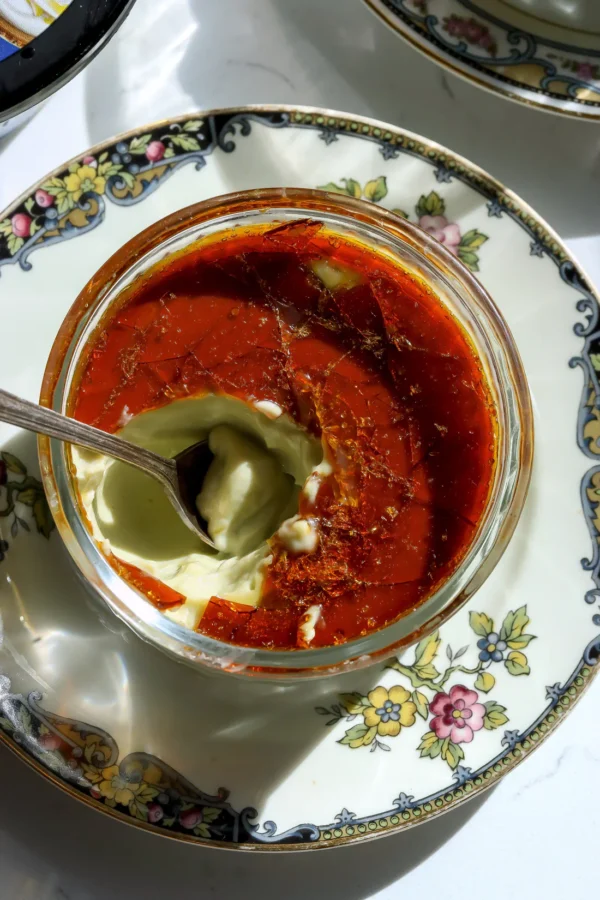
Want to save this recipe to your collection?
Prep and Storage Tips
Prep
The Fish: Pat your fillets completely dry with paper towels, looking for any bones. Place them on a plate, cover tightly, or in an airtight container and refrigerate.
Wait to Dredge: 15-20 minutes before you’re ready to pan-fry your fillets, coat them in the flour and salt and place them in the fridge. Don’t do it sooner than this. If you do it too early, the flour coating can become gummy.
The Sauce: You can have your butter measured, your lemon zested and ready to squeeze, your parsley washed, dried and chopped. The sauce doesn’t take long and with everything prepped it’ll be that much quicker. You’ll will also have only the one pan to wash, and who doesn’t want that.
Make-Ahead: You can fully make the sauce for your sole meunière ahead of time. Make the whole thing a day before, let it cool and store it in an airtight container in the refrigerator. When ready to serve, gently reheat the sauce in a pan, stirring often, while you make your sole. The fish is best made right before serving.
Storage
The Fridge: If you have leftovers, you can store them in an airtight container in the refrigerator for 1-2 days.
Freezer: I don’t recommend doing this. The delicate sole will be mushy when it thaws. The sauce’s consistency won’t be right either.
Reheat: Gently reheat the fish and sauce in a pan, being careful not to overcook the fish.
Frequently Asked Questions
No. The milk solids burn at the temperature you need to pan-fry, leaving a bitter crust. Use a neutral oil like avocado oil if you don’t have clarified butter.
It could be a few things. The pan wasn’t hot enough, the fish was too wet before dredging, or you skipped the immediate shake when the fish hit the pan.
No it’s not, but you can easily swap out the flour for gluten-free flour.
Not as is, but just use more ghee in the sauce to make it lactose-free. Ghee (clarified butter) is regular butter with the lactose and other milk solids cooked out.
You can but make sure they are defrosted completely and pat them completely dry before cooking. Fresh fillets are going to taste better, but they will work frozen as well.
Equipment
- Bowl
- sheet pan
- stainless steel pan
Ingredients
- 4 dover sole filets, or dover sole filets, deboned
- 1/4 cup flour
- 1 tsp kosher salt
- 1/2 tsp white pepper
- 4 tbsp clarified butter
Meunière Sauce
- 5-6 tbsp unsalted butter
- 3 tbsp capers
- 1 tsp caper brine
- 1 lemon, zest and 1/2 of of juice
- 1/2 tsp honey
- 1 tsp tamari
- 2 tbsp parsley, chopped
- chives, to taste, for topping
- lemon wedges, for serving
Instructions
- Prep The Fish: Pat the fish dry. Combine the flour and seasoned salt in a bowl. Coat both sides of the filets in the flour mixture, shake off the excess, and place on a sheet pan. Refrigerate for 15 to 20 minutes.4 dover sole filets, 1/4 cup flour, 1 tsp kosher salt
- Sear The Fish: Preheat a stainless steel pan on high heat for 2 minutes. Lower to medium-high and add 2 tablespoons of clarified butter. Once the butter is bubbling, add 2 filets to the pan, shaking each fillets for a second when you place them in the pan. Cook for 2 to 2.5 minutes per side, being very careful when flipping. Remove the fish, wipe the pan clean, and repeat the process with the remaining 2 tablespoons of clarified butter and 2 filets.2 tbsp clarified butter, 2 tbsp clarified butter
- Meunière Sauce: Whip out your pan and add unsalted butter to the pan over medium heat. Brown the butter for about 2 minutes until it develops a nutty aroma. Add capers, caper brine, and lemon zest. Continue browning for 3 to 5 minutes until the butter is golden. Turn off the heat and mix in a small squeeze of the lemon juice and tamari. Adjust the lemon juice to taste.5-6 tbsp unsalted butter, 3 tbsp capers, 1 tsp caper brine, 1 lemon, 1 tsp tamari
- Assemble: Spoon the sauce over the cooked fish and top with the chopped parsley, chives. Serve with lemon wedges on the side.2 tbsp parsley
Nutrition
Nutrition information is automatically calculated, so should only be used as an approximation.